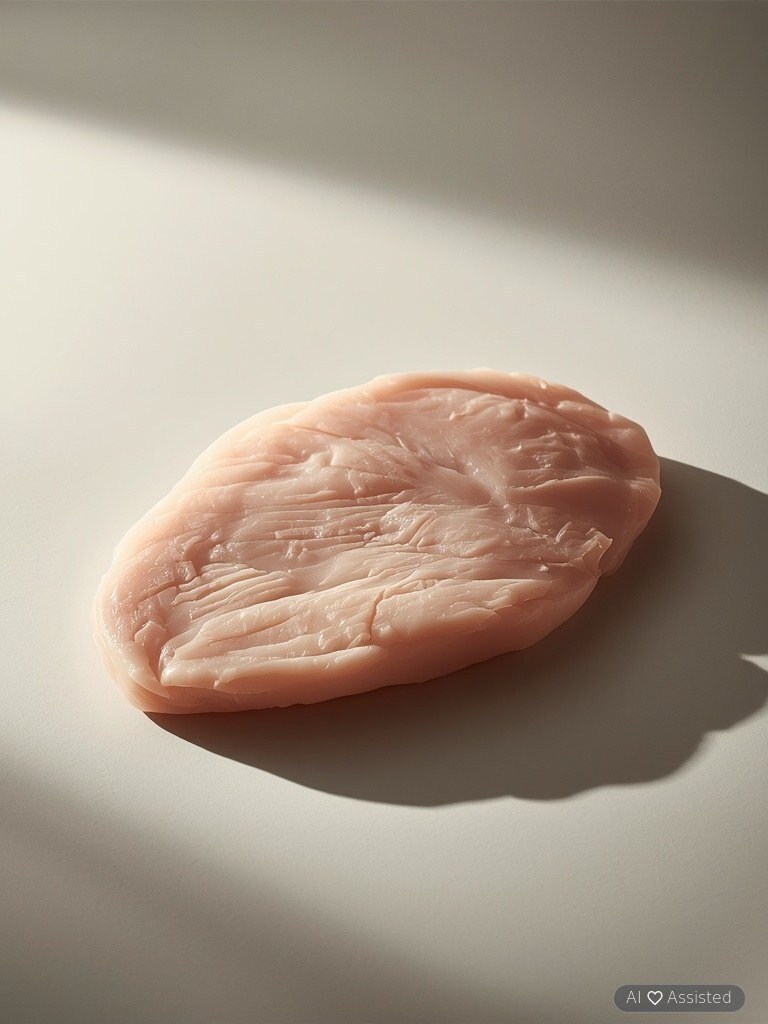
Boneless, skinless turkey breast fillet – lean, diet-friendly meat with a refined flavor profile

| Diets Premium Expert Wojciech Wiśniewski | min read 3 min | Scientifically reviewed by a clinical dietitian 23.10.2026 |
Smart Voice
•Listen to the article content live
Skinless turkey breast fillet is among the leanest and most nutrient-dense animal proteins available in human nutrition. It delivers exceptional biological protein value with virtually negligible total fat, while serving as a rich reservoir of bioavailable zinc, selenium, and cobalamin (B12). This article details its dietary role in fat loss, athletic conditioning, and clinical convalescence.
Want to apply these guidelines in your daily diet?
Our smart diet generator creates a tailored meal plan in 3 minutes based on the recommendations in this article.
Macronutrient Profile and High-Biological-Value Protein in Turkey Breast
A 100-gram serving of raw skinless turkey breast yields merely 85–95 kcal, while supplying an impressive 21–24 g of complete protein and less than 1.0 g of total fat. This remarkable ratio establishes turkey breast as having one of the highest protein-to-calorie densities in clinical dietetics. Turkey protein provides the full array of essential amino acids, with particularly favorable concentrations of tryptophan—the biological precursor to serotonin and melatonin, supporting emotional balance and restorative sleep.
Essential Micronutrients: Zinc, Selenium, and B-Complex Vitamins
Relative to broiler chicken, turkey breast presents higher concentrations of vital trace elements. It stands out as an exceptional dietary source of organic selenium (providing 25–30 mcg per 100 g, fulfilling more than half of daily adult requirements), crucial for thyroid hormone metabolism and antioxidant protection. It also contributes bioavailable zinc (1.5–2 mg/100 g), vitamin B3 (niacin), pyridoxine (B6), and cobalamin (B12), fundamental for erythropoiesis and neural integrity.
Culinary Preparation – Cooking Succulent Turkey Breast Without Dryness
Because of its minimal intramuscular fat content, turkey breast can quickly turn dry and stringy if overcooked. To guarantee optimal juiciness, wet brining (submerging the breast in a 5% salt-and-herb solution for 2–4 hours prior to cooking) dramatically increases cellular water retention. Ideal culinary techniques include roasting in an oven bag at 160°C until the internal core reaches 74°C, gentle braising in vegetable stock, or low-temperature sous-vide immersion.

Wojciech Wiśniewski
✓Diets Premium Expert
Diets Premium team expert. Specializes in nutrition plans, strength sports, and training plans.
View Profile →