
1 / 1
1 zdjęcie
234
Soja – Eigenschaften, Nährwert, Anwendung und mögliche negative Auswirkungen
Nährstoffeigenschaften
Nährwertangaben
Nährwert
Protein In Der Ernährung
Proteinquelle
Sojaprotein
Sojabohnen
Eiweiß
Fleisch
Laura Schneider
Autor
2026-09-24
Datum
6 Min. Lesezeit
article.read_time
5
Kapitel
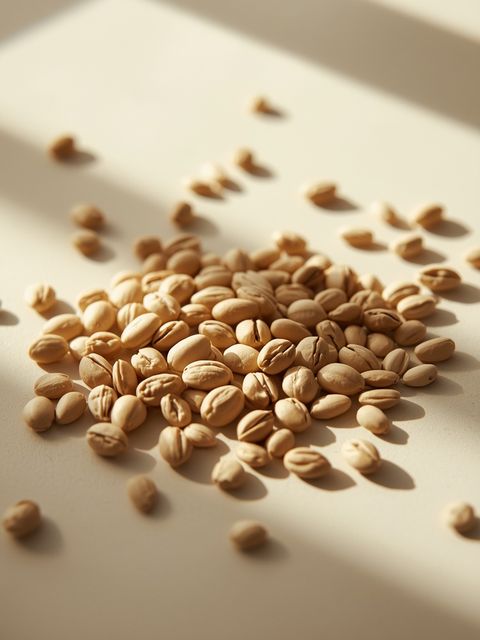
Soja ist bei Vegetariern beliebt, da es für sie eine bedeutende Proteinquelle darstellt. Es ist jedoch bemerkenswert, dass viele wertvolle Eigenschaften von Soja auch für diejenigen von Interesse sein könnten, die keinen Fleischverzicht in ihrer Ernährung praktizieren.
The soybean (*Glycine max*): Botanical profile, nutritional composition, and significance in plant-based diets
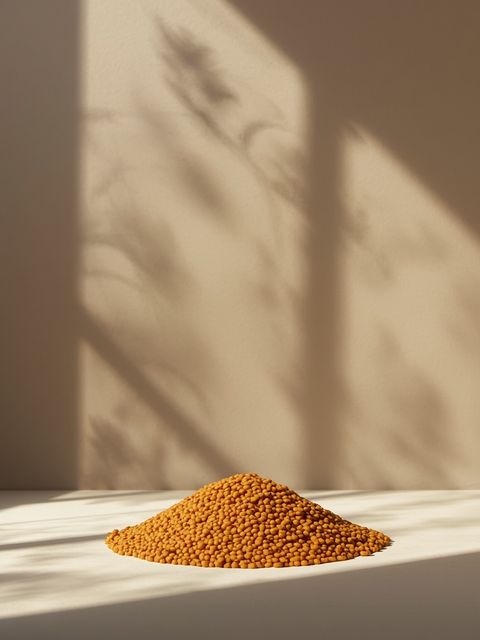
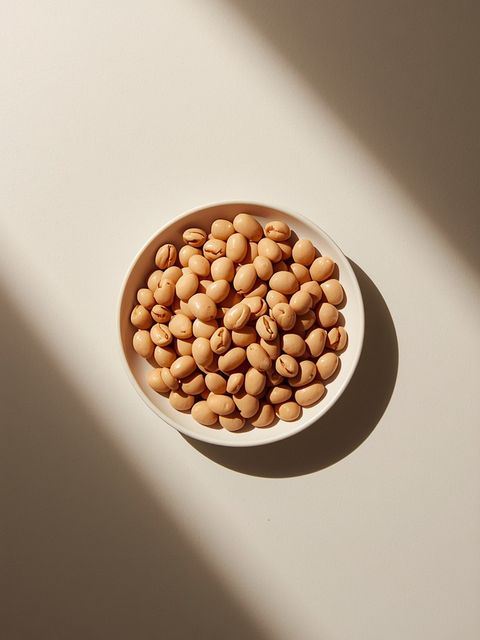
The most extensively cultivated soybean variety is vegetable soybean, scientifically designated as *Glycine max* (L.) Merr., an annual leguminous plant originating from Southeast Asia. Its cultivation history in China spans **four millennia**, underscoring its enduring agricultural significance. Presently, the **United States** and **Brazil** dominate global production, with vast monocultures dedicated to this crop. The surge in its popularity over recent decades is largely attributable to the expanding adoption of plant-based diets—both vegan and vegetarian—as soy represents one of the **few complete plant-based protein sources**, furnishing all essential amino acids in balanced proportions.
With regard to protein quality, the **Protein Digestibility-Corrected Amino Acid Score (PDCAAS)** for soy protein isolate attains the **maximum value of 1.00**—equivalent to that of chicken egg protein—whereas whole soybeans achieve a score of **0.91**. Meanwhile, the **biological value (BV)** of soy protein stands at **74**, while that of whole soybeans reaches **96** (compared to **97** for chicken eggs). Beyond its protein content, soy is a rich source of **polyunsaturated fatty acids**, including linoleic acid (omega-6) and α-linolenic acid (omega-3), as well as B-complex vitamins such as thiamine (B₁), riboflavin (B₂), and folic acid (B₉).
A nutritional breakdown reveals that **100 grams of dried soybeans** fulfill daily requirements for the following minerals: **potassium** at **45%**, **calcium** at **24%**, **phosphorus** at an exceptional **106%**, **magnesium** at **54%** (for men) or **70%** (for women), and **iron** at **89%**, positioning it among the most nutrient-dense legumes available commercially.
Sie haben begonnen, einen PRO-Artikel zu lesen
Sie können das erste Kapitel lesen. Um den gesamten Artikel zu lesen und alle Inhalte freizuschalten, wechseln Sie zum PRO-Konto.
Tags