Meal Plans and Diets • CLINICAL PROTOCOL

High-Protein and Macro Diet

Personalized, evidence-based nutrition guidelines (EBM) dedicated to High-Protein and Macro Diet. Balanced macronutrients, micronutrition, and elimination of pro-inflammatory factors.

High-Protein and Macro Diet
HOW TO START

It's Easy to Start Today!

Eat Healthy

Precisely selected nutrients supporting metabolic balance and tissue regeneration.

Workout Hard

Physical activity safely tailored to your clinical conditions and baseline endurance.

Enjoy Your Life

Psychoemotional balance, restful sleep, and stress reduction as indispensable pillars of recovery.

SERVICES & PROTOCOLS
Personal Health Program

Personal Health Program

Dedicated medical nutrition therapy and dietary protocols for High-Protein and Macro Diet.

Personal Fitness Trainer

Personal Fitness Trainer

Tailored workout plan and physical exercise supporting therapy.

Wellness Counseling

Wellness Counseling

Specialist support and continuous monitoring of health progress.

Diet Programs

Diet Programs

Precise calculation of BMR, TDEE, and micronutrient balance.

Refreshing Citrus Background
FREE RECOMMENDATIONS

Change Your Health in One Day!

Special Program for Sensitive Nutrition
POPULAR PROGRAMS & CLINICAL PROTOCOLS

Special Program for Sensitive Nutrition

Individually formulated nutrition protocols for individuals managing specific metabolic and allergic requirements in High-Protein and Macro Diet.

Allergen exclusion, gut microbiota support, and optimization of carbohydrate-lipid metabolism.

8
Programs
161
Happy Customers
7
Awards
117
Success Stories

Other Groups in Category: Meal Plans and Diets

Articles and Guides in — High-Protein and Macro Diet

Publications, recommendations, and clinical analysis in High-Protein and Macro Diet

24 publications
Protein supplements: classification, physiological functions, and supplementation strategies for physically active individuals

Protein supplements: classification, physiological functions, and supplementation strategies for physically active individuals

The protein supplement industry continues to evolve, introducing formulations with enhanced amino acid profiles, improved bioavailability, and tailored nutrient compositions to meet the diverse needs of athletes and fitness enthusiasts. Manufacturers leverage advanced processing techniques—such as precise protein fractionation, elimination of artificial additives, and optimization of digestion rates—to create products that are not only palatable but also physiologically effective. For athletes aiming to maximize muscle hypertrophy, accelerate recovery, or achieve body recomposition, these supplements serve as critical tools. However, navigating the vast array of options requires a nuanced understanding of protein sources, their physiological roles, and evidence-based supplementation strategies to ensure alignment with individual goals, training regimens, and dietary plans.

Peanuts – characteristics, cultivation methods, and health impact: analysis of nutritional value and potential consumption benefits

Peanuts – characteristics, cultivation methods, and health impact: analysis of nutritional value and potential consumption benefits

Annual global peanut production reaches millions of metric tons, with the legume available in diverse forms—ranging from whole kernels to confectionery products, peanut butter, oil, and high-protein food formulations. Due to their cost-efficient protein-to-price ratio, they represent a highly sought-after ingredient for food manufacturers, who continually expand their applications. But does their regular consumption yield measurable health benefits? Are there evidence-based reasons to incorporate them into daily dietary patterns?

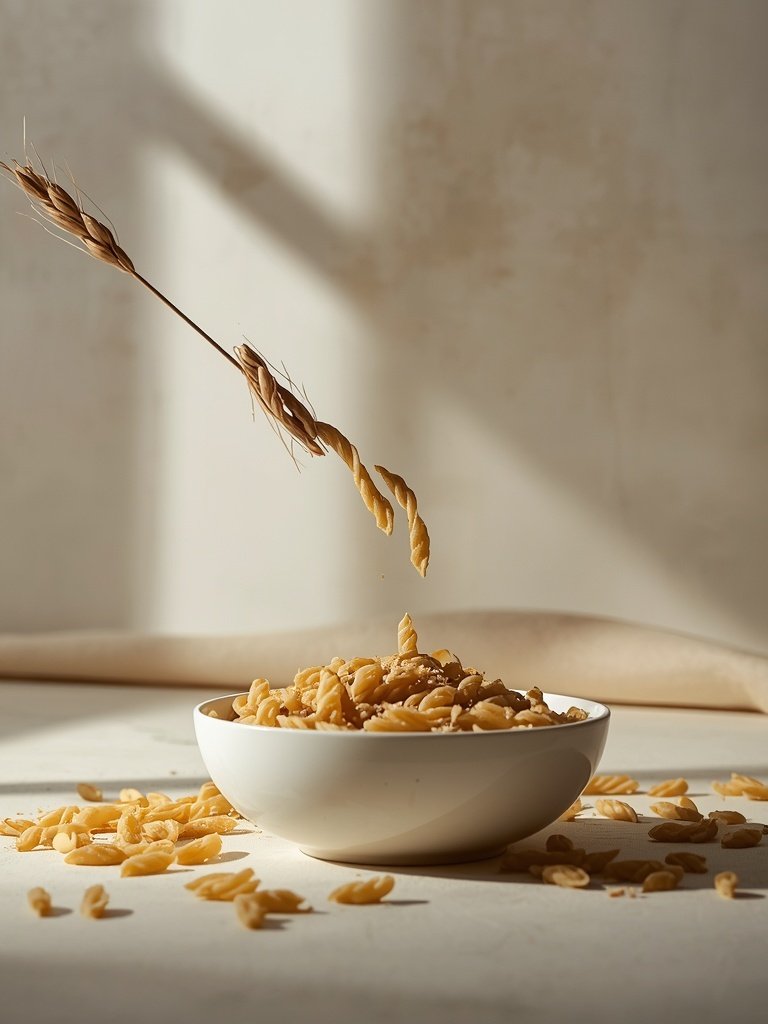
Al dente spaghetti from durum wheat – nutritional value analysis and effect on glucose metabolism

Al dente spaghetti from durum wheat – nutritional value analysis and effect on glucose metabolism

Durum wheat spaghetti (Triticum durum), boiled strictly according to traditional Italian al dente specifications, represents the gold standard of healthy carbohydrate nutrition. Genetically distinct from soft common wheat, durum wheat yields superior protein density, a compact crystalline endosperm, and abundant yellow carotenoid pigments (lutein). The tight mechanical entrapment of starch granules within an intact protein network ensures whole-grain durum spaghetti exhibits an impressively low glycemic index (GI = 35–40).

High-Protein Diet: Principles, Meal Plan, and Effects

High-Protein Diet: Principles, Meal Plan, and Effects

Protein plays a vital role in the body by supplying essential nitrogen and amino acids necessary for numerous physiological processes. Hence, it is no surprise that high-protein diets are so widely promoted in social media. According to common belief, such a dietary approach accelerates fat loss, supports muscle development, and enhances satiety, making it easier to stick to dietary discipline. For whom might this approach be unsuitable? Are high-protein diets finally the perfect solution for a lean and toned physique? The answers to these questions can be found in this article. We invite you to read!

Oxidative Diet: Benefits and Risks of the Popular High-Protein Diet

Oxidative Diet: Benefits and Risks of the Popular High-Protein Diet

A protein-based diet represents one of the most debated approaches to fat reduction in the field of nutrition. While some appreciate its effectiveness, others criticize the potential health risks that may arise during its implementation. The once-popular Dukan diet is losing ground, while a more contemporary alternative – the Oxy diet – is gaining traction. Is this an improved version of Dukan's original protein protocol, or simply another method promising rapid results with potential health implications?

Optimizing a diet for muscle mass gain – high-protein or high-fat diet? Sample meal plan

Optimizing a diet for muscle mass gain – high-protein or high-fat diet? Sample meal plan

During muscle mass building, merely increasing calorie intake and training intensity is not sufficient. Unfortunately, excessive calorie consumption can lead to unwanted effects such as excessive fat gain or lack of visible changes. Many individuals wonder which nutritional approach to choose to effectively support their physique development. The key is to tailor the diet to the body's individual needs.

High-fat and high-protein diet in epilepsy therapy: recommendations and indications

High-fat and high-protein diet in epilepsy therapy: recommendations and indications

The ketogenic diet represents a specialized high-fat and high-protein nutritional approach used for individuals with drug-resistant epilepsy (particularly in children) and certain congenital metabolic disorders. With proper medical supervision and targeted nutrient supplementation, this dietary regimen can yield substantial health benefits. The mechanism of action relies on intricate metabolic pathways, making it essential to thoroughly understand both the potential risks and advantages before implementation.

What are the characteristics of the ketogenic state? Consequences of consuming a high-fat and high-protein diet

What are the characteristics of the ketogenic state? Consequences of consuming a high-fat and high-protein diet

The existence of humans, just like any other living organism, is directly related to the process of consuming and metabolizing food. It is believed that one of the most important environmental factors that affect the human body and maintain good health is rational nutrition. People struggling with overweight or obesity often browse the internet in search of various diets that could effectively help with faster weight reduction. One such diet is the high-fat, high-protein diet.

Meals in a protein-fat diet – satiety physiology, balancing principles, and quick recipes

Meals in a protein-fat diet – satiety physiology, balancing principles, and quick recipes

The protein-fat (low-carbohydrate / ketogenic) dietary model continues to gain clinical and practical prominence due to remarkable postprandial glycemic control and prolonged satiety. This guide breaks down the metabolic mechanisms of this dietary approach, lipid quality selection, and rapid, nutrient-dense recipes.

Blue-green algae to support weight loss - dosage, effects, contraindications, recipes

Blue-green algae to support weight loss - dosage, effects, contraindications, recipes

Blue-green algae, commonly referred to as spirulina, are products derived from cyanobacteria. They are recognized globally as a dark green powder composed of numerous bioactive components. Thanks to their high protein content (55-70% dry weight) and the presence of all amino acids, blue-green algae serve as an excellent nutritional supplement.[1] Over the past few years, their popularity has been on the rise. Should one consider incorporating blue-green algae into their weight loss diet?

High-protein and high-fat breakfast – suggestions... For whom is a high-protein and high-fat breakfast suitable?

High-protein and high-fat breakfast – suggestions... For whom is a high-protein and high-fat breakfast suitable?

Breakfast indisputably constitutes the most crucial meal of the day, which supplies strength for the entire forenoon and compensates for insufficiencies that occur during sleep. It is the initial ingestion of sustenance after a minimum of eight hours of relaxation. When arranging breakfast, one should remember that it should offer a sensation of fullness and the aforementioned energy, but also not induce drowsiness, which may result from consuming excessively heavy or improperly balanced nutrients.

The Art of Influence – How Producers Shape Our Dietary Choices

The Art of Influence – How Producers Shape Our Dietary Choices

Every year, there is a growing interest from society in a healthy lifestyle and suitable nutrition. Consequently, new products that are widely perceived as healthy, such as high-protein, low-fat, and sugar-free products, are constantly appearing on store shelves. The packaging often states that they are healthy, light, or low-calorie. Although this is sometimes true, unfortunately, in many cases it is only a marketing ploy used by manufacturers to boost sales, which also applies to children's food. This practice has been termed leanwashing.

Is it possible to effectively build muscle mass on a vegetarian diet?

Is it possible to effectively build muscle mass on a vegetarian diet?

In the world of powerlifters, marathon runners and bodybuilders, there has long been a belief that only the consumption of animal protein allows for effective increases in strength, endurance and muscle mass. Plant-based protein is often considered less valuable, so many people do not include it in their daily protein intake. As a result, protein intake is very high, which does not bring any additional benefits, regardless of the type of sport practiced, the age of the athlete or the level of their abilities. Nowadays, an increasing number of trainees, both amateurs and professionals, are using a vegetarian diet and achieving excellent results, also during competitions. So, is it possible to effectively build muscle mass on a vegetarian diet?

Muscle building - current, evidence-based approach

Muscle building - current, evidence-based approach

Constructing a muscular and attractive physique is no longer just a matter of intense training and high protein consumption. Thanks to scientific disciplines such as dietetics, physiology, endocrinology, or biomechanics, the process of achieving a desired physique has become more systematic and efficient. Following specific recommendations can help you achieve your desired physical results faster. The following information contains aspects that, by taking them into account, can contribute to optimizing the process of building a muscular physique.

Sour milk combined with casein forms an ideal protein food

Sour milk combined with casein forms an ideal protein food

The primary objective of supplement manufacturers is to create products that have the optimal formulation to achieve the best outcomes. Depending on the product and its intended use, these outcomes will mean something else. Some supplements are intended to improve health and functioning of the immune system, others are responsible for burning fat, but one of the most significant areas of this industry is supporting muscle mass growth.

Is it really worth taking protein supplements?

Is it really worth taking protein supplements?

Protein supplements are intended for athletes and those with high physical activity. One can choose from a wide range of options, but whey protein is regarded as the leader in this field. It is used for both building muscle mass and during the reduction of fat tissue. In this article, we will address the topic of applying protein supplements, focusing on the benefits they offer and potential side effects.

Branched-Chain Amino Acids (BCAA) - how to use the recommended doses?

Branched-Chain Amino Acids (BCAA) - how to use the recommended doses?

Branched BCAA amino acids are an indispensable component of many high-protein products that play a critical role in the human body. The use of BCAA supplements is especially recommended for individuals who regularly put their system under stress through intense strength training. But what are BCAA exactly and what are the recommended dosages to achieve the desired results?

Share