Cancer-Preventive Diet

Sophia Williams
✓
Diets Premium Expert • 21.03.2026
✓
Scientifically reviewed by a clinical dietitian:
This article has been peer-reviewed for adherence to IŻŻ, WHO, and PTGiP clinical nutritional standards.
| Diets Premium Expert Sophia Williams | min read 8 min | Scientifically reviewed by a clinical dietitian 21.03.2026 |
Smart Voice
•Listen to the article content live
0:00
/
0:00
Key Takeaways
In Poland, mortality due to cancer ranks second, just after cardiovascular diseases, as per the GUS data from 2021. Cancers are classified as civilization diseases, and their development is significantly disrupted by environmental factors, including diet. It is estimated that 30-40% of cancer cases can be avoided by maintaining an active lifestyle, consuming a healthy diet, and maintaining proper body weight (K. Borzucka-Sitkiewicz 2019). What does it mean to follow a cancer-inhibiting diet?
Meal Plan
Want to apply these guidelines in your daily diet?
Our smart diet generator creates a tailored meal plan in 3 minutes based on the recommendations in this article.
PRO Content
PRO
This article is professional premium content (PRO) provided in its entirety.
How does a cancer evolve?
Excessive and uncontrolled growth of cells, leading to the development of cancer, is a result of damage to the DNA structure in the body. Cancer arises when the internal environment loses control over deoxyribonucleic acid replication and cell division or cell composition processes. The spread and progression of cancer disease are closely linked to the functioning of the immune system, particularly the mechanisms responsible for combating reactive oxygen forms, known as free radicals. Cancer cells are characterized by the ability for uncontrolled and spontaneous growth and migration throughout the body, developing until they lead to the death of the organism.
Cancer Incidence Statistics
Despite an increasing awareness surrounding cancer prevention and diagnosis, the number of cases remains high. In 2018, 167,446 instances and 101,391 cancer-related deaths were documented. Men most commonly develop prostate cancer (19.6%), lung cancer (16.1%), and colon cancer (7.2%), while women are most often diagnosed with breast cancer (22.5%), lung cancer (9.3%), and cervical cancer (7.2%) (U. Wojciechowska et al. 2020).
Factors contributing to the development of cancers
Cancers may arise due to genetic and environmental factors. Only a small number of cases are caused by genetic burden alone. The majority of them are the result of lifestyle, including poor dietary habits. The main risk factors for the development of cancer diseases include: smoking, unhealthy diet, and genetic predispositions (R. Beliveau, D. Gingras 2007). Tumors can also develop due to environmental pollution and ionizing radiation (J. W. Guzek 2008).
Cancer-causing substances
– Red meat and its processed products. In 2015, the International Agency for Cancer Research (IRAC) classified processed meat as carcinogenic to humans and unprocessed red meat as potentially cancer-causing (V. Bouvard et al., 2015). The production of processed meat provides a source of nitrates and nitrites, chemicals that are commonly used to preserve meat products. These compounds in the human body become nitrosoamines, which are responsible for the creation of cancers.
Excess Weight and Malignant Tumors
Excessive body weight can increase the risk of various diseases, including cancer. According to the World Health Organization (WHO), obesity and overweight account for 741% of all cancer types, including pancreatic cancer, breast cancer, cervical cancer, liver cancer, kidney cancer, thyroid cancer, prostate cancer, colon cancer, and bladder cancer (P. Jaworski, A. Binda 2015; B. Kaczmarek-Borowska, K. Synoś, K. Zielińska 2018). This process is complex and involves the increased secretion of proinflammatory substances and the decreased secretion of anti-inflammatory substances. This leads to a series of processes that result in damage to genetic material. The link between excess body weight and cancer involves the metabolism of estrogens, the insulin-like growth factor (IGF), the immune system, and oxidative stress. Adipose tissue is highly metabolically active and produces hormones with proinflammatory properties, such as TNF-α, IL-6, IGF, as well as hormones like leptin and adiponectin. Leptin is a hormone that exhibits carcinogenic activity on cells in the digestive tract, while adiponectin, which has a lower concentration in overweight individuals, inhibits the mTOR pathway involved in cancer development.
An anti-cancer disease diet - What to eat?
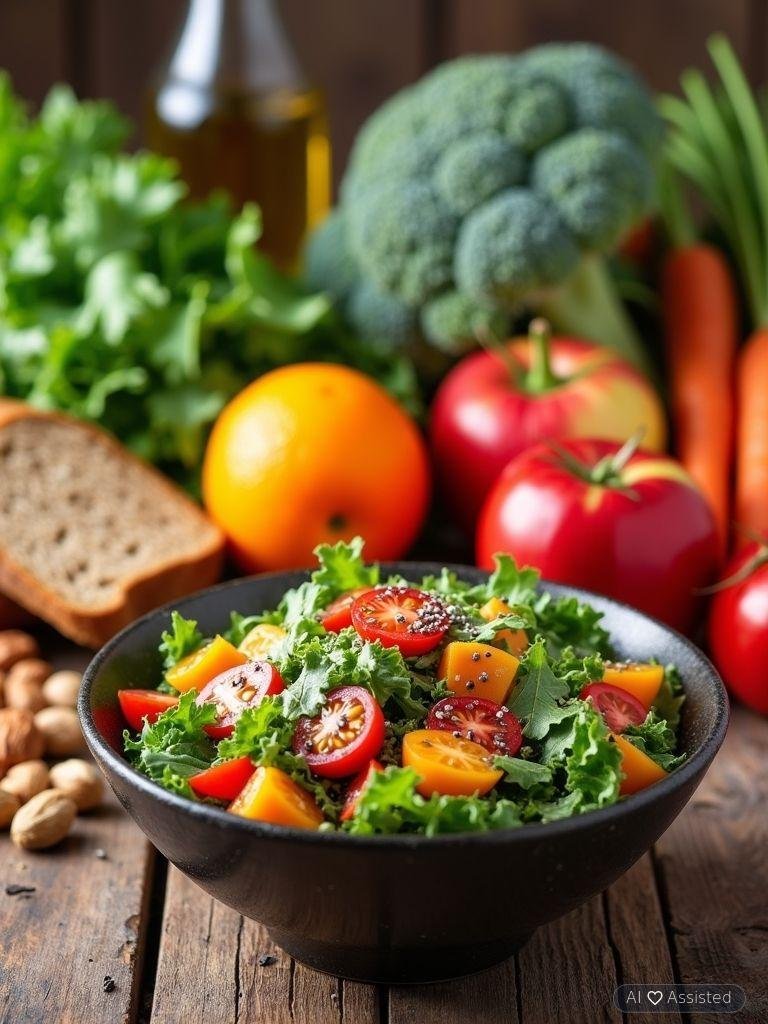
A diet rich in processed red meat, sugar, salt, and large amounts of alcohol and tobacco increases the risk of developing cancer. According to the American Academy of Sciences, after smoking, diet is the second most common cause of cancer. An anti-cancer diet aims to reduce the risk of developing cancer. It is based on unprocessed foods such as vegetables, fruits, whole grains, fatty fish, lean meats, dairy products, eggs, plant oils, nuts, seeds, and plant fats. A model of nutrition that works against cancer is the Mediterranean diet (C. La Vecchia 2007). Health-promoting properties of the Mediterranean diet result from the high consumption of vegetables, fruits, whole grains, and moderate consumption of fish and dairy products, as well as very low consumption of red meat. In the Mediterranean diet, small amounts of red wine are allowed, which is a source of resveratrol with strong antioxidant properties. The main source of fat in the Mediterranean diet is olive oil, which provides unsaturated fatty acids. The Mediterranean diet also has anti-inflammatory properties and is characterized by a favorable ratio of omega-6 to omega-3 fatty acids of 2:1. It not only reduces inflammation, but also contributes to the reduction of damage to genetic material (DNA) (M. Ch. Mentella et al. 2019). C. Bosetti, C. Pelucchi, C. Vecchia have shown that the Mediterranean diet reduces the risk of colon cancer, prostate cancer, and endometrial cancer.
The diet combating cancer - fruits and vegetables
A high intake of fruits and vegetables reduces the risk of cancerous mutations. Meta-analysis by F. Turati et al. The World Health Organization has shown that high consumption of vegetables and fruits has a positive effect on the risk for many cancers, especially changes in the digestive tract. M. S. Farvid and al. Show that consumption of yellow and orange vegetables in particular and onion vegetables may decrease risk of developing breast cancer. World Health Organisation recommends consuming at least 400 grams of fruits and vegetables daily.
The anti-cancer diet - a plant-based substance known as fiber
Food fiber has an impact on increasing the mass of feces, accelerating the peristaltic movements of the intestines, and removing toxic substances from the body. It is also a source of nourishment for the gut microflora. As a result of fiber fermentation, short-chain fatty acids are produced, including butyric acid. Butyric acid plays a role in inhibiting the process of cancer cell differentiation and leads to their apoptosis (B. Kaczmarek-Borowska 2018). D. Aune and colleagues proved that consuming at least 10 grams of fiber per day, which comes from whole grain products, reduces the risk of developing colon cancer by 10%. The World Health Organization recommends consuming food fiber in an amount of at least 25 grams per day.
Cancer development and physical exertion
Engaging in regular physical activities helps to decrease the likelihood of developing cancer diseases. By participating in daily exercises, one can maintain a normal body weight, which positively affects blood sugar levels, insulin, and sex hormones, reduces inflammation, and enhances the function of the immune system. At least 30 minutes of moderate physical activity per day or at least 150 minutes per week contributes to reducing the risk of cancer by 4% compared to less frequent activities (according to K. Borzucka-Sitkiewicz, 2019). There is no single product that can guarantee protection against the development of cancer. The recommended diet should mainly consist of minimally processed products, rich in vegetables and fruits, and whole-grain products. It is advisable to limit the consumption of red meat and its processed products and avoid indulgences.

Sophia Williams
✓Diets Premium Expert
Diets Premium team expert. Specializes in nutrition plans, strength sports, and training plans.
View Profile →