Key Takeaways
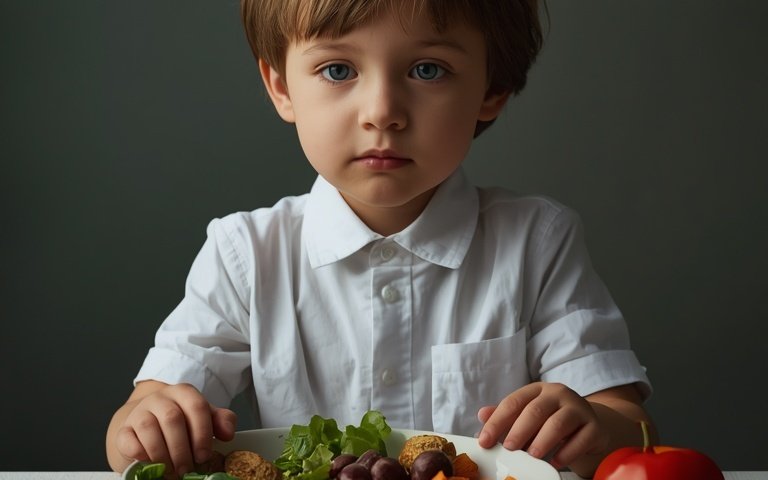
The rising popularity of alternative dietary patterns has prompted many families to consider whether a meat-free lifestyle is appropriate for growing children. While vegetarianism in adults rarely sparks debate today, applying plant-based diets in pediatric nutrition is still frequently viewed with caution. However, accumulating scientific evidence and nutritional authorities affirm that well-structured vegetarian variants, particularly lacto-ovo-vegetarianism and lacto-vegetarianism, can be safe for children and may help reduce the long-term risk of civilization-related conditions such as overweight, insulin resistance, arterial hypertension, and certain malignancies.
From a physiological perspective, a carefully balanced pediatric vegetarian diet that avoids extreme restrictions offers distinct metabolic advantages alongside specific nutritional challenges. A generous intake of alkali-rich fruits and vegetables supports healthy acid-base homeostasis in the developing body, while a higher proportion of polyunsaturated fatty acids contributes to a favorable lipid profile. Conversely, excluding meat and animal tissues introduces the risk of inadequate complete protein intake, requiring careful evaluation before transitioning a child away from a traditional omnivorous diet.
In everyday nutritional practice, successful implementation relies heavily on parental knowledge, commitment, and thoughtful meal planning. To mitigate the risk of protein shortfalls, caregivers should purposefully combine diverse plant-based foods with complementary amino acid profiles across daily meals. Consulting with pediatricians and registered dietetics professionals ensures that the child's evolving nutritional requirements are safely met throughout every stage of growth and development.
There has been a significant increase in the popularity of alternative diets, which are comparable to traditional methods. Currently, the most commonly applied non-conventional diet is vegetarianism and its various variants. Although the application of vegetarianism in adults does not raise major controversies, its implementation in children's diet is still considered dangerous and harmful. However, more and more scientific studies suggest that the vegetarian diet is safe and can even bring health benefits, resulting from giving up meat consumption.
01 / 03
Plant-based nutritional principles – meat-free dietary patterns and their variations
The Institute of Food and Nutrition in Poland affirms that properly structured vegetarian dietary patterns—particularly lacto-ovo-vegetarianism and lacto-vegetarianism—yield measurable health benefits while significantly reducing the risk of developing civilization-related diseases, including overweight and obesity, insulin resistance leading to type 2 diabetes, arterial hypertension, and certain malignant neoplasms. Scientific evidence indicates that individuals adhering to these dietary models demonstrate an increased intake of foods with well-documented positive effects on human health—such as fresh and processed fruits, leguminous vegetables and root crops, whole-grain cereals, oilseeds, and nuts—while simultaneously limiting the consumption of detrimental components like saturated fats and animal-derived cholesterol. Nutrition experts emphasize that both lacto-ovo-vegetarian and lacto-vegetarian diets—when adequately balanced to meet requirements for complete protein, iron, vitamin B12, and calcium—can serve as nutritionally complete models for all age groups, including infants post-breastfeeding, growing children, and adolescents. Although the theoretical feasibility of implementing such diets in institutional catering (e.g., schools) exists, practical challenges arise due to the logistical complexities of preparing separate meals for a relatively small cohort of individuals following these regimens.
The motivations underlying the adoption of a vegetarian diet are diverse and multidimensional: for some, the decision stems from religious or philosophical convictions (e.g., the principle of *ahimsa* in Hinduism or Jainism), while for others, ethical considerations—such as animal rights advocacy or concerns about the welfare of farmed animals—take precedence. Increasingly, ecological factors also play a pivotal role, as awareness grows regarding the detrimental impact of intensive industrial animal farming on climate change, soil degradation, and water resource depletion. In the case of children, the transition to a vegetarian diet is almost invariably initiated by the dietary preferences and worldview of their legal guardians.
Within the scientific literature, several core variants of vegetarianism are distinguished, each characterized by varying degrees of restrictiveness: **lacto-ovo-vegetarianism** (excludes all meat—including poultry, fish, and seafood—while permitting eggs, dairy products, and honey), **lacto-vegetarianism** (eliminates meat and meat derivatives as well as fish but allows dairy consumption), and **ovo-vegetarianism** (permits eggs but excludes all other animal-derived products). More extreme iterations exist, the adoption of which—particularly among children and adolescents during periods of rapid growth—carries a heightened risk of nutritional deficiencies (e.g., complete protein, heme iron, vitamin B12, zinc, or long-chain omega-3 fatty acids): **veganism** (complete abstention from all animal-derived foods, including dairy, eggs, and honey), **raw foodism (vitarianism)** (a diet composed exclusively of unprocessed plant-based foods such as fruits, vegetables, sprouts, nuts, and seeds, with no heating above 40–48°C), and **fruitarianism** (the most restrictive form, limited to the consumption of fruits, nuts, and seeds that can be harvested without harming the parent plant). Consult detailed guidelines on each variant of vegetarianism to avoid dietary pitfalls and ensure nutritional adequacy!
Want to apply these guidelines in your daily diet?
Our smart diet generator creates a tailored meal plan in 3 minutes based on the recommendations in this article.