Dorada – Nutritional Value & Recipes

Oliwia Kaczmarek
2026-03-16
6 min. read

1 / 1
10
views
1 zdjęcie
The majority of individuals are conscious of the fact that fish, those caught from good sources, preferably in cold water, are exceptionally healthy. However, this does not impact the frequency of their consumption among Poles, who still consume a small amount of fish, and sometimes none at all. One species that is relatively unknown is the Dorade. It is characterized by very tender meat and a low calorie count! Read this article to learn more about its properties.
The Gilt-head Bream: Mediterranean Splendor and Its Conservation Challenges
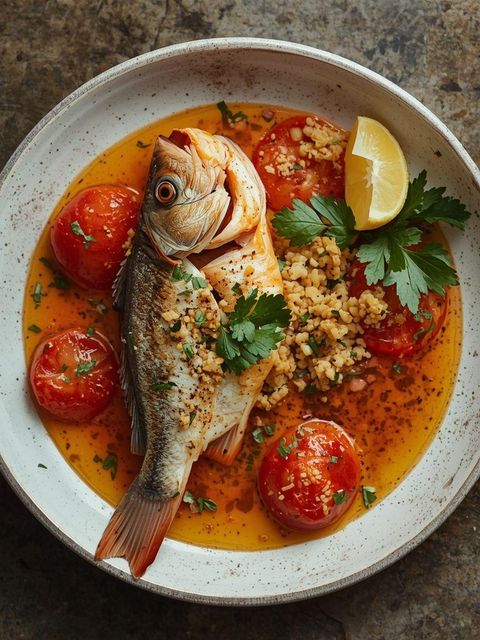
The gilt-head bream (*Sparus aurata*), commonly referred to as dorada, is a distinguished marine fish indigenous to the Mediterranean basin and the eastern coastal waters of the Atlantic Ocean, where it thrives in rocky substrata and expansive seagrass meadows. Its diet is predominantly composed of small crustaceans, bivalve molluscs, and other benthic invertebrates. Commercial aquaculture of this species is most concentrated in Greece, Croatia, and Spain—nations where it has long been revered as the "Queen of the Seas," a title derived from its striking appearance: a silvery head adorned with a golden band between the eyes, evocative of a regal crown. In ancient Greek mythology, the gilt-head bream was sacred to Aphrodite, the goddess of love and beauty, further emphasizing its symbolic significance. Over recent decades, this fish has gained culinary prominence across Northern Europe, including Poland; however, its wild populations face severe threats from overfishing and habitat degradation. Conservation experts advocate for consuming specimens sourced from sustainable fisheries in the Bay of Biscay or the central Mediterranean, where stocks remain relatively robust, in contrast to the critically depleted populations in the northeastern Atlantic, where its numbers have plummeted alarmingly.
You have started reading a PRO article
You can preview the first chapter. To read the complete article and unlock all content, upgrade to a PRO account.