PRO
8 min read
Unfavorable Aspects of Posture – Spinal Deformities
1 photo
557
Smart Voice
AI
0:00
0:00
Listen to the article content live
Table of Contents 6
PRO Content
PRO
This article is professional premium content (PRO) provided in its entirety.
The next category of postural disorders that I have focused on are spinal deformities. These conditions are often regarded as minor curvatures in the spine, but in this text, I would like to provide an expanded perspective on this disease entity, emphasizing its multidimensional nature and methods of managing it.
01 / 06
Spinal scoliosis: A comprehensive definition, causative factors, and the repercussions of neglected therapeutic intervention
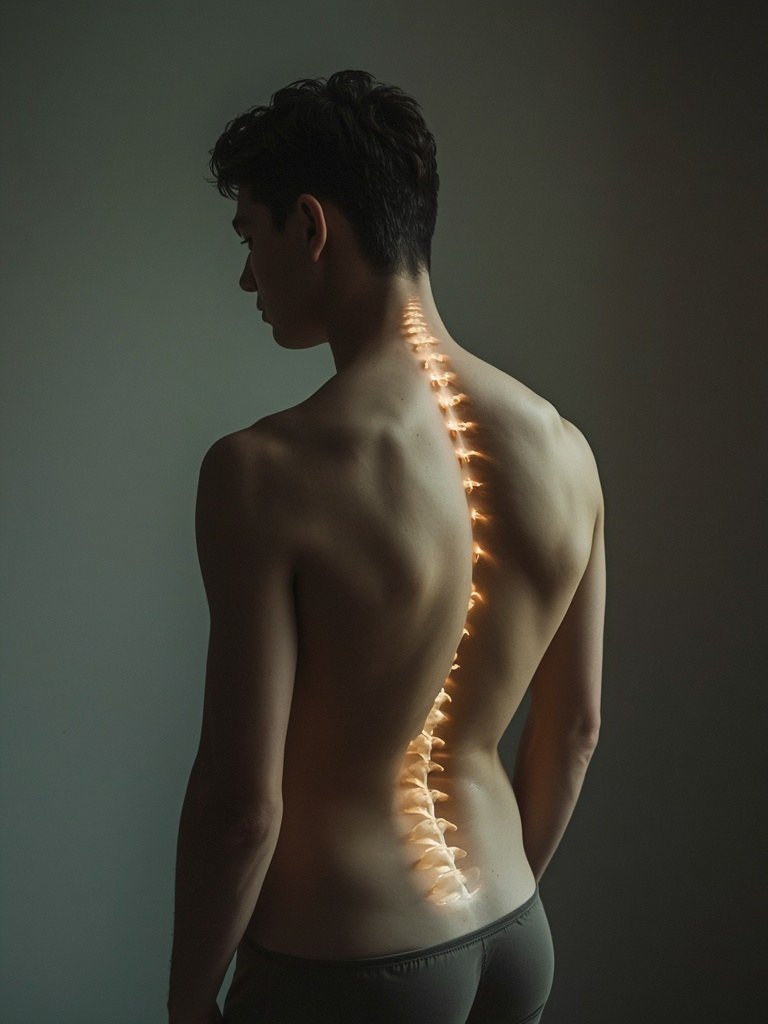
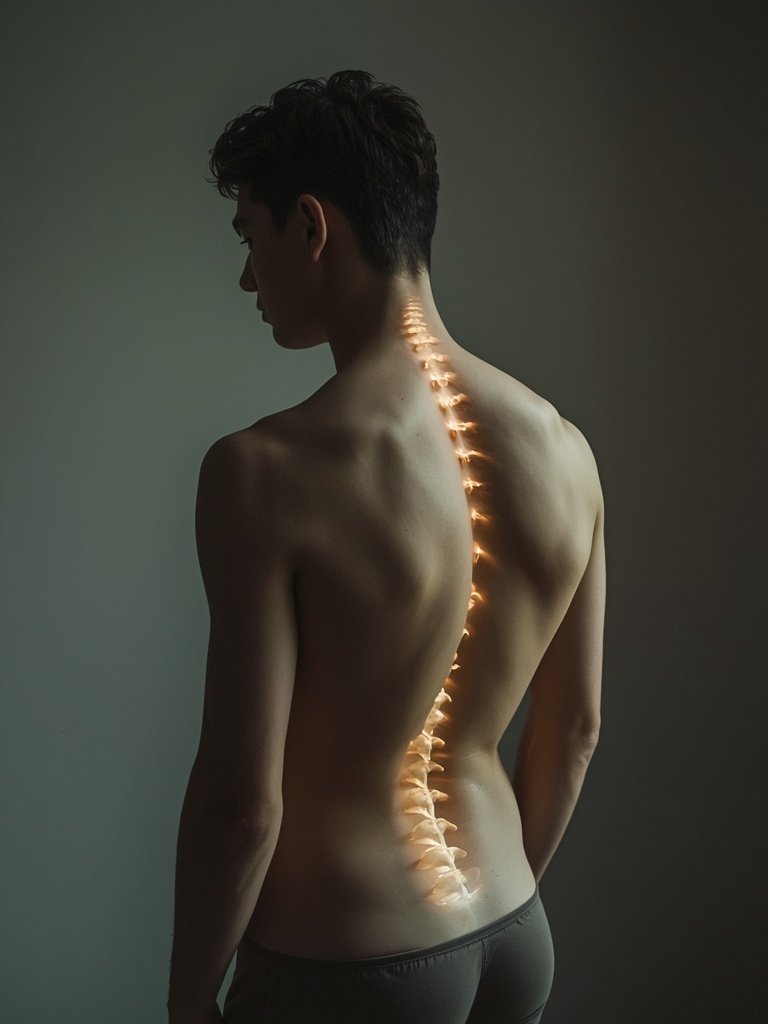
The term *scoliosis* encompasses a complex structural disorder of the spine, the precise characterization of which necessitates a synthesis of multiple specialized definitions. Within this framework, scoliosis is conceptualized as a **three-dimensional deformity of the spinal axis**, primarily manifesting as a **lateral deviation** from its physiological alignment across three mutually perpendicular planes: the **coronal (frontal), sagittal (arrow-like), and axial (transverse) planes**. The defining diagnostic criterion here is the presence of an **actual, structural lateral curvature**—distinct from merely functional or apparent deviations. It is critical to emphasize that the **vast majority of cases emerge during skeletal growth phases, namely childhood and adolescence**, rendering early detection and intervention paramount. Left untreated or inadequately rehabilitated, scoliosis may progress to **permanent morphological alterations**, which in adulthood often present as **chronic pain, impaired visceral function (e.g., pulmonary or cardiac complications), and severe limitations in physical mobility**—consequences that frequently demand comprehensive, multispecialty medical management.
02 / 06
Scoliosis etiology: A comprehensive examination of causative and biomechanical determinants in lateral spinal curvature progression
The pathophysiological underpinnings of scoliosis development remain a subject of extensive debate within medical circles, characterized by their multifaceted and heterogeneous nature. Orthopedic and neurological specialists present divergent theoretical frameworks regarding the origins of lateral spinal deviations. One school of thought emphasizes structural abnormalities within the passive support components of the axial skeleton—specifically malformations in vertebral bodies, intervertebral discs, or ligamentous structures—which may constitute the so-called "primary scoliotic nucleus." Conversely, an alternative paradigm attributes primary significance to neuromuscular imbalances, where disrupted muscle tone—frequently secondary to central or peripheral nervous system pathologies—initiates and sustains the deformative process. Regardless of the adopted explanatory model, there exists a consensus regarding the dualistic nature of etiopathogenesis: an inciting (etiological) factor—highly variable and often elusive—triggers the pathological cascade, while a universal biomechanical factor, common to all scoliotic phenotypes, governs disease progression in accordance with physical growth principles. Of particular note is the predominance of idiopathic scoliosis, encompassing approximately 80% of cases and defined by the absence of a discernible primary cause, posing substantial diagnostic and therapeutic challenges.
03 / 06
Comprehensive Classification of Scoliosis Based on Diagnostic and Therapeutic Criteria
Scoliosis constitutes a heterogeneous group of structural-functional spinal disorders whose systematic categorization necessitates the consideration of multidimensional criteria. The following classification presents a comprehensive division of this pathology based on etiopathogenesis, anatomical localization, morphological characteristics, and the dynamics of changes. Analysis of these parameters enables precise assignment of individual cases to appropriate therapeutic categories, thereby forming the foundation for developing personalized treatment strategies.
04 / 06
Clinical and Diagnostic Symptoms of Scoliosis: Identifying Three-Dimensional Spinal Deformities
Scoliosis represents a group of musculoskeletal disorders that are notoriously difficult to detect due to the absence of typical inflammatory markers such as fever or localized redness. Nevertheless, despite its "insidious" nature, a constellation of distinctive symptoms enables its identification. Given its three-dimensional deformity—encompassing the coronal plane (asymmetric deviation of the body’s axis), sagittal plane (alterations in physiological curvatures), and transverse plane (vertebral rotation with displacement of vertebral bodies and spinous processes)—the symptoms manifest multidimensionally. In the thoracic region, the deformity presents as a rib hump, whereas in the lumbar region, it forms a so-called muscular roll. Muscular asymmetry (weakness and stretching on the concave side vs. excessive tension and contractures on the convex side) alongside visible disruptions in anatomical symmetry (e.g., uneven scapular positioning, pelvic alignment, or waist triangles) serve as critical diagnostic indicators. Furthermore, vertebral torsion—a phenomenon wherein incompletely ossified vertebrae undergo lateral displacement and deformation due to resistance from surrounding soft tissues—compounds the complexity of the clinical presentation. Although scoliosis primarily affects the spine, it can lead to multisystem complications, including respiratory impairments (due to pulmonary compression), circulatory dysfunctions (right ventricular hypertrophy), and neurological symptoms (nerve root compression with associated neuralgia).
05 / 06
Medical diagnosis of spinal curvature disorders: measurement techniques and methodological approaches
Beyond the fundamental visual assessment of bodily posture and the symmetry of anatomical structures, a range of specialized techniques exists for the precise diagnosis of scoliosis. Among the most widely adopted and globally recognized methods is the **Cobb angle measurement**, a geometric construction protocol based on radiographic imaging of the spine. This approach involves drawing two parallel lines: one along the superior endplate of the **upper end vertebra** (marking the initiation of the curvature) and another along the inferior endplate of the **lower end vertebra** (denoting the termination of the deformity). Perpendicular lines are then extended from these baselines, intersecting outside the curved segment to form an angle that quantifies the degree of spinal deviation in degrees. In clinical practice, however, the **supplementary angle to 180 degrees** (referred to as the upper or lower complementary angle) is typically measured instead, as its numerical value increases in direct proportion to the severity of the deformity. Another extensively utilized method is **radiographic imaging via X-ray (RTG)**, which not only provides definitive data on the magnitude of curvature but also facilitates the detection of associated phenomena such as vertebral rotation and axial torsion. Conventionally, two projections are obtained—one in the **weight-bearing (standing) position** and another in the **non-weight-bearing (supine) position**. This dual approach enables the evaluation of **dynamic correctability of the curvature**, reflecting the spine’s capacity for partial realignment in response to postural changes, thereby indicating tissue flexibility and the potential reversibility of the deformity upon elimination of gravitational forces.
06 / 06
Therapeutic and rehabilitative management of lateral spinal curvatures (scoliosis)
In the context of scoliosis diagnosis and management, the timeliness of intervention is of paramount importance—earlier detection significantly increases the likelihood of halting progression or even achieving complete reversal of the spinal deformity. A fundamental tenet holds that during the phase of active skeletal growth, when the musculoskeletal system retains its adaptive capacity for structural remodeling, systematic and targeted rehabilitation must be implemented to correct the existing curvature. The cornerstone of therapeutic intervention should be specialized corrective gymnastics, grounded in well-defined principles: these include the selective stretching of muscles located on the concave side of the curvature paired with targeted strengthening of muscular structures in convex regions, restoration of physiological spinal curvatures, derotational maneuvers to reduce vertebral torsion, preservation or restoration of full spinal mobility across all planes of movement, cultivation of habitual maintenance of proper posture during daily activities, activation of the musculoskeletal, respiratory, and circulatory systems to enhance overall physical fitness, development of adequate muscular strength—particularly in postural muscles (with emphasis on the abdominal musculature)—maintenance or improvement of joint mobility, and precise torso positioning through exercises designed to centralize body alignment. Critical to this process is the proper alignment of the head, neck, and torso relative to a correctly positioned pelvis. A key component of rehabilitation involves asymmetric exercises, which aim to induce spinal bending in the direction opposite to the existing curvature. During their execution, strict adherence to symmetrical body positioning in starting postures is essential to prevent exacerbation of compensatory curvatures. Absolute contraindications include all antigravity activities, elongation exercises, and positions that promote excessive spinal lengthening, such as hanging exercises. An alternative and widely adopted therapeutic approach involves the use of orthopedic bracing in the form of corrective corsets. Their primary function is to stabilize terminal points (pelvis and head) as well as the entire axial skeleton. Additionally, corsets compel the patient to maintain proper posture, facilitate curvature correction, and prevent progression. Bracing is indicated in cases of incomplete skeletal maturity and progressive scoliosis with Cobb angles ranging from 25° to 45°. For lesser curvatures (below 25°), corset use is justified only when rapid progression exceeding 5° over a six-month period is documented.
Meal Plan
Want to apply these guidelines in your daily diet?
Our smart diet generator creates a tailored meal plan in 3 minutes based on the recommendations in this article.
Tags

Scientifically reviewed by a clinical dietitian
• 25.09.2026
Julia Wójcik
Diets Premium Expert
Diets Premium team expert. Specializes in nutrition plans, strength sports, and training plans.
USDA FoodData Central
EFSA
PubMed Clinical Guidelines