Complete Guide to Naturally Gluten-Free Grains, Flours and Baking Binders
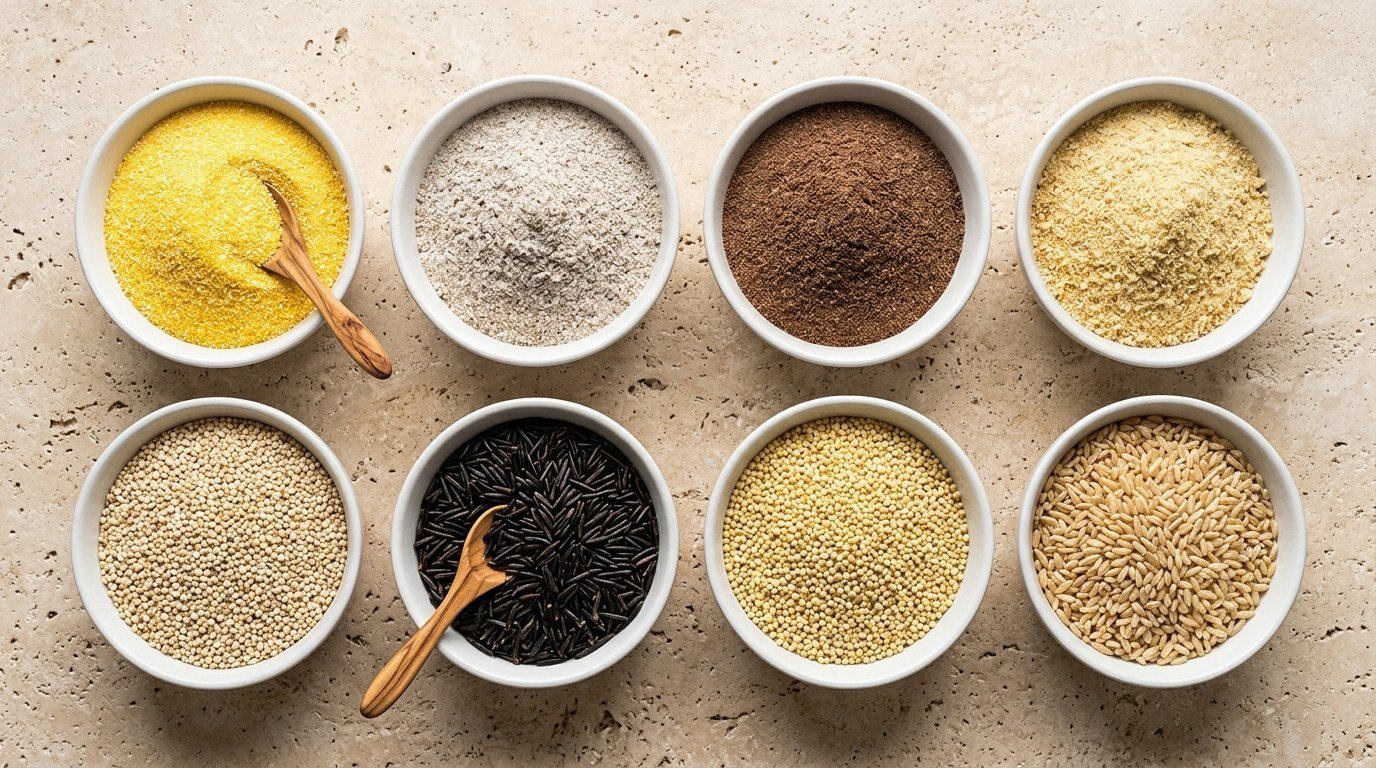
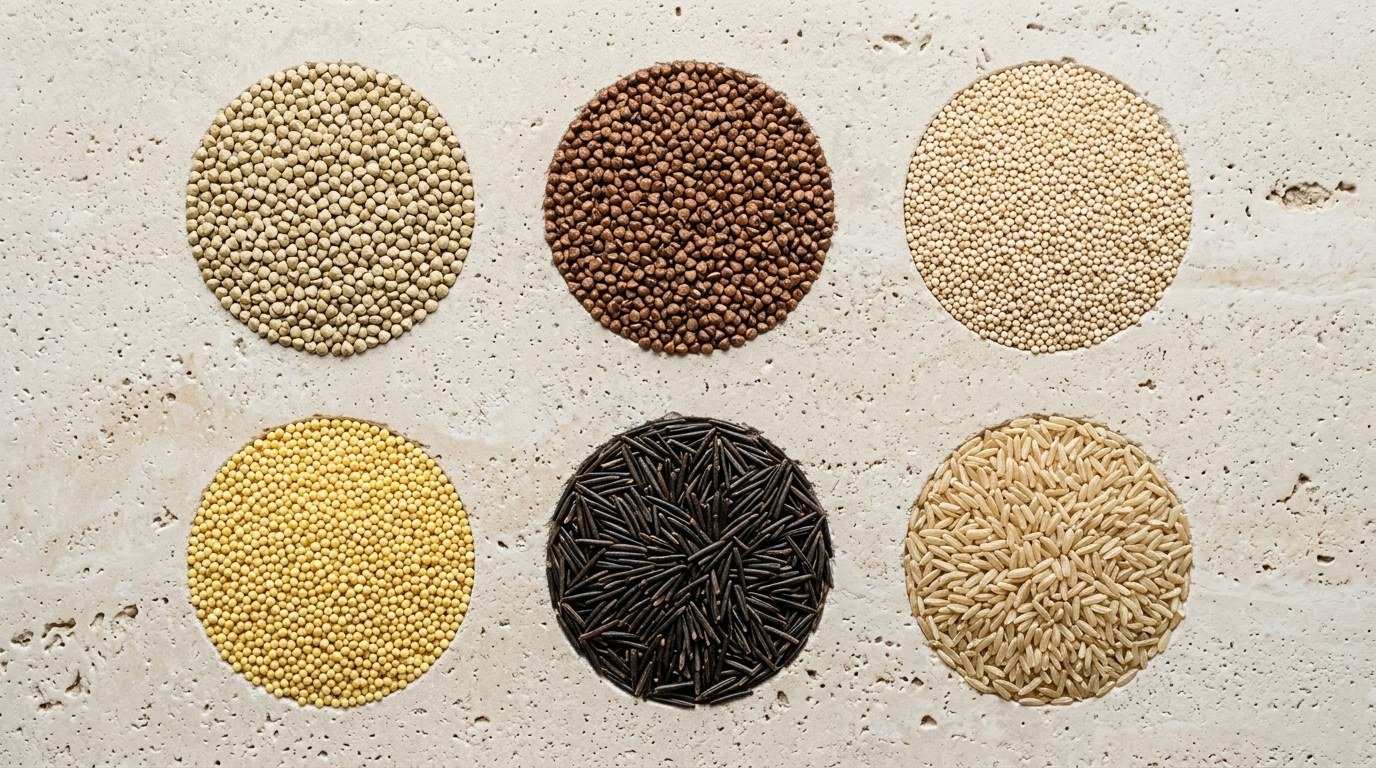
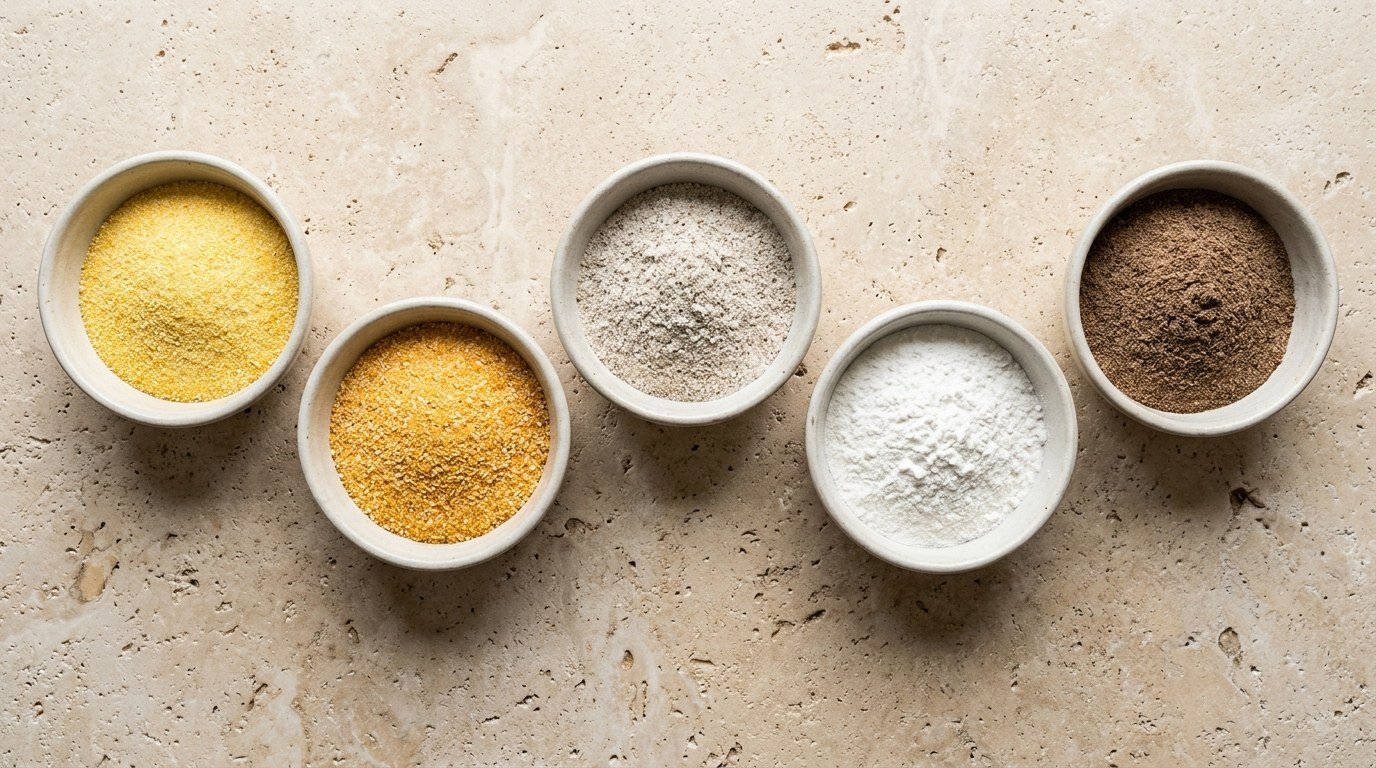
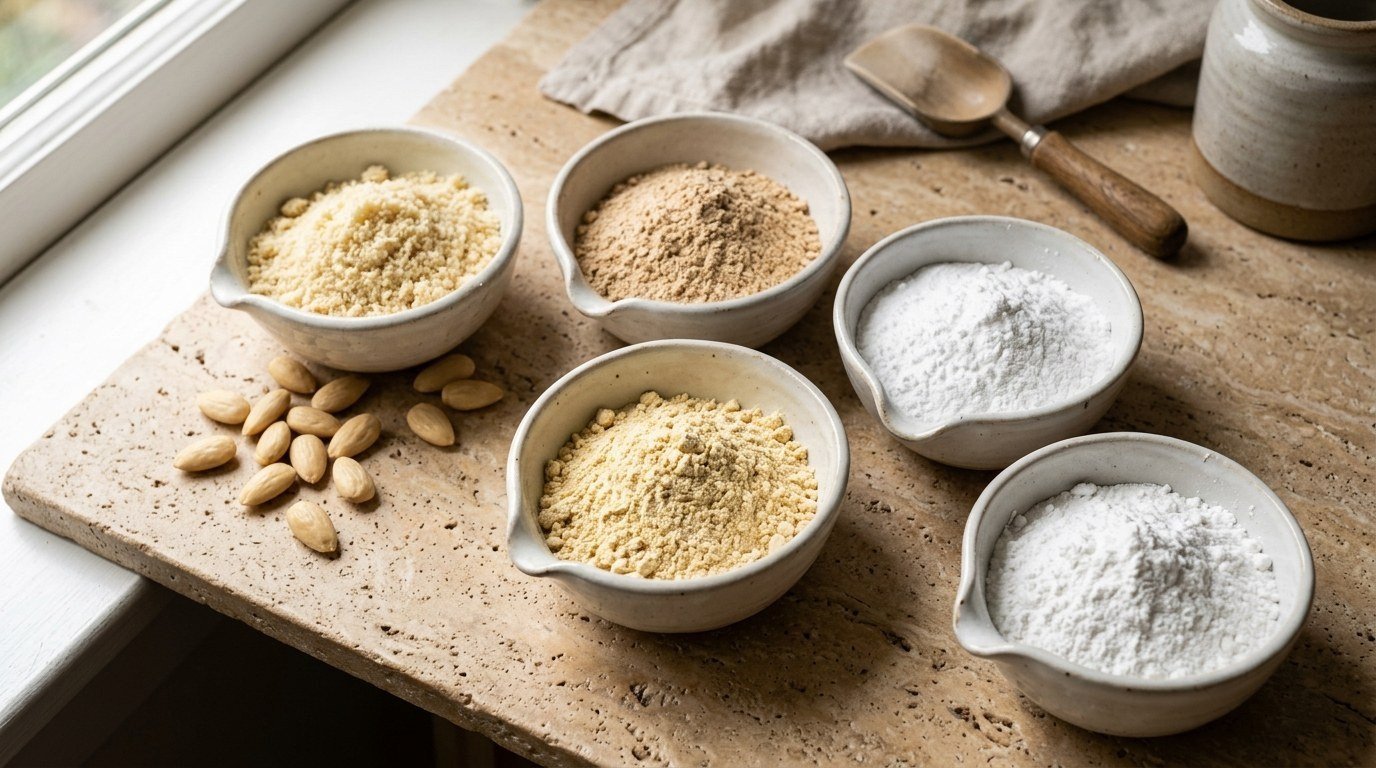
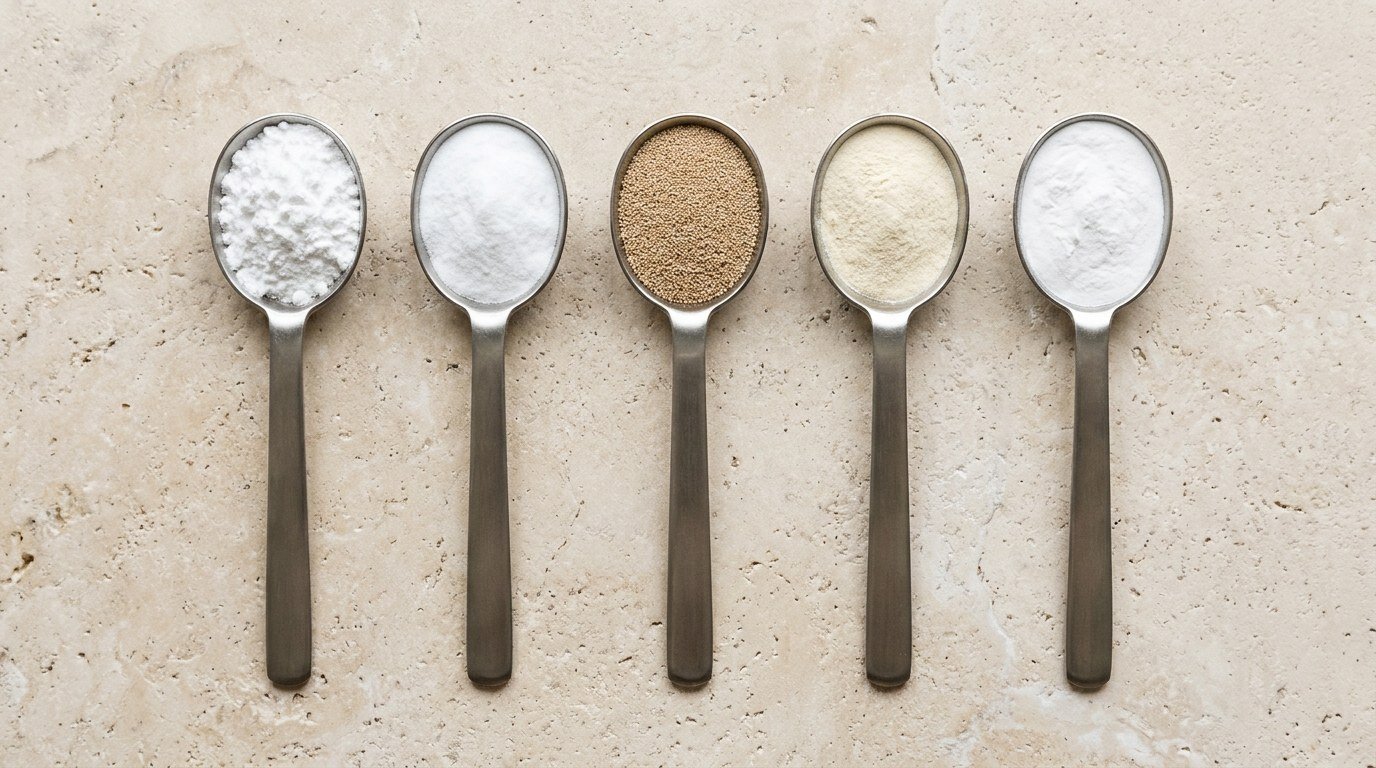
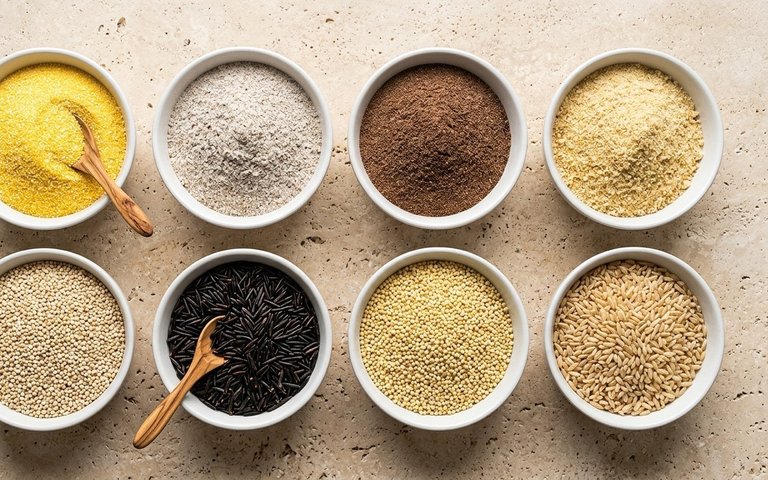
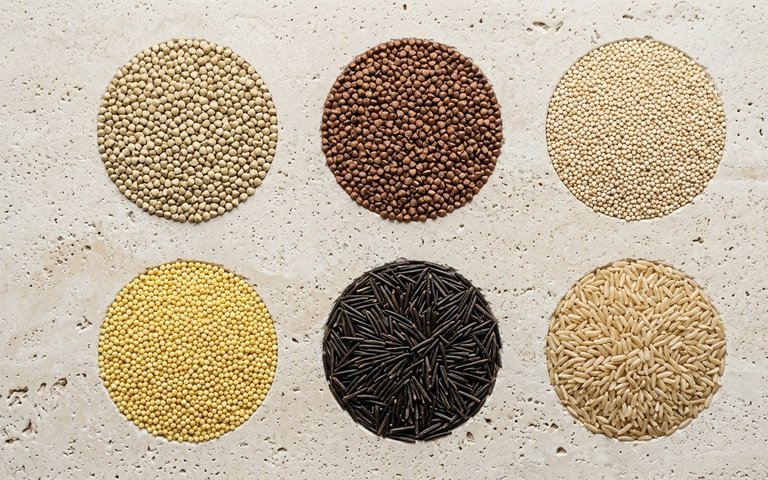
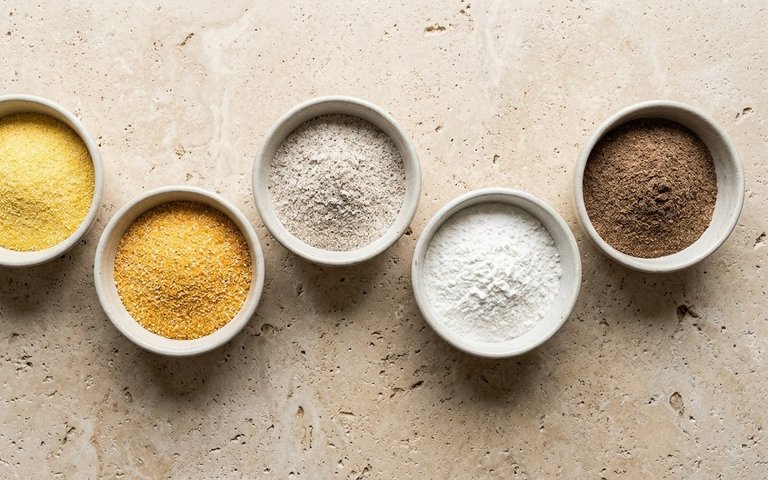
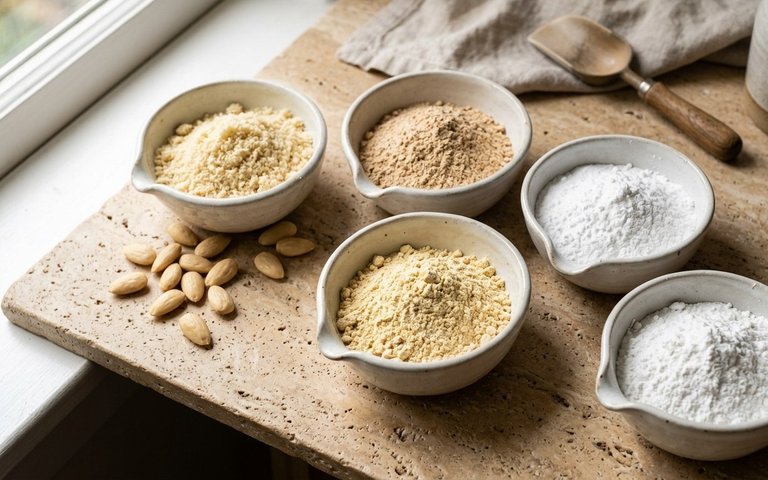
Table of Contents 4
Medical & Editorial Disclaimer (§3 Terms): This article is for informational and educational purposes only, does not constitute medical advice, diagnosis, or treatment, and is used at your own risk. Consult a qualified physician for medical conditions.
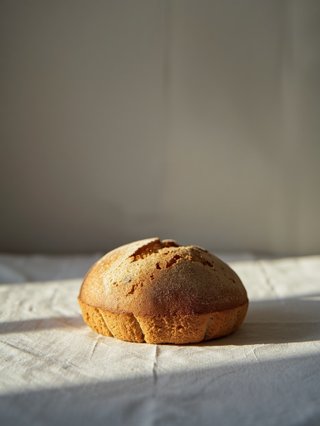
Without wheat gluten, batters lose the stretchy protein network that traps air and moisture. Relying on a single flour like white rice flour often produces crumbly loaves — yet blending whole-grain flours, starches, and natural plant binders creates remarkably tender bread and pastry.
Use this reference guide to choose gluten-free grains, pair base flours with starches, and harness psyllium husk, ground flaxseed, or xanthan gum with confidence.
Nine Nutrient-Rich Naturally Gluten-Free Grains and Pseudocereals
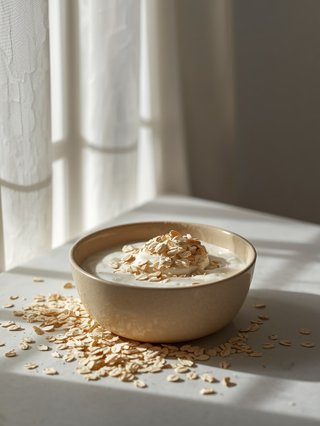
Gluten-free staples extend far beyond white rice and corn. Rotate across buckwheat (rich in magnesium and rutin), quinoa (complete amino acid profile — rinse well before cooking), millet (mild and gentle on digestion), amaranth (notable calcium and iron), teff (subtle nutty warmth), sorghum, brown or wild rice, and certified oats.
Food-science reviews show that incorporating pseudocereals substantially boosts fiber, iron, and antioxidant intake compared with refined-starch substitutes (Alvarez-Jubete et al., Trends Food Sci Technol).
The Flour-Blending Principle: Why a 60/40 Ratio Shines
To balance nutrition with airy texture, blend two complementary categories in roughly a 60% whole-grain/protein flour to 40% light starch ratio:
- Base flours (60%): brown rice, millet, sorghum, certified oat, teff, plus 15–30% buckwheat, chickpea, or almond flour for character and moisture.
- Light starches (40%): tapioca starch (chewy bounce and crisp crust), potato starch (moist sponge crumb), or arrowroot powder.
Natural Baking Binders: Psyllium Husk, Flax, Chia and Xanthan Gum
Psyllium husk (whole or finely powdered) is the biggest game-changer in gluten-free bread baking. Hydrated in water, it builds a flexible, fiber-rich gel that lets you shape free-form loaves and keeps slices soft for days — roughly 15–20 g per 500 g of flour for yeast or sourdough bread.
For muffins, crepes, and cakes, use ground flaxseed or chia gel (1 tbsp whisked into 3 tbsp warm water) or a light pinch of xanthan or guar gum (about 1/2 tsp per 250 g flour, avoiding excess so crumb stays tender).
Leavening, Batter Resting and Keeping Loaves Fresh — References
Verify that baking powder is labeled gluten-free (some blends use wheat starch as an anti-caking filler). Rest gluten-free batters 15–20 minutes so flours hydrate smoothly without grit, wait until loaves cool completely before slicing, and freeze extra slices immediately for toast-ready freshness.
- Alvarez-Jubete L, Arendt EK, Gallagher E. Nutritive Value of Pseudocereals. Trends Food Sci Technol, 2010.
- Capriles VD, Arêas JAG. Novel Approaches in Gluten-Free Breadmaking. Compr Rev Food Sci Food Saf, 2014.
- European Coeliac Societies (AOECS) & DGE: Culinary Grain Nutrition Portal.
Want to apply these guidelines in your daily diet?
Our smart diet generator creates a tailored meal plan in 3 minutes based on the recommendations in this article.
Tags

Oliwia Kaczmarek
• 25.11.2026Diets Premium Expert
Diets Premium team expert. Specializes in nutrition plans, strength sports, and training plans.