Coconut Oil – Is It Edible? Pros and Cons
Smart Voice
AITable of Contents 4
Coconut oil: Comprehensive analysis of composition, properties, and nutritional value from a scientific standpoint
Coconut oil has its advantages
The health hazards of coconut oil: Scientific evidence of its cardiovascular and metabolic drawbacks
Comprehensive overview of coconut oil’s properties and consumption guidelines from a health perspective
Fats play an irreplaceable role in human physiology, serving as essential sources of energy, thermal insulation, and structural components of cellular membranes. Among the wide array of available fat sources, coconut oil has gained considerable popularity in recent years, frequently marketed as a "healthy" or even "miraculous" product. However, scientific scrutiny reveals that its regular consumption—even in moderate amounts—should be approached with caution, particularly by individuals predisposed to dyslipidemia or cardiovascular diseases.
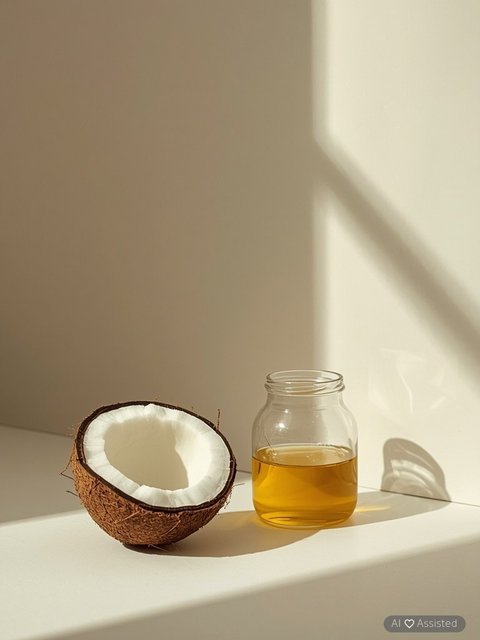
Clinical research confirms that coconut oil contains approximately 82–87% saturated fatty acids, making it one of the most highly saturated plant-based fats commonly used. While its high lauric acid content (around 45–50%) may contribute to elevated levels of high-density lipoproteins (HDL, or "good cholesterol"), it simultaneously increases low-density lipoproteins (LDL, or "bad cholesterol"), which, over time, may elevate the risk of atherosclerosis. Consequently, despite certain beneficial attributes, this product should not be regarded as a universal dietary solution.
In accordance with guidelines from the World Health Organization (WHO) and the European Society of Cardiology (ESC), the intake of saturated fatty acids should be limited to a maximum of 10% of total daily energy intake—reduced to 7% for individuals at elevated cardiovascular risk. Practically, this means that even healthy individuals should consume coconut oil only occasionally, whereas patients with hypercholesterolemia or other metabolic disorders should eliminate it entirely, opting instead for fats rich in monounsaturated (e.g., olive oil) or polyunsaturated fatty acids (e.g., flaxseed oil, nuts).
It is also critical to emphasize that marketing claims portraying coconut oil as possessing "exceptional weight-loss" or "antibacterial" properties lack sufficient validation in rigorous scientific studies. While certain components, such as lauric acid, demonstrate antimicrobial effects *in vitro*, their *in vivo* efficacy remains unproven or negligible. Therefore, rather than relying on unsubstantiated assertions, it is advisable to adhere to evidence-based recommendations (EBM – *Evidence-Based Medicine*), which unequivocally favor unsaturated fats in the prevention of chronic diseases.
In summary, although coconut oil may serve as a culinary novelty for healthy individuals, its excessive or routine consumption carries tangible metabolic risks. The decision to incorporate it into one’s diet should always be made in consultation with a dietitian or physician, especially in cases of pre-existing cardiovascular conditions. Alternative fat sources, such as extra virgin olive oil or cold-pressed rapeseed oil, remain the safer and better-documented choices for long-term health maintenance.
Want to apply these guidelines in your daily diet?
Our smart diet generator creates a tailored meal plan in 3 minutes based on the recommendations in this article.

mgr Casal S. et al., Olive oil stability under deep-frying conditions, „Food and Chemical Toxicology” 2010, 48(10), 2972–2979. de la Rubia Ortí J.E. et al., Influencia del aceite de coco en enfermos de alzhéimer a nivel cognitivo [How does coconut oil affect cognitive performance in alzheimer patients?], „Nutrición Hospitalaria” 2017, 34(2), 352–356. Eyres L. et al., Coconut oil consumption and cardiovascular risk factors in humans, „Nutrition Reviews” 2016, 74(4), 267–280. Food Data Central – USDA, https://fdc.nal.usda.gov/index.html (22.11.2021). Law K.S. et al., The effects of virgin coconut oil (VCO) as supplementation on quality of life (QOL) among breast cancer patients, „Lipids in Health and Disease: 2014, 13(1), 1–7. Mess E., Ornat M., Sławomirska R., Rola tłuszczów w chorobach onkologicznych, „Medycyna Paliatywna” 2017, 9(4), 191–203. Neelakantan N., Seah J.Y.H., van Dam R.M., The Effect of Coconut Oil Consumption on Cardiovascular Risk Factors: A Systematic Review and Meta-Analysis of Clinical Trials, „Circulation” 2020, 141(10), 803–814. Piotrowska A., Totko-Borkusiewicz N., Klucznik A., Olej kokosowy–możliwości zastosowań kosmetycznych, „Postępy Fitoterapii” 2019, 2, 136–144. Reger M.A. et al., Effects of beta-hydroxybutyrate on cognition in memory-impaired adults, „Neurobiology of Aging” 2004, 25(3), 311–314. Rial S.A. et al., Gut microbiota and metabolic health: the potential beneficial effects of a medium chain triglyceride diet in obese individuals, „Nutrients” 2016, 8(5), 281. Sacks F.M. et al., Dietary fats and cardiovascular disease: a presidential advisory from the American Heart Association, „Circulation” 2017, 136(3), e1–e23. Varma S.R. et al., In vitro anti-inflammatory and skin protective properties of Virgin coconut oil, „Journal of Traditional and Complementary Medicine” 2019, 9(1), 5–14.
Diets Premium Expert
Diets Premium team expert. Specializes in nutrition plans, strength sports, and training plans.