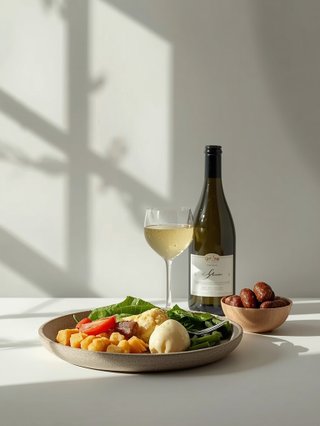
Seasonal vegetables - autumn flavors and nutritional value


Table of Contents 11
Medical & Editorial Disclaimer (§3 Terms): This article is for informational and educational purposes only, does not constitute medical advice, diagnosis, or treatment, and is used at your own risk. Consult a qualified physician for medical conditions.
From a physiological standpoint, autumn vegetables provide vital dietary fiber that supports gastrointestinal motility and healthy digestion. Beta-carotene found in orange varieties supports immune function and provides antioxidant protection, while cruciferous vegetables like broccoli supply non-heme iron, magnesium, and copper necessary for neuromuscular and metabolic health. Additionally, understanding how thermal processing impacts carbohydrate structure—such as in cooked root vegetables like beets—highlights the value of pairing them with healthy fats or proteins to support stable postprandial metabolic responses.
Incorporating these vegetables into daily nutrition is straightforward and highly versatile, ranging from warm blended soups and roasted cutlets to crisp salads topped with seeds and dressings. Combining cooked or raw seasonal produce with quality plant oils enhances the bioavailability of fat-soluble vitamins. Embracing a wide variety of these nutrient-rich autumn staples provides a balanced, satisfying foundation for overall wellness throughout the cooler months.
This article is professional premium content (PRO) provided in its entirety.
Seasonal vegetables – health advantages and taste diversity
Which vegetable varieties are characteristic of autumn?
Pumpkin - Properties and Regulations
Creamy pumpkin soup with additional coconut milk
Pumpkin cutlets with orange addition
Beetroots - their properties and recipes
A salad comprising rocket, beetroot, and feta
Nutritious vegetable smoothie with beetroot
Broccoli - characteristics and recipe regulations
Broccoli cream soup with sunflower seeds
A raw salad with broccoli, corn and eggs
Want to apply these guidelines in your daily diet?
Our smart diet generator creates a tailored meal plan in 3 minutes based on the recommendations in this article.

mgr Acosta-Patiño J.L. et al., Hypoglycemic action of Cucurbita fi cifolia on type 2 diabetic patients with moderately high blood glucose levels, „Journal of Ethnopharmacology” 2001, 77(1), 99–101. Antoniewska A. et al., Olej z nasion dyni jako źródło cennych składników w diecie człowieka, „Problemy Higieny i Epidemiologii” 2017, 98(1), 17–22. Armah C. et al., Diet rich in high glucoraphanin broccoli reduces plasma LDL cholesterol: Evidence from randomised controlled trials, „Molecular Nutrition & Food Research” 2015, 59(5), 918–926. Bailey S.J. et al., Dietary nitrate supplementation enhances muscle contractile efficiency during knee-extensor exercise in humans, „Journal of Applied Physiology” 2010, 109, 135–140. Bayat A. et al., Effects of Cucurbita ficifolia Intake on Type 2 Diabetes: Review of Current Evidences, „Shiraz E-Medical Journal” 2014, 15(2). Dixit Y., Kar A., Protective role of three vegetable peels in alloxan induced diabetes mellitus in male mice, „Plant Foods for Human Nutrition” 2010, 65(3), 284–289. Hirose K. et al., Dietary factors protective against breast cancer in Japanese premenopausal and postmenopausal women, „International Journal of Cancer” 2003, 107(2), 276–282. Jian L. et al., Do dietary lycopene and other carotenoids protect against prostate cancer?, „International Journal of Cancer” 2005, 113(6), 1010–1014. Jedz sezonowo przez okrągły rok, lokalnyrolnik.pl/blog/e-book_jedz_sezonowo.pdf (3.11.2021). Johnston N., Sulforaphane halts breast cancer cell growth, „Drug Discovery Today” 2004, 9(21), 908. Klewicka E., Betacyjaniny – biodostępność i biologiczna aktywność, „Żywność. Nauka. Technologia. Jakość” 2012, 2(81), 5–21. Krochmal-Marczak B. et al., Wartość odżywcza i prozdrowotna wybranych warzyw z rodzaju kapusta (Brassica L.), „Herbalism” 2017, 1(3), 80–91. Krajka-Kuźniak V., Indukcja enzymów II fazy jako strategia chemioprewencji nowotworów i innych schorzeń degeneracyjnych, „Postępy Higieny i Medycyny Doświadczalnej” 2007, 61, 627–638. Kulczyński B. et al., Wartość żywieniowa dyni, „Bromatologia i Chemia Toksykologiczna” 2016, 3, 698–701.
Diets Premium Expert
Diets Premium team expert. Specializes in nutrition plans, strength sports, and training plans.