"Real" sausages or industrial imitation? Ingredient analysis, MOM, preservatives, and health impact

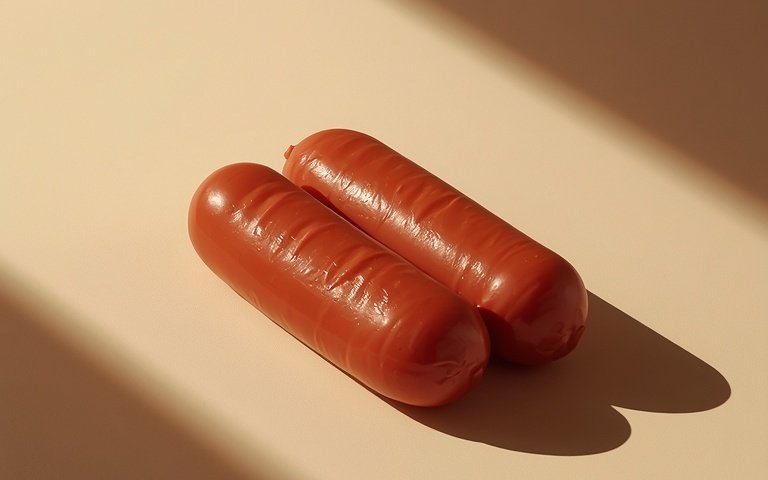
Table of Contents 4
Medical & Editorial Disclaimer (§3 Terms): This article is for informational and educational purposes only, does not constitute medical advice, diagnosis, or treatment, and is used at your own risk. Consult a qualified physician for medical conditions.
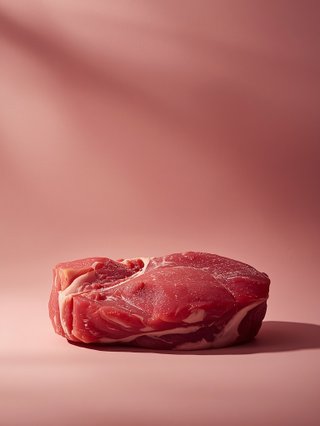
A closer examination of production methods reveals stark structural differences. Lower-grade sausages rely heavily on mechanically separated meat, a high-pressure byproduct rich in saturated fats, connective tissue, and microscopic bone residue. To achieve an appealing texture and shelf-life, these products depend on added phosphates, sodium nitrite, and artificial flavor enhancers. Furthermore, front-of-pack claims promoting veal content or suitability for children often mask formulas that consist primarily of inexpensive trimmings and filler ingredients.
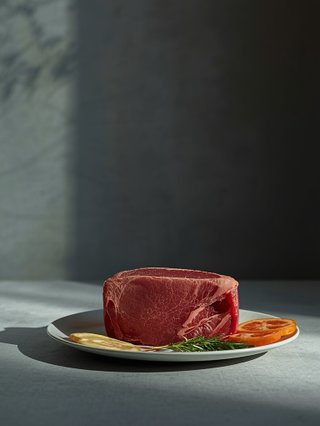
Incorporating processed meats into a balanced lifestyle requires careful label inspection and strict selection criteria. Optimal choices feature a clean ingredient declaration centered entirely on genuine muscle meat, free from mechanically recovered tissue, nitrites, and unnecessary additives. Pairing high-quality sausages with fiber-rich vegetables, whole grains, and fresh herbs creates a wholesome meal while minimizing exposure to highly processed industrial ingredients.
Frankfurters and Wiener sausages rank among the most popular convenience breakfast foods owing to their rapid preparation, tender texture, and mild flavor favored by children and adults alike. Yet behind a single product name on supermarket shelves lie items of vastly different nutritional quality—ranging from high-meat artisanal sausages to ultra-processed fat-and-water emulsions made from mechanically separated meat (MSM).
Carefully reading ingredient labels, verifying actual skeletal muscle meat percentage, and avoiding added phosphates, sodium nitrite, and artificial flavor enhancers allow consumers to distinguish a wholesome product from a low-grade industrial imitation.
What Are Low-Grade Frankfurters Made Of? Mechanically Separated Meat (MSM), Fat, Water, and Additives
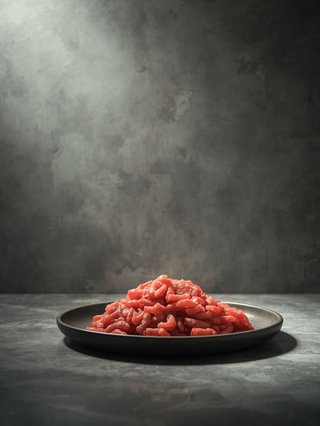
While authentic sausages should be crafted from skeletal muscle meat, low-cost industrial frankfurters frequently rely on MSM (mechanically separated meat) as their primary bulk ingredient. MSM is produced by forcing residual poultry carcasses or pork bones under high pressure through fine sieves to strip away remaining tissue scraps. The resulting paste contains high proportions of connective tissue, bone marrow, saturated fat, ground cartilage, and microscopic bone particles. Under European food law, MSM cannot be counted toward the declared meat percentage and is highly susceptible to lipid oxidation and microbial spoilage.
The second major component of cheap frankfurters is water (often accounting for 55–65% of total product weight) combined with pork fatback and pork rinds (frequently added even to poultry sausages), leaving the product with only 9–11% protein alongside 20–28% fat. To bind this excess water and fat into a stable, sliceable emulsion, manufacturers incorporate chemical emulsifiers and water-retaining agents: di- and triphosphates (E450, E451), citrates, modified starch, soy protein isolates, and cellulose fibers. Finally, sodium nitrite (E250), monosodium glutamate (E621), and carmine dye (cochineal, E120) are added to mask low meat content. Excessive dietary phosphates impair calcium absorption and bone mineralization, while sodium nitrite can react with amines—especially when pan-fried or grilled at high heat—to form carcinogenic N-nitrosamines.
Ham and Veal Sausages – How to Read Labels and Avoid Marketing Traps
When searching for healthier sausages for themselves or their children, consumers frequently reach for packages prominently labeled 'ham frankfurters,' 'veal sausages,' or 'made for kids.' While genuinely premium products do exist in this category, shoppers should never rely solely on front-of-pack marketing claims.
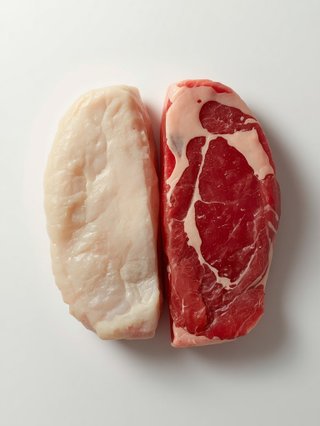
Inspecting the back-of-pack ingredient declaration often reveals that 'veal sausages' contain as little as 3–5% actual veal, with the remainder consisting of low-grade pork trimmings, pork fat, water, and starch fillers. Truly high-quality ham or turkey breast sausages should contain at least 90–95% skeletal muscle meat, natural spices (pepper, nutmeg, garlic, allspice), and a modest amount of salt—completely free from MSM, added phosphates, monosodium glutamate, and glucose syrup.
How Many Calories Do Frankfurters Have and What Is Their Macronutrient Profile?
Despite their light, smooth texture, standard frankfurters are relatively calorie-dense and high in saturated fat. Depending on the meat source and added fat trimmings, 100 g of frankfurters (typically 2 links) provides between 200 and 340 kcal:
- Conventional pork frankfurters: supply roughly 260–330 kcal / 100 g, only 11–13 g of protein, and 22–28 g of total fat (including 8–11 g of saturated fatty acids) alongside 1.8–2.5 g of salt.
- High-meat poultry sausages (crafted from turkey or chicken breast without added pork lard): offer a much leaner profile, providing approximately 160–210 kcal / 100 g, 14–17 g of complete protein, and 10–15 g of fat.
When incorporating sausages into a weight-loss or heart-healthy diet, always check the nutrition facts table in addition to the 'poultry' label, aiming for products containing less than 15–18 g of total fat per 100 g.
Can Frankfurters Be Part of a Healthy Diet? Criteria for Selecting High-Quality Sausages
While public health authorities advise limiting ultra-processed and nitrite-cured meats due to their association with cardiovascular risk and colorectal carcinogenesis, occasional consumption of high-grade sausages can fit into a balanced diet when strict quality criteria are met. Look for clean-label products featuring over 90–95% skeletal meat, zero MSM, zero added phosphates or MSG, and ideally uncured options made without sodium nitrite E250.
Preparation and meal pairing are equally important: never pan-fry, char, or grill nitrite-cured frankfurters at high temperatures; instead, warm them gently in hot (non-boiling) water. Always serve them alongside a generous portion of fresh vegetables rich in vitamin C and polyphenols—such as bell peppers, tomatoes, lacto-fermented pickles, and chives—plus whole-grain bread, as dietary vitamin C actively inhibits endogenous nitrosamine formation in the stomach.
Want to apply these guidelines in your daily diet?
Our smart diet generator creates a tailored meal plan in 3 minutes based on the recommendations in this article.

Kacper Nowak
• 25.11.2026Diets Premium Expert
Diets Premium team expert. Specializes in nutrition plans, strength sports, and training plans.