Artichokes – Ingredients, Contraindications, Preparation Method
Smart Voice
AITable of Contents 4
Edible artichokes of a thickness not exceeding ten millimetres
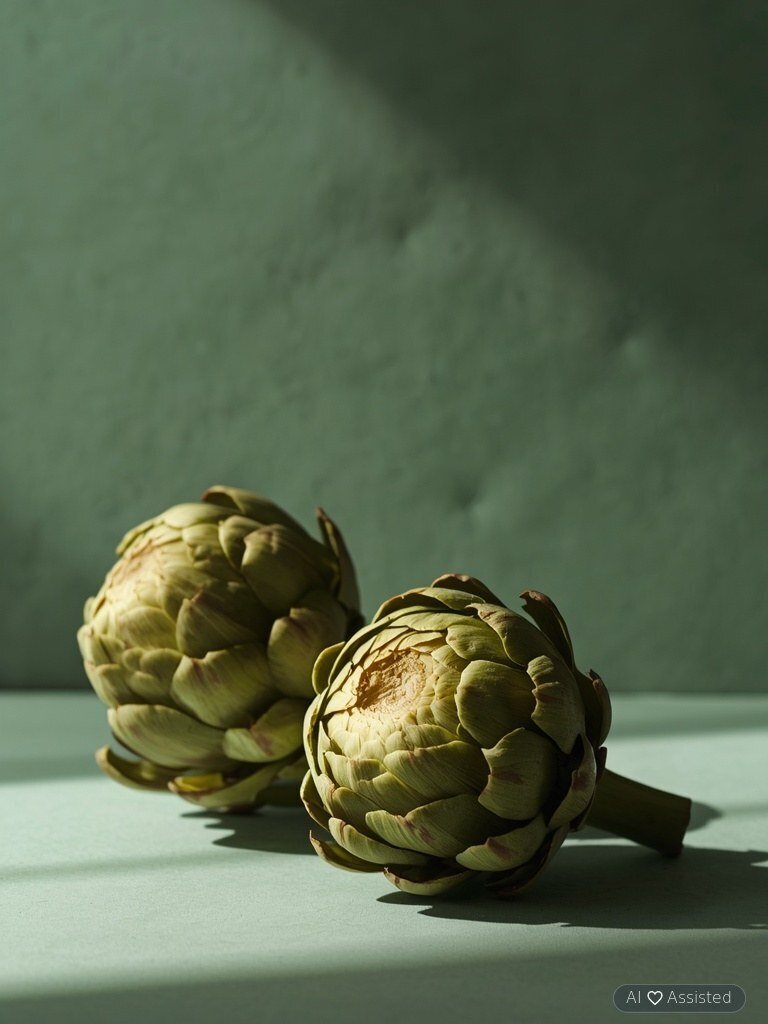
The globe artichoke, scientifically designated as Cynara cardunculus, represents a perennial rosette-forming plant of substantial agronomic significance. Its cultivation is highly favoured owing to the abundant yields it produces, which can be harvested systematically over a period exceeding half a decade. Nevertheless, the plant attains its peak productivity during the third year of vegetative growth, at which point it achieves optimal capacity for generating edible portions. Within the context of the global food economy, the artichoke assumes a pivotal role, particularly in the Mediterranean basin, where its cultivation not only satisfies local demand but also serves as a critical driver of regional economic advancement. The foremost global producers of this plant include nations such as Italy, Spain, France, and Greece, as well as regions like California in North America, alongside areas in South America, Turkey, and Iran.
Historical records confirm that the artichoke was employed as a medicinal plant as early as the fourth century BCE, positioning it among the oldest cultivated species worldwide. Its nutritional value is equally impressive—given its low caloric content (merely 50 kilocalories per 100 grams), it constitutes an excellent ingredient for weight-reduction diets and balanced nutritional regimens for individuals committed to maintaining a healthy body weight or addressing overweight concerns. Furthermore, its richness in dietary fibre, vitamins, and minerals further consolidates its status as a valuable component of a health-conscious diet.
Globe artichoke – a comprehensive analysis of its health-promoting properties and biological mechanisms of action
Artichokes: Contraindications, Precautions, and Adverse Reaction Profiles
A comprehensive step-by-step guide to properly cleaning and cooking artichokes
Want to apply these guidelines in your daily diet?
Our smart diet generator creates a tailored meal plan in 3 minutes based on the recommendations in this article.
Tags

Literatura: Ben Salem M., Affes H. i in., Pharmacological Studies of Artichoke Leaf Extract and Their Health Benefits. Plant Foods Hum Nutr, 2015, Fissore E. N., Santo Domingo C. i in., A study of the effect of dietary fiber fractions obtained from artichoke (Cynara cardunculus L. var. scolymus) on the growth of intestinal bacteria associated with health, Food Funct, 2015, Heidarian E., Rafleian-Kopaei M., Protective effect of artichoke (Cynara scolymus) leaf extract against lead toxicity in rat, Pharm Biol., 2013, Magielse J., Verlaet A. i in., Investigation of the in vivo antioxidative activity of Cynara scolymus (artichoke) leaf extract in the streptozotocin-induced diabetic rat, Mol Nutr Food Res, 2014, Mileo A. M., Di Venere D. i in., Long Term Exposure to Polyphenols of Artichoke (Cynara scolymus L.) Exerts Induction of Senescence Driven Growth Arrest in the MDA-MB231 Human Breast Cancer Cell Line, Oxid Med Cell Longev, 2015, Rondanelli M., Monteferrario F. i in., Health-promoting properties of artichoke in preventing cardiovascular disease by its lipidic and glycemic-reducing action, Monaldi Arch Chest Dis., 2013, Xia N, Pautz A et al. Artichoke, cynarin and cyanidin downregulate the expression of inducible nitric oxide synthase in human coronary smooth muscle cells. Molecules. 2014 Wider B, Pittler MH et al. Artichoke leaf extract for treating hypercholesterolaemia . Cochorane Database Sys Rev. 2013.
Diets Premium Expert
Diets Premium team expert. Specializes in nutrition plans, strength sports, and training plans.