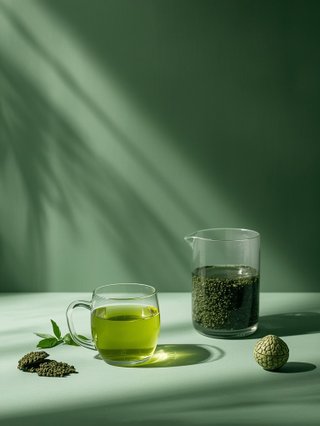
The effect of green tea... Green tea for hair


Table of Contents 2
Medical & Editorial Disclaimer (§3 Terms): This article is for informational and educational purposes only, does not constitute medical advice, diagnosis, or treatment, and is used at your own risk. Consult a qualified physician for medical conditions.
At a physiological level, the bio-active compounds and polyphenols found in green tea provide strong antioxidant support, which forms the basis of its health-promoting profile. When applied topically as a tonic, this infusion helps manage oily scalps by reducing excessive sebum production, while simultaneously stimulating hair growth and cellular renewal without causing inflammation or irritation.
Incorporating green tea into your daily routine is a gentle and effective way to harness its natural benefits for personal care and nutrition. By making it a regular part of your lifestyle habits, you can support scalp health and encourage vibrant hair vitality as part of a balanced, mindful approach to daily wellness.
Green tea is a beverage that is highly valued for its precious properties, particularly in Asian countries. This type of tea has been traditionally present on the tables of those countries for centuries. Recently, green tea is also gaining popularity in Poland, where not only its medicinal, but also its beautifying properties are being discovered and added to an increasing number of cosmetics. Read the article to learn more about the properties of green tea.
The health impact of green tea: biological mechanisms and therapeutic benefits
Green tea represents a rich source of bioactive compounds whose multifaceted health-promoting effects have been extensively documented in scientific research. Primarily, the polyphenols contained within this beverage—particularly epigallocatechin gallate (EGCG)—exhibit potent antioxidant, antiproliferative, and pro-apoptotic properties, translating into potential anticancer activity against malignancies such as lung, skin, breast, colorectal, liver, stomach, and prostate cancers. Furthermore, its capacity to modulate immune responses has been demonstrated, manifesting in antiviral effects and alleviation of symptoms associated with atopic dermatitis. Recent clinical meta-analyses indicate that consistent consumption of catechins—the primary active constituents of green tea—contributes to a reduction in blood pressure levels while simultaneously lowering the risk of cardiovascular diseases by improving the lipid profile, including decreases in total cholesterol and LDL cholesterol fractions. Notably, regular intake of this beverage correlates with enhanced oral health, including reduced gum inflammation even in individuals diagnosed with periodontitis. Some studies also suggest its beneficial influence on glycemic regulation, fasting insulin reduction, and potential antidepressant effects, which may represent a significant component in mood disorder prevention. Although there are reports of a modest effect on weight loss in overweight or obese individuals, these findings require further validation through controlled clinical trials.
Green tea for your hair
Not everyone knows that the tonics made from this drink are great for hair that has problems gaining fat. It has been shown that the use of this treatment significantly reduces the secretion of leather through the scalp and, importantly, it does not cause any irritation or inflammation. Furthermore, studies suggest that the active ingredients of this product also have the proper effect of stimulating the growth of hair and the formation of new cells.
Want to apply these guidelines in your daily diet?
Our smart diet generator creates a tailored meal plan in 3 minutes based on the recommendations in this article.

Literatura: Fritz H., Seely D., Kennedy D. A. i in., Green tea and lung cancer: a systematic review , Integr Cancer Ther, 2013, Jurgens T. M., Whelan A. M. i in., Green tea for weight loss and weight maintenance in overweight or obese adults, Cochrane Database Syst Rev, 2012, Khalesi S., Sun J. i in., Green tea catechins and blood pressure: a systematic review and meta-analysis of randomized controlled trials, Eur J Nutr, 2014, Kwon O. S., Han J. H., Yoo H. G. i in., Human hair growth enhancement in vitro by green tea epigallocatechin-3-gallate (EGCG), Phytomedicine, 2007, Liu K., Zhou R., Wang B. i in., Effect of green tea on glucose control and insulin sensitivity: a meta-analysis of 17 randomized controlled trials, Am J CLin Nutr. 2013, Nualsri C., Lourith N. i in., Development and clinical evaluation of green tea hair tonic for greasy scalp treatment, J Cosmet Sci, 2016, Pham N. M., Nanri A. i in., Green tea and coffee consumption is inversely associated with depressive symptoms in a Japanese working population, Public Health Nutr, 2014, Ramasamy C., Potential natural antioxidants: adjuvant effect of green tea polyphenols in periodontal infections. Infect Disord Drug Targets. 2015, Yiannakopoulou E. C., Interaction of green tea catechins with breast cancer endocrine treatment: a systematic review. Pharmacology. 2014, Zink A., Traidl-Hoffmann C., Green tea in dermatology – myths and facts, J Dtsch Dermatol Ges., 2015.
Diets Premium Expert
Diets Premium team expert. Specializes in nutrition plans, strength sports, and training plans.