Weight Loss Support Beverage
Smart Voice
AITable of Contents 9
This article is professional premium content (PRO) provided in its entirety.
Which variety of tea aids in the process of weight reduction?
Distinctive traits and bioactive constituents of tea based on degree of processing
Oolong tea: The semi-oxidized aromatic infusion with remarkable health benefits
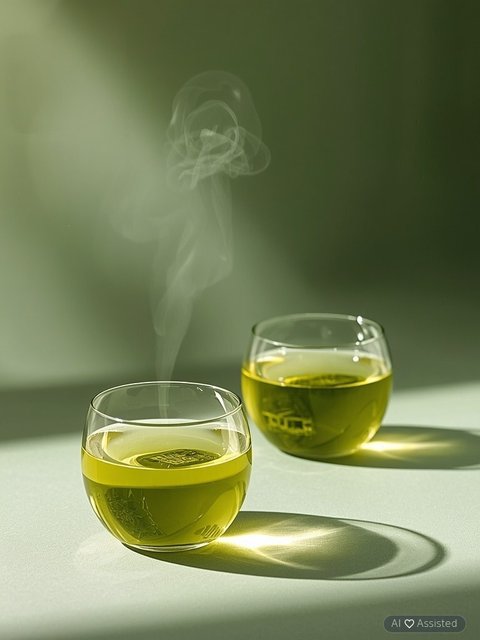
Green tea – a time-honored infusion with empirically supported health-promoting properties
White tea: A distinctive treasure derived from young tea buds
Within the contemporary tea market, white tea has emerged as a distinguished variety owing to its unique production process, which relies solely on the delicate, hand-picked buds of the Camellia sinensis plant, harvested during the earliest stages of spring growth. What sets this type apart from other tea varieties is its exceptionally high concentration of theine—a natural stimulant that imparts remarkably potent refreshing and invigorating properties to the nervous system. Furthermore, scientific research confirms that white tea surpasses even green tea in its content of polyphenols and other antioxidant compounds, with levels nearly three times higher. Of particular note are study findings demonstrating that a mere one-minute infusion is sufficient to release active components exhibiting strong antimutagenic effects [1].
Black tea: comprehensive profile, properties, and the fermentation process
Oolong tea: The semi-oxidized elixir from China and Taiwan
Oolong tea, colloquially referred to as "black dragon tea" (Chinese: *wūlóng*), is traditionally cultivated in the mountainous regions of southern China—primarily in Fujian Province—as well as in northeastern Taiwan. Its distinctive biochemical composition features elevated levels of tannins (plant-based polyphenols) and catechins—flavonoids renowned for their potent antioxidant properties—while maintaining a moderate caffeine content, positioning it as an intermediary between stimulating black teas and gentle green teas. Emerging scientific evidence suggests that regular consumption of oolong may exert protective effects against oxidative stress-related pathologies, including age-associated neurodegenerative disorders (e.g., senile dementia) and vascular impairments affecting both cerebral and peripheral circulation. Furthermore, the polyphenols present in oolong leaves demonstrate the capacity to modulate immune responses, thereby enhancing the body’s defensive mechanisms. Of particular note is its potential role in weight management: rodent studies have revealed that administration of an isolated oolong polyphenol (3-O-galloyl epigallocatechin) significantly inhibited adipose tissue accumulation even under high-fat, high-sugar dietary conditions, implying an influence on lipid metabolism [6].
It is important to emphasize that the oxidation level of oolong leaves ranges from 10% to 70%, depending on the region and processing technique. Classic Chinese oolongs (e.g., *Tie Guan Yin* or *Da Hong Pao*) undergo only partial fermentation (~20%), preserving their light green leaf coloration and delicate floral aroma. In contrast, Taiwanese varieties such as *Dong Ding* or *Ali Shan* often achieve higher oxidation levels (up to 60%), resulting in darker leaves and a more robust, toasted flavor profile in the infusion [1]. Unlike black tea, oolong leaves remain unrolled, further distinguishing their sensory characteristics.
Ginger root: A versatile natural supplement for herbal tea infusions with broad-spectrum health benefits
Does herbal medicine deliver tangible health benefits?
Want to apply these guidelines in your daily diet?
Our smart diet generator creates a tailored meal plan in 3 minutes based on the recommendations in this article.

mgr Literatura: Broda M., Leja K., 2010, Czerwona herbata. Ekonatura, 6–7, Fijołek M., 2016, Zioła na odporność, Wydawnictwo Esprit, Kraków, Greger M., 2017, Jak nie umrzeć przedwcześnie. Co jeść, aby dłużej cieszyć się zdrowiem, Wydawnictwo Czarna Owca, Warszawa, Stańczyk A., 2010, Właściwości zdrowotne wybranych gatunków herbat. Bromatologia i Chemia Toksykologiczna, XLIII, 4, 498–504, Świderski F., Waszkiewicz-Robak B. (red.), 2010, Towaroznawstwo żywności przetworzonej z elementami technologii, Wydawnictwo SGGW, Warszawa,. Wierzejska R., 2014, Wpływ picia herbaty na zdrowie – aktualny stan wiedzy, Przegląd Epidemiologiczny, 68, 595–599, www.czajnikowy.com.pl/herbata-oolong-wlasciwosci-odchudzanie-herbata-ulung/ [dostęp:11.04.2021].
Diets Premium Expert
Diets Premium team expert. Specializes in nutrition plans, strength sports, and training plans.