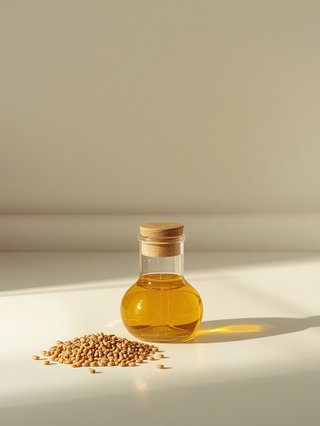
Sesame oil – a natural source of plant sterols with hypocholesterolemic effects


Table of Contents 3
Medical & Editorial Disclaimer (§3 Terms): This article is for informational and educational purposes only, does not constitute medical advice, diagnosis, or treatment, and is used at your own risk. Consult a qualified physician for medical conditions.
The physiological efficacy of sesame oil is largely driven by its high concentration of phytosterols alongside signature lignans such as sesamin, sesamolin, and sesamol, the latter forming during seed roasting. Functioning as potent lipophilic antioxidants, these compounds impart remarkable oxidative stability to the oil while actively influencing lipid metabolism—specifically by moderating hepatic cholesterol biosynthesis through enzyme inhibition and encouraging bile acid excretion. Furthermore, emerging clinical literature indicates that these plant sterols may possess analgesic and cytoprotective potential, although the exact biochemical pathways governing these additional effects remain an area of ongoing scientific inquiry.
When incorporating sesame oil into daily nutrition, consumers should remain mindful of European food safety guidelines regarding daily phytosterol thresholds, as just a couple of standard tablespoons readily fulfill the recommended intake. Because unrefined virgin sesame oil contains delicate volatile aromatics and sensitive lipid fractions, it should not be subjected to high-heat deep frying. Instead, it is best utilized as a cold dressing or aromatic finishing oil drizzled over fresh salads, steamed greens, grain bowls, soups, and traditional noodle dishes immediately prior to serving.
Cold-pressed oil derived from sesame seeds is distinguished by its exceptionally high concentration of plant-derived sterols—bioactive phytochemicals scientifically proven to reduce circulating levels of low-density lipoprotein (LDL) cholesterol, commonly referred to as "bad" cholesterol. In alignment with guidelines issued by the European Food Safety Authority (EFSA), however, daily phytosterol intake should not exceed 3 grams. This threshold is readily achievable through the consumption of just two tablespoons of sesame oil.
Notably, emerging evidence from systematic clinical reviews suggests that these same sterol compounds may also exhibit analgesic properties, though the precise biochemical pathways underlying this effect remain an active area of investigation.
Sesame oil properties
Sesame oil contains a very high amount of plant phytosterols. They have an effect on reducing the concentration of LDL cholesterol in the blood serum. However, according to the recommendations of the Committee on Food, no more than 3 g of phytoesterols per day should be consumed.
Two tablespoons of sesame oil per day is enough. Studies have shown that plant sterols have anti-pain properties. Studies conducted in terms of the ability to inhibit the development of malignant tumors, thanks to the use of seeds oil, have unambiguously shown that this product inhibits the growth of fatty acids.
Use of sesame oil
Unrefined virgin sesame oil should not be used for deep frying due to its delicate volatile compounds and unrefined lipid fractions. However, it is an exquisite dressing and finishing oil for fresh salads, steamed greens, grain dishes, and traditional noodle bowls.
It holds legendary status in Asian gastronomy, where even a few drops of toasted or cold-pressed sesame oil impart an unmistakable, aromatic depth to soups, marinades, and stir-fries immediately prior to serving. Furthermore, it supplies valuable polyunsaturated fatty acids, natural vitamin E, and trace minerals (including magnesium, copper, and calcium) that support vascular and metabolic health.
Sesamin and sesamol: unique lignans conferring hypocholesterolemic and antioxidant efficacy
The distinctive therapeutic profile of sesame seed oil is governed by its signature lignans—sesamin and sesamolin, which during seed roasting yield sesamol. These bioactive lignans function as formidable lipophilic antioxidants, endowing sesame oil with superior oxidative resistance and shelf stability.
Clinical investigations confirm that sesamin inhibits hepatic HMG-CoA reductase—the rate-limiting enzyme in endogenous cholesterol biosynthesis—while stimulating fecal bile acid excretion. Furthermore, sesamin modulates delta-5-desaturase activity, dampening pro-inflammatory eicosanoid generation and exerting mild hypotensive actions.
Want to apply these guidelines in your daily diet?
Our smart diet generator creates a tailored meal plan in 3 minutes based on the recommendations in this article.
Tags

Lena Bauer
• 23.10.2026Diets Premium Expert
Diets Premium team expert. Specializes in nutrition plans, strength sports, and training plans.