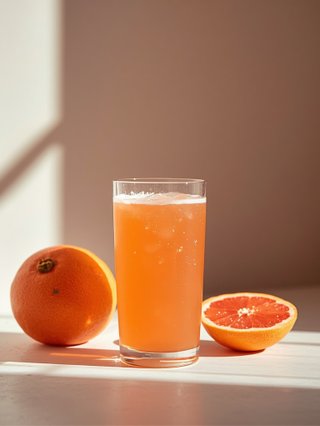
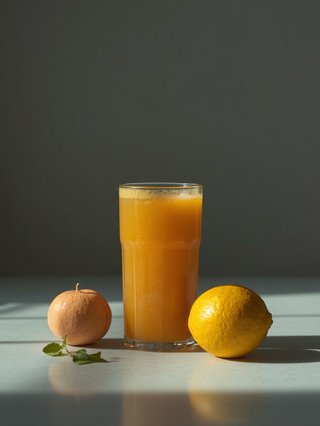
Orange drink that surpasses the freshness of the fruit
Table of Contents 5
Medical & Editorial Disclaimer (§3 Terms): This article is for informational and educational purposes only, does not constitute medical advice, diagnosis, or treatment, and is used at your own risk. Consult a qualified physician for medical conditions.
Mechanical processing ruptures complex plant cell walls, rendering fat-soluble carotenoids and citrus flavonoids markedly more bioavailable to the digestive tract compared to intact fruit segments. Conversely, the removal of structural dietary fiber accelerates the absorption kinetics of natural fruit sugars into the bloodstream. Evaluating various commercial beverage categories, from freshly squeezed unpasteurized options to direct juices, reveals how different production methods impact nutrient retention and overall quality.
To leverage the superior bioaccessibility of orange juice micronutrients while mitigating metabolic and dental vulnerabilities, clear consumption practices should be observed. Experts recommend enjoying a modest portion as part of a balanced meal containing dietary fats and proteins to support steady energy levels. Integrating these evidence-based habits into daily routines allows consumers to enjoy nutrient-rich beverages mindfully and responsibly.
It is widely assumed that whole, unprocessed fruit is unconditionally superior to fruit juice in every nutritional dimension. However, modern food chemistry and clinical bioavailability research present a fascinating nuance: mechanical juicing ruptures complex plant cell walls, rendering fat-soluble carotenoids and citrus flavonoids markedly more bioavailable to the human digestive tract. In this comprehensive analysis, we explore the science of orange juice, weigh its bioaccessibility against whole fruit fiber, and outline optimal consumption habits.
Why processed fruit juices can surpass whole fruit: scientific evidence and practical consumer guidelines
Navigating beverage aisles reveals an extensive spectrum of fruit-derived liquids whose legal classifications frequently confuse consumers. European regulatory frameworks strictly delineate 100% fruit juices, nectars, and fruit-flavored beverages. Crucially, legislation rigorously prohibits the addition of refined sugars, syrups, colorants, or chemical preservatives to 100% fruit juices—all intrinsic sugars derive exclusively from the pressed fruit. Research published in the esteemed Journal of Agricultural and Food Chemistry unveiled a compelling finding: in terms of systemic micronutrient delivery, processed orange juice can actually surpass fresh whole fruit.
The biological rationale relies on cellular matrix disruption. In whole citrus fruit, potent antioxidants remain entrapped within insoluble pectin and cellulose cell-wall architectures. Mechanical extraction and mild homogenization disrupt these barriers, liberating micronutrients into an emulsion that is substantially more accessible to human digestive enzymes and bile micelles. Consequently, a single glass of premium orange juice can yield superior postprandial plasma concentrations of specific bioactive compounds compared to an identical weight of intact orange segments. However, because liquid matrices accelerate energy transit, portion control remains paramount.
Bioavailability of carotenoids, hesperidin, and vitamin C: orange juice versus intact citrus fruits
A detailed biochemical examination of orange juice versus intact oranges highlights profound differences in nutrient pharmacokinetics. Ascorbic acid (vitamin C) displays robust absorption across both matrix formats, with a standard 200 ml serving providing 70–80 mg, fully meeting daily adult requirements. However, the most pronounced kinetic divergence involves lipophilic carotenoids—notably beta-cryptoxanthin, lutein, and zeaxanthin. Controlled human intervention trials demonstrate that intestinal micellarization and plasma bioavailability of beta-cryptoxanthin are 1.8 to 4 times greater from pasteurized orange juice than from chewed raw orange slices.
An equally striking advantage concerns hesperidin, the primary citrus flavanone possessing validated vasoprotective, anti-inflammatory, and hypotensive properties. Industrial pressing extracts substantial amounts of hesperidin from the albedo (the white spongy mesocarp) into the liquid phase—tissue that consumers almost invariably discard when peeling whole fruit. While hesperidin requires enzymatic deglycosylation by colonic microflora to hesperetin, circulating concentrations of bioactive hesperetin metabolites are significantly higher following juice ingestion than consumption of hand-peeled pulp alone.
Glycemic response, dietary fiber loss, and fructose absorption kinetics: the nutritional trade-off
Notwithstanding the superior bioaccessibility of polyphenols and carotenoids, fruit juice exhibits a critical physiological deficit when compared to intact fruit: the near-total loss of structural dietary fiber. An average whole orange (approximately 150 g) provides 3.0–3.5 grams of dietary fiber, including soluble viscous pectins that delay gastric emptying. In sharp contrast, a 200 ml glass of juice contains merely 0.2–0.8 grams of fiber. The absence of this cellular matrix accelerates gastric transit, removes the physical diffusion barrier for monosaccharides, and eliminates satiety-inducing mechanical cues.
Consequently, the 15–20 grams of free sugars (fructose, glucose, and sucrose) in a glass of juice enter portal circulation at a velocity markedly higher than sugars derived from whole oranges requiring mastication. In populations with insulin resistance, metabolic syndrome, or non-alcoholic fatty liver disease (NAFLD), bolus delivery of liquid fructose challenges hepatic processing capacity, promoting de novo lipogenesis. For this reason, clinical consensus dictates that individuals with impaired glucose tolerance prioritize whole fruit, while viewing fruit juice as a concentrated functional beverage rather than an ad libitum hydration source.
Comparative analysis of juice categories: freshly squeezed, NFC (Not From Concentrate), and from concentrate
From a technological standpoint, commercial orange juices fall into three distinct categories: freshly squeezed unpasteurized juices, Not From Concentrate (NFC) direct juices, and juices reconstituted from concentrate (From Concentrate - FC). Unpasteurized freshly pressed juice delivers immaculate sensory profiles and intact thermolabile plant enzymes; however, its microbiological stability is strictly bounded to 24–48 hours under refrigeration. Without thermal sanitation, unpasteurized juices carry potential microbiological risks if cold-chain integrity is compromised.
NFC juices are extracted directly from whole oranges, subjected to high-temperature short-time (HTST) pasteurization, and packaged aseptically, ensuring several months of shelf-life while restricting ascorbic acid degradation to less than 10%. Conversely, FC juices involve vacuum evaporation to remove water at the source orchard, international transport as bulk concentrate, and precise rehydration with potable water and volatile aroma fractions. While FC juices match NFC products in elemental mineral and vitamin retention, subtle differences in aromatic volatile terpenes can occur. Both NFC and 100% FC options remain nutritionally reliable provided zero adulterants are added.
Practical clinical recommendations: optimal portioning, dental enamel protection, and meal integration
To leverage the superior bioaccessibility of orange juice micronutrients while mitigating metabolic and dental vulnerabilities, clear consumption guidelines should be observed. Clinical authorities endorse a standard daily portion of 150–200 ml (one small glass), functioning as an allowable substitute for one of the five recommended daily produce servings. Orange juice is optimally integrated into comprehensive meals featuring dietary fats and proteins (e.g., poached eggs with avocado or nut-enriched oats); dietary lipids augment carotenoid solubilization, while proteins and dietary fibers blunt postprandial glucose excursions.
From a dental perspective, intrinsic citric and malic acids lower oral pH to approximately 3.5–3.8, initiating transient enamel demineralization. To safeguard dental integrity, juice should be consumed in a single sitting or sipped through a straw, avoiding prolonged sipping across extended periods. Crucially, individuals should rinse their mouths with plain water immediately after consumption and postpone toothbrushing for at least 30 minutes to permit saliva-mediated remineralization. Practicing these clinical strategies enables individuals to safely enjoy the functional virtues of orange juice.
Want to apply these guidelines in your daily diet?
Our smart diet generator creates a tailored meal plan in 3 minutes based on the recommendations in this article.
Tags

mgr Literatura:
• 23.10.2026Diets Premium Expert
Diets Premium team expert. Specializes in nutrition plans, strength sports, and training plans.