3 min read
Greater Celandine Herb – Distribution, Constituents, Properties, Application and Preparation
1 photo
747
Smart Voice
AI
0:00
0:00
Listen to the article content live
Table of Contents 5
The Chelidonium majus herb, also known by its Latin name, is widely distributed due to ancient beliefs. The Latin name originates from the Greek term chelidon, meaning the herb. One legend claims that the herb bloomed when the swallows arrived in the spring, but bloomed in May when the birds departed. Other sources report that swallows utilized the plant's sap to improve their offspring's vision. This sap is orange-yellow and exudes from the damaged tissues of the herb. Despite being toxic, it also possesses therapeutic properties.
01 / 05
Greater celandine (*Chelidonium majus*) – distribution, habitat, and geographical range
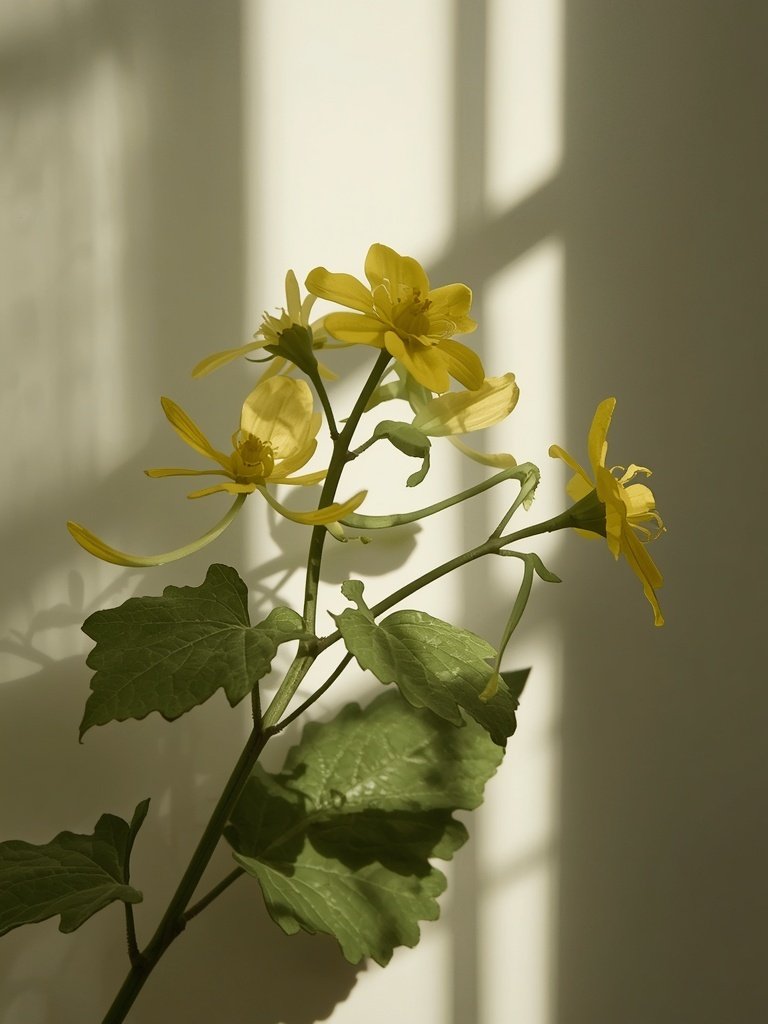
Greater celandine (*Chelidonium majus*) is a perennial herbaceous plant belonging to the poppy family (*Papaveraceae*), typically growing to a height of approximately 75 centimeters and distinguished by its small, vivid yellow flowers arranged in umbel-like clusters. While native to vast regions of Eurasia, human activity has facilitated its introduction and naturalization across other continents, including North America and parts of Australia. Within Poland, the species is ubiquitous, thriving in both urban environments and natural habitats such as roadsides, fallow lands, rubble areas, and forest edges. The optimal period for harvesting its alkaloid-rich leaves—compounds known for their pharmacological properties—spans the growing season from early April through late September, when the plant reaches peak developmental maturity.
02 / 05
Phytochemical composition of greater celandine herb – an analysis of bioactive constituents
A comprehensive phytochemical characterization of greater celandine herb (Chelidonium majus L.) highlights the prominent presence of two key alkaloids: chelidonine—a compound with documented spasmolytic activity—and sanguinarine, which exhibits potential antibacterial and anti-inflammatory properties. Beyond these, the plant serves as a rich reservoir of biologically significant substances, including plant pigments (notably the carotenoids β-carotene and cryptoxanthin, which may exert pro-oxidative effects under specific conditions) as well as volatile aromatic compounds classified as essential oils. Additionally, the aerial parts of the plant contain proteolytic enzymes that may facilitate digestive processes, alongside essential macro- and micronutrients critical for physiological function. Among the organic acids, particular attention is drawn to the high concentrations of malic acid (which plays a role in carbohydrate metabolism regulation), citric acid (a pivotal molecule in the Krebs cycle), and the distinctive chelidonic acid, which is characteristic of this species. Phytoanalytical investigations have further confirmed a substantial concentration of flavonoids with well-documented antioxidant potential—primarily quercetin (known for its anti-inflammatory and antiviral effects) and kaempferol (which may modulate cellular signaling pathways)—with a combined content in the plant material estimated at approximately 2% of dry weight.
03 / 05
Comprehensive pharmacological profile of celandine: therapeutic properties and health benefits
This botanical specimen exhibits a broad spectrum of biological activities, including the capacity to mitigate allergic responses through immunological modulation. It demonstrates potent antioxidant properties attributable to the presence of bioactive polyphenolic compounds—namely kaempferol and quercetin—which effectively scavenge free radicals. Additionally, it possesses well-documented antimicrobial effects, encompassing both bactericidal and virucidal actions, owing to the inclusion of specific organic acids with disinfectant properties. From an oncological perspective, its antiproliferative potential is particularly noteworthy, especially in the prevention of non-Hodgkin lymphomas. This mechanism relies on the incorporation of alkaloids (e.g., sanguinarine) into the DNA structure of malignant cells, thereby triggering apoptotic cell death via cytotoxic activity. Furthermore, it exerts spasmolytic effects on smooth muscle tissue, resulting in reduced muscular tension and alleviation of menstrual pain, thus serving as a potential adjunctive therapy for dysmenorrhea. Berberine—another key constituent—modulates neurotransmitter synthesis within the central nervous system, exhibiting anxiolytic properties. It also accelerates tissue regeneration in cases of recalcitrant wound healing. The plant effectively eradicates pathogenic yeasts responsible for cutaneous mycosis. Moreover, it exerts beneficial effects on the cardiovascular system by enhancing vascular parameters. Topical application of celandine juice is justified in dermatological practice, particularly for the treatment of viral warts localized on the hands and feet.
04 / 05
Therapeutic applications of greater celandine (*Chelidonium majus*): indications, dosage, and precautionary measures
When considering the use of greater celandine (*Chelidonium majus*) for medicinal purposes, it is imperative to acknowledge its potent toxicity, as the plant contains cytotoxic alkaloids whose unregulated ingestion may result in severe adverse health effects. The maximum safe daily dose is established at 30 milligrams of total alkaloid content, equivalent to approximately 4–5 grams of dried leaf material. Preparations derived from this herb are primarily employed in the treatment of viral skin lesions, including common warts (verrucae) and superficial fungal infections. Additionally, owing to its rich composition of flavonoids, carotenoids, and vitamin C, celandine extract is occasionally utilized as an adjunct in oncology—both for therapeutic interventions and preventive measures—given that its antioxidant properties may inhibit lipid peroxidation, thereby mitigating the risk of cardiovascular diseases and oxidative stress-induced malignancies.
05 / 05
Greater celandine (*Chelidonium majus*) – preparatory forms and therapeutic applications in herbal medicine
To harness the medicinal properties of greater celandine (*Chelidonium majus*), one may utilize dried leaves for preparing aqueous infusions or fresh plant parts—after crushing—which are applied topically to the skin, particularly in the treatment of fungal infections and viral warts. This perennial herb, a member of the poppy family (*Papaveraceae*), is commonly found in ruderal habitats across Poland. The yellow-orange latex secreted by its stems and leaves has been employed externally for centuries to address inflammatory or infectious dermatoses through direct application to affected areas. Infusions made from dried aerial parts may exert beneficial effects on the nervous system—demonstrating sedative properties—as well as on the circulatory system, owing to a mild antispasmodic action on smooth muscle tissue. However, it is critical to emphasize that greater celandine contains alkaloids (including chelidonine and sanguinarine), classifying it as a highly toxic plant. Prior to any use—whether internal or external—consultation with a phytotherapist or physician is mandatory to prevent poisoning symptoms such as nausea, vomiting, or even hepatic damage.
Meal Plan
Want to apply these guidelines in your daily diet?
Our smart diet generator creates a tailored meal plan in 3 minutes based on the recommendations in this article.

Scientifically reviewed by a clinical dietitian
• 25.09.2026
Literatura: „Glistnik jaskółcze ziele ( Chelidonium majus L.) we współczesnej terapii – wskazania i bezpieczeństwo stosowania” – Borgis – Postępy Fitoterapii 3/2011, s. 208-218, Piotr Migas, Magdalena Heyka
Diets Premium Expert
Diets Premium team expert. Specializes in nutrition plans, strength sports, and training plans.
USDA FoodData Central
EFSA
PubMed Clinical Guidelines