PRO 9 min read

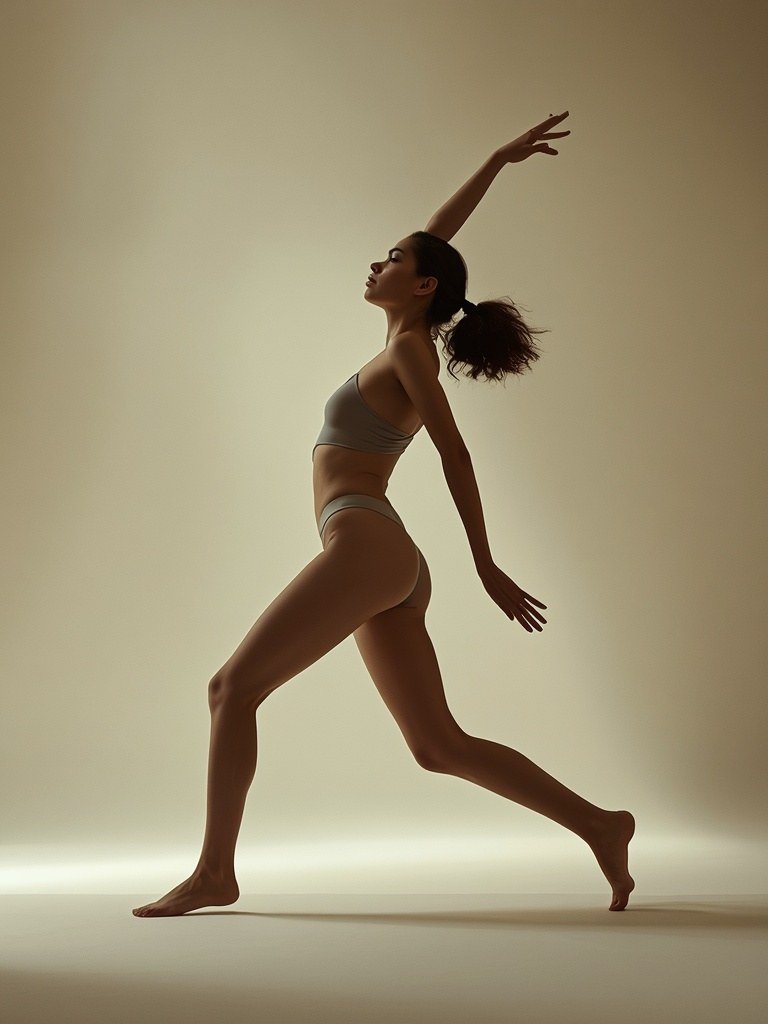
Exemplary Movements of the Human Body
Exemplary Movements of the Human Body
1 photo
389

Smart Voice

AI
0:00
0:00
Listen to the article content live
Table of Contents 18
PRO Content PRO

This article is professional premium content (PRO) provided in its entirety.

Individuals have at their disposal seven fundamental movement patterns that are acquired and refined throughout life. These patterns are essential for proper functioning and also serve as a form of exercise.
01 / 18

Seven foundational kinetic templates underlying routine physical activities

Within this introductory examination, we will explore the core, universal movement sequences that serve as the foundation for most human actions. Additionally, we will discuss real-life scenarios and athletic exercises where these patterns become distinctly observable and can be deliberately refined by individuals regardless of their current proficiency level.
02 / 18

Squat – a foundational movement pattern in sports and physical activity

1. (squat) – a fundamental biomechanical pattern employed across all athletic disciplines and daily physical tasks that demand force production from the lower limbs. Mastery of this movement serves as the cornerstone of resistance training programs, ensuring maximal muscular efficiency while concurrently mitigating injury risk during high-load dynamic activities.
03 / 18

Pressing Motion – Upper-Body Movement Pattern

2. (pressing mechanics, upper-body engagement) – a foundational motor pattern that facilitates the execution of both dynamic and controlled pushing movements, wherein the primary role is assumed by the anatomical structures of the upper torso, colloquially referred to as the *upper body*. This pattern constitutes an essential component of strength-training regimens, particularly those designed to enhance and fortify key muscle groups, including the pectoralis major and minor (chest muscles), the shoulder girdle complex (encompassing the deltoid muscle in its entirety), and the triceps brachii (the three-headed arm extensor).
04 / 18

Pulling Motion (Upper-Body Movement Pattern)

The third fundamental movement pattern, designated as the "pull" mechanism, centers on the activation of upper-torso musculature during the execution of dynamic drawing-in motions. This kinetic template encompasses all actions wherein the following muscle groups play a predominant role: the latissimus dorsi (responsible for the breadth of the back), the trapezius (scapular stabilizer), the teres major and minor (shoulder rotators), the posterior deltoid (rear shoulder musculature), and the extensor muscles (involved in wrist extension).
05 / 18

Hip flexion hinge: biomechanical movement pattern of the hip joint

4. (hip flexion hinge mechanism) – a foundational movement pattern that facilitates optimal engagement of the hip musculature during a wide range of physical activities. This distinct motor schema is particularly evident in the execution of strength-based exercises such as deadlifts (across their various modifications) or dynamic kettlebell movements, including swings. Given its pivotal role in maintaining proper biomechanical alignment and injury prevention, mastery of this technique—second only to the squat—represents one of the most essential competencies that every strength trainee, regardless of experience level, must internalize with precision.
06 / 18

Single-Leg Lunge (Unilateral Movement Pattern)

5. (single-leg forward stride) – a foundational movement pattern that facilitates the targeted engagement and utilization of strength in an individual lower limb, serving as a cornerstone of unilateral training methodologies. It plays a pivotal role in refining one-sided exercise execution while concurrently enhancing precise biomechanical stabilization across the hip joint, knee articulation, and foot complex. Its consistent incorporation into training regimens contributes to improved functional movement capacity and mitigates the risk of muscular imbalances.
07 / 18

Dynamic Twist: Rotational Movement Pattern in Athletic Training

6. (**twist/rotation**) – a specialized motor pattern primarily employed in dynamic exercises centered on torso or limb rotation. It demonstrates particular efficacy in sports demanding rapid, controlled rotational movements, such as basketball, soccer, and volleyball. This pattern constitutes a fundamental component of training regimens for athletes whose performance relies on explosive power coupled with precise coordination of twisting motions—e.g., during dribbling, ball strikes, or directional changes combined with full-body rotation.
08 / 18

Weighted gait – the foundational locomotion and core stabilization movement pattern

The seventh fundamental motor pattern—**weighted load carriage during ambulation**—represents the most frequently overlooked yet inherently basic form of physical activity, particularly neglected by individuals focused on gym-based strength training. Consciously incorporating exercises that involve transporting heavy objects (e.g., dumbbells, sandbags, or stones) systematically enhances **dynamic stability** and **functional deep-core musculature strength** (the so-called *core*). Furthermore, this pattern plays a **pivotal role** in cultivating proper postural habits—it trains the controlled maintenance of the body’s axial alignment across multiple planes of motion while engaging the **entire abdominal muscle complex** (including the *transversus abdominis*, obliques, and rectus abdominis) in a coordinated, synergistic manner.
09 / 18

Why mastering fundamental movement patterns is the cornerstone of long-term success in strength training

Comprehending and mastering fundamental movement patterns constitutes the bedrock of any effective training regimen—regardless of whether you are a novice or an advanced athlete. Much like the ability to ride a bicycle remains with us indefinitely, properly ingrained motor patterns—such as squats, deadlifts, or pressing movements—ensure not only lasting results but also significantly reduce the risk of injury even after prolonged breaks. A prime example is the legendary Tom Platz, who, despite the passage of time and being far removed from his peak physical condition, continues to demonstrate an impressive squat technique—a testament to the permanence of well-established movement habits. However, the key lies not merely in mastering these patterns but also in flexibly adapting the training plan to individual preferences. Rather than adhering to rigid schemes centered on isolated exercises, the focus should shift toward developing motor competencies through diverse variations of a given pattern. This approach not only enhances training efficiency but also renders the process more rewarding and less monotonous.
10 / 18

What is the most effective approach to mastering movement patterns and determining their practical application?

Mastering proper movement patterns demands not only patience but also a deliberate commitment to progression, enabling the execution of demanding workout regimens. If you have been training consistently yet still struggle with certain fundamental patterns, it may be prudent to revisit the basics—a strategic retreat that will undoubtedly yield long-term benefits. The foundational principle governing the acquisition of motor patterns states: *„Always commence with the most elementary version of an exercise!”*; this is an indispensable prerequisite for ensuring optimal progression. This can be illustrated by the case of a woman in her fifties who is just beginning her fitness journey in the gym, having had no prior engagement with structured physical activity. Rather than immediately attempting the conventional barbell deadlift, she should focus on mastering the *hip hinge* pattern—the hip flexion movement—starting with the unweighted variation known as the *bodyweight hip hinge*. It is critical to recognize that the nervous system requires approximately 300 repetitions to effectively internalize a given movement, meaning she would need to perform roughly 300 repetitions of this specific pattern before achieving basic proficiency. Only after this foundational skill is acquired should gradual increases in difficulty be introduced—such as incorporating dumbbells and subsequently progressing to the Romanian deadlift with a barbell. A sample progression for the *hip hinge* pattern might unfold as follows: unweighted Romanian deadlift → with dumbbells → with a barbell → with a kettlebell → conventional dumbbell deadlift → trap bar deadlift → rack pull → conventional barbell deadlift → sumo deadlift. Not everyone will be capable of performing certain variations (e.g., the conventional deadlift) while maintaining proper biomechanics and natural spinal alignment—this depends on individual anatomy and is entirely acceptable. The key lies in selecting an exercise variant that feels comfortable and sustainable. Regardless of the time invested in foam rolling, stretching, or mobility work, some anatomical constraints remain immutable; thus, it is advisable to make informed choices and avoid struggling with movements that are not suited to one’s physical predispositions.
11 / 18

A structured framework for advancing movement patterns: Progressing from foundational exercises to advanced movement variations

This resource provides a meticulously outlined progression framework for distinct movement patterns, designed to serve as a practical reference when constructing personalized training programs. It is essential to emphasize that the suggested exercises represent illustrative examples rather than rigid prescriptions—their selection must always account for an individual’s unique characteristics, including current proficiency level, potential limitations, and specific training objectives. Consider the following recommendations as a flexible foundation that should—and often must—be adapted to align with particular needs. Bear in mind that effectiveness hinges on customization, and while the presented patterns offer directional guidance, they do not exhaust the full spectrum of possible exercises or their potential configurations.
12 / 18

The squat exercise: mastering variations from TRX to Olympic barbell techniques

Among the most widely practiced squat variations are: the **TRX-assisted squat** (which leverages suspension straps for controlled descent and reduced joint strain), the **unweighted bodyweight squat** (relying solely on one’s own mass for resistance), the **goblet squat** (performed with a dumbbell or kettlebell held at chest level), the **Olympic-style front squat** (where the barbell rests across the front deltoids and clavicles, a staple in weightlifting), and the **barbell back squat** (executed with the bar positioned either high on the upper traps – *high-bar* – or lower across the rear deltoids – *low-bar*). The foundation for progression lies in **achieving technical mastery of a chosen variation**, followed by **gradual increases in difficulty** through methods such as incorporating resistance bands, adjusting bar placement (e.g., shifting its position along the back), modifying load (adding plates, wearing a weighted vest), or integrating these adjustments into complex, multi-faceted routines.
13 / 18

Comprehensive guide to the "hip hinge" movement: biomechanics, exercise variations, and strength training applications

This category encompasses the following deadlift variations centered on hip hinge biomechanics: • **Bodyweight Romanian deadlift** (a calisthenic adaptation utilizing solely gravitational resistance), • **Dumbbell Romanian deadlift** (unilateral or bilateral execution with free-weight distribution), • **Barbell Romanian deadlift** (traditional implementation employing an Olympic barbell or trap-bar apparatus), • **Kettlebell deadlift** (performed with a cast-iron bell allowing for dynamic grip positioning), • **Neutral-grip dumbbell deadlift** (emphasizing eccentric control during the lowering phase), • **Trap-bar deadlift** (a hex-bar variation featuring a neutral grip to mitigate spinal loading), • **Rack pull (partial-range deadlift)** – an isolation exercise targeting the lockout phase with abbreviated range of motion, • **Conventional deadlift** – the foundational technique incorporating full hip and knee flexion/extension, • **Sumo deadlift** – a wide-stance variant prioritizing adductor muscle engagement in the thigh region.
14 / 18

Pull exercises – upper-body resistance training: horizontal and vertical pulling movements

This category encompasses a comprehensive range of resistance exercises targeting the upper-body musculature through pulling motions. Key techniques include: • **neutral-grip seated cable rowing using a low pulley station** (low-pulley neutral-grip cable row), • **chest-supported dumbbell rowing on an incline bench** (chest-supported dumbbell row), • **inverted bodyweight rowing** (inverted row, also referred to as the Australian pull-up), • **single-arm dumbbell rowing with torso support** (one-arm supported dumbbell row), • **bent-over barbell rowing with a forward-leaning posture** (bent-over barbell row), • **Pendlay-style rowing** (Pendlay row – a ballistic variation emphasizing full reset between repetitions), • **seated latissimus pulldown via an overhead cable machine** (seated lat pulldown), • **eccentric-phase emphasis during neutral-grip pull-ups** (neutral-grip eccentric pull-up), • **standard pull-up execution on a fixed bar** (pull-up). Within this classification, two primary movement planes are distinguished: **horizontal pulls** (e.g., rowing variations) and **vertical pulls** (e.g., pull-ups and pulldowns).
15 / 18

Push Movement Patterns – Horizontal and Vertical Variations for the Upper Body

The push pattern targets the pectoralis major, anterior deltoids, and triceps brachii. These movements are categorized into horizontal pushing (pressing away from the torso) and vertical pushing (overhead pressing). Key progressive variations include:

  • Horizontal pushing (push-up progressions): hands-elevated push-ups, kneeling push-ups, standard push-ups, and feet-elevated push-ups.
  • Horizontal free-weight pressing: flat dumbbell bench press and traditional barbell bench press.
  • Suspension and dip pushing: parallel bar dips targeting upper-body pressing power.
  • Vertical pushing (overhead pressing): single-arm seated or standing dumbbell overhead press, bilateral dumbbell overhead press, and standing barbell overhead press (military press).
16 / 18

The lunge exercise: a comprehensive breakdown of movement patterns and their variations

The lunge movement pattern encompasses the following exercise variations: • **static split squat** – a stationary split-stance position with the rear foot fixed in place, • **back-foot-elevated split squat** – an adaptation that intensifies activation of the front leg musculature by elevating the heel of the rear foot, • **front-foot-elevated split squat** – a modification that primarily targets the rear leg while enhancing ankle joint mobility, • **reverse lunge** – a backward step variation that reduces lumbar spine loading compared to the forward lunge, • **forward lunge** – the conventional execution engaging the quadriceps, gluteal muscles, and core stabilizers, • **single-leg deadlift** – though primarily categorized under the *hip hinge* pattern (hip flexion), this movement also demands unilateral stability, linking it to exercises dominated by knee flexion (e.g., squats) and hip extension (e.g., deadlifts and their derivatives). It is critical to note that lunges extend beyond mere knee flexion; they additionally incorporate activation of pelvic stabilizers and controlled movement at the hip joint.
17 / 18

Twist – rotational and twisting motions: foundational movement patterns in functional training

Among the most commonly utilized exercises in the *twist* category are the *cable wood chopper* (rotational cable pull), the *pallof press* (anti-rotational press), and *medicine ball rotation throws* (dynamic rotational ball tosses). Two primary classifications of rotational movements exist, both of which play a pivotal role in functional training and injury prevention strategies. The first classification consists of **rotational movements**, wherein active torque generation occurs—such as the forceful trunk rotation paired with a ball throw. The second classification encompasses **anti-rotational movements**, which focus on core stabilization and the prevention of uncontrolled torso rotation under external load, as exemplified by the *pallof press*, where the primary objective is to maintain proper alignment despite resistance forces acting upon the body.
18 / 18

Loaded ambulation techniques: a comprehensive examination of gait and weight-carrying patterns

This classification encompasses sophisticated motor activities including: **unassisted ambulation without external loads** (basic gait pattern), **bilateral weight carriage in a neutral stance** (the conventional *farmer’s carry*), **unilateral weight-bearing locomotion** (single-arm farmer’s carry variation), **anteriorly loaded transport** (front-loaded carry technique), **mixed-grip weight stabilization** (combined pronated/supinated grip during carriage), and **overhead weight balancing** (supra-scapular load carriage). Weighted gait represents one of the most underutilized functional movement paradigms, despite its pivotal contribution to core stability development and intersegmental coordination enhancement. Prior to introducing external resistance, a **comprehensive biomechanical assessment** is mandatory to detect potential postural deviations or movement asymmetries. Should any irregularities be identified, **selective implementation of low-load corrective exercises** is advised to prevent excessive strain on the musculoskeletal framework. An **absolute contraindication** for performing these exercises exists when there is uncertainty regarding **axial load symmetry** or proper tension distribution across the body’s kinematic chains.
Meal Plan

Want to apply these guidelines in your daily diet?

Our smart diet generator creates a tailored meal plan in 3 minutes based on the recommendations in this article.

mgr Felix Weber
Scientifically reviewed by a clinical dietitian • 25.09.2026

mgr Felix Weber

Diets Premium Expert

Diets Premium team expert. Specializes in nutrition plans, strength sports, and training plans.

USDA FoodData Central EFSA PubMed Clinical Guidelines
Loading
Recommended articles in this category

Related Articles

Discover similar publications and expert insights.

Primary and Isolated Exercises
Physical Activity
Primary and Isolated Exercises
⏱ 3 min czytania
#Physical Activity
Is Hula-Hooping Workout for Waist and Abdomen Genuinely Effective?
Physical Activity
Is Hula-Hooping Workout for Waist and Abdomen Genuinely Effective?
⏱ 4 min czytania
#Physical Activity
Do Nordic Walking Poles Help in the Fight Against Overweight?
Physical Activity
Do Nordic Walking Poles Help in the Fight Against Overweight?
⏱ 4 min czytania
#Physical Activity #Walking
Working Across the Full Motion Spectrum and Enhanced Outcomes
Physical Activity
Working Across the Full Motion Spectrum and Enhanced Outcomes
⏱ 6 min czytania
#Physical Activity #Muscle Building
Is it truly beneficial to cool down after a workout?
Physical Activity
Is it truly beneficial to cool down after a workout?
⏱ 3 min czytania
#Physical Activity
How to Care for Correct Movement Patterns
Sport
How to Care for Correct Movement Patterns
⏱ 12 min czytania
#Sport #Physical Activity
What Factors Influence Progress in Training
Physical Activity
What Factors Influence Progress in Training
⏱ 4 min czytania
#Physical Activity
Facial Yoga Workouts: Do they genuinely contribute to rejuvenation?
Yoga
Facial Yoga Workouts: Do they genuinely contribute to rejuvenation?
⏱ 4 min czytania
#Yoga #Physical Activity
How to Avoid Injuries? Collaborate with Your Physique
Physical Activity
How to Avoid Injuries? Collaborate with Your Physique
⏱ 4 min czytania
#Physical Activity
Advantages of Strength Training
Physical Activity
Advantages of Strength Training
⏱ 7 min czytania
#Physical Activity #Strength Training
Shape Your Body and Character through Boxing Training
Boxing
Shape Your Body and Character through Boxing Training
⏱ 3 min czytania
#Boxing #Power
Lactic Acid in Muscle Tissue
Physical Activity
Lactic Acid in Muscle Tissue
⏱ 6 min czytania
#Physical Activity
Advice to Help You Start Running Regularly
Physical Activity
Advice to Help You Start Running Regularly
⏱ 2 min czytania
#Physical Activity #Running
Arthritis - symptoms, diet... how to treat joint ailments?
Mental Health And Diet
Arthritis - symptoms, diet... how to treat joint ailments?
⏱ 4 min czytania
#Mental Health And Diet #Genetic Metabolic Disorders
Nutritional counseling for deteriorating joint health
Nutrition And Health
Nutritional counseling for deteriorating joint health
⏱ 4 min czytania
#Nutrition And Health #Nutrition And Disease
Improving Memory Performance Through Balanced Diet and Physical Activity
Physical Activity
Improving Memory Performance Through Balanced Diet and Physical Activity
⏱ 5 min czytania
#Physical Activity #Balanced Diet
Aerobic Training in Tablet Form
Endurance Training
Aerobic Training in Tablet Form
⏱ 4 min czytania
#Endurance Training #Physical Activity
Walks on Foot – A Superb Solution for Enhancing Health and Physical Fitness
Walking
Walks on Foot – A Superb Solution for Enhancing Health and Physical Fitness
⏱ 6 min czytania
#Walking #Low Intensity
Boxing Training – For Whom, Merits, Safety, How to Start
Martial Arts
Boxing Training – For Whom, Merits, Safety, How to Start
⏱ 6 min czytania
#Martial Arts #Fat Burning
Giant Shoulders - Shoulder Training for Frontal Axons!
Healthy
Giant Shoulders - Shoulder Training for Frontal Axons!
⏱ 7 min czytania
#Healthy #Physical Activity
Develop Your Muscular Strength - Discover Every Detail!
Physical Activity
Develop Your Muscular Strength - Discover Every Detail!
⏱ 8 min czytania
#Physical Activity #Strength Training
Neurological System Training
Physical Activity
Neurological System Training
⏱ 4 min czytania
#Physical Activity #Types Of Exercise
Is it Truly a Divided Training Program? Definition and Application.
Physical Activity
Is it Truly a Divided Training Program? Definition and Application.
⏱ 8 min czytania
#Physical Activity #Types Of Exercise
Working Out During Illness
Physical Activity
Working Out During Illness
⏱ 4 min czytania
#Physical Activity #Types Of Exercise
Exercises on Hot Days – Recommendations
Physical Activity
Exercises on Hot Days – Recommendations
⏱ 4 min czytania
#Physical Activity #Outdoor
Assistance in Preparing for Winter Training
Physical Activity
Assistance in Preparing for Winter Training
⏱ 4 min czytania
#Physical Activity #Health Benefits
Hula-Hoop Training? Here's the Reason Why You Should Consider It as an Option!
Physical Activity
Hula-Hoop Training? Here's the Reason Why You Should Consider It as an Option!
⏱ 4 min czytania
#Physical Activity #Types Of Exercise
Training within pulse rate ranges
Physical Activity
Training within pulse rate ranges
⏱ 11 min czytania
#Physical Activity #Types Of Exercise
Workouts in the Open Air
Physical Activity
Workouts in the Open Air
⏱ 4 min czytania
#Physical Activity #Types Of Exercise
The Effects of Daily Walks on Human Physiology
Physical Activity
The Effects of Daily Walks on Human Physiology
⏱ 5 min czytania
#Physical Activity #Walking

Share