PRO
8 min read
Colors – Artificial, Natural… How to Produce Edible Dyes?


1 photo
636
Smart Voice
AI
0:00
0:00
Listen to the article content live
Table of Contents 7
PRO Content
PRO
This article is professional premium content (PRO) provided in its entirety.
Ice cream, jellies, candied cherries, beverages, gels are merely a few of the products wherein the indispensable component is the colorant... In response to global trends in food coloring, organic dyes are gaining increasing popularity... This is due to the limitation of artificial colorant utilization resulting from abundant scientific evidence regarding their deleterious consequences on the human body.
01 / 07
Colorant additives in food manufacturing: properties and functional applications
The application of colorant additives in food products serves two primary functions: conferring a desired hue and restoring the original color lost due to the degradation of natural pigments during thermal, mechanical, or chemical processing stages. Furthermore, these substances facilitate the achievement of consistent color uniformity across multiple production batches while also enhancing color intensity in products intended for subsequent dilution. The origins of such additives span a broad spectrum, encompassing plant- or animal-derived extracts as well as compounds generated through advanced biotechnological processes or chemical synthesis. All approved colorants are systematically categorized under the **E-number scheme** ranging from **E100** to **E199**, with ongoing research dedicated to identifying novel, safe sources. A distinct subclassification exists for *coloring foods*—ingredients that, beyond their chromatic function, exhibit supplementary sensory attributes (e.g., flavor or aroma) or nutritional benefits. These substances are subject to substantially fewer regulatory constraints compared to conventional synthetic dyes.
02 / 07
Artificial food colorants: properties, health implications, and regulatory oversight
Within the food manufacturing sector, artificial colorants are systematically favored over their natural counterparts due to their superior cost-effectiveness, exceptional resistance to environmental degradation, consistent color uniformity, and precise dosing capabilities. While these compounds undergo far more rigorous scientific evaluation than natural pigments, they remain a primary source of concern among consumers. The category of synthetic dyes approved for food applications encompasses a chemically diverse array of compounds, including azo derivatives, quinoline-based structures, indigoid compounds, xanthene dyes, and triarylmethane pigments. These substances are generated through controlled chemical synthesis processes, utilizing both synthetic precursors and naturally occurring compounds as starting materials. The current inventory of permitted artificial colorants has been significantly reduced compared to historical standards, a direct consequence of extensive toxicological research demonstrating their potential hazards—not only to human health but also to environmental integrity. For instance, azo dyes undergo metabolic conversion within the human body into amine compounds with documented carcinogenic properties, while their industrial byproducts pose substantial ecological risks due to poor biodegradability and acute toxicity to aquatic organisms. Regulatory adjustments concerning the permissible use of synthetic dyes are implemented on an ongoing basis, with the primary motivation being the prevention of practices that might obscure product defects rather than an immediate response to health threats. This discussion highlights specific examples of adverse effects associated with synthetic colorants, including: azorubine and tartrazine (linked to hyperactivity, concentration disorders, and hepatotoxic/cytotoxic effects in pediatric populations), quinoline yellow (potential allergenic responses, asthma induction, and—in extreme cases—anaphylactic shock), Allura Red (associated with hyperactivity, allergic reactions, and renal calcium deposition), amaranth and carmine (allergenic properties and promotion of renal calculi), erythrosine (possible thyroid dysfunction alongside allergic and hyperactive responses), β-apo-8′-carotenal (potential nephrotoxic and hepatotoxic effects), and Brilliant Black (dermatological and ophthalmic irritation). For further context, readers are directed to a comprehensive analysis of permitted and prohibited food additives, including their respective health impacts.
03 / 07
Natural food colorants: origins, properties, and applications in the food industry
The growing body of scientific evidence highlighting the potential adverse health effects of synthetic colorants, combined with heightened consumer awareness regarding food quality, has compelled manufacturers to actively seek safer, naturally derived alternatives for food coloring applications. These natural pigments are primarily obtained through sophisticated extraction processes applied to plant-based raw materials—including roots, leaves, floral petals, and fruits—or animal-derived sources such as muscle tissue, blood, or the chitinous exoskeletons of insects. There is also increasing industry interest in pigments sourced from microorganisms, including filamentous fungi, molds, and algae, particularly cyanobacteria. Given the vast biological diversity of both flora and fauna, alongside continuous advancements in isolation and stabilization techniques, this market segment is poised for substantial growth. However, it is important to note that natural colorants often exhibit lower environmental stability compared to their synthetic counterparts, posing challenges in achieving the desired color intensity and longevity in food products. Among the approved natural colorants, the most widely utilized include curcumin, riboflavin, carmine (E120), natural caramel (E150a), carotenoids, betanin, and anthocyanins. Notably, many of these compounds not only serve as coloring agents but also demonstrate bioactive properties, further enhancing their appeal to both the food industry and health-conscious consumers.
04 / 07
Homemade food colorings from natural ingredients: a step-by-step guide to DIY preparation
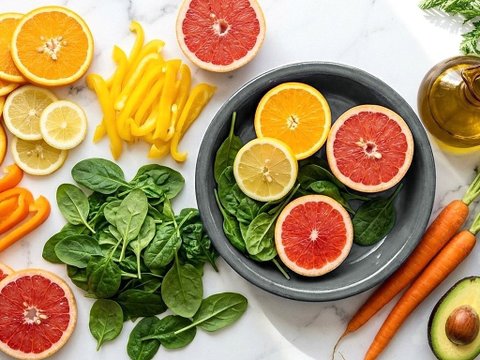
Creating vibrant dishes and baked goods at home does not require artificial additives—commonly available fruits, vegetables, and spices can yield rich, long-lasting colors. Homemade natural food colorings not only enhance the visual appeal of meals but also preserve their original taste and aroma without introducing synthetic compounds. This article outlines proven techniques for extracting dyes in a full spectrum of hues—from red to black—using straightforward kitchen methods that anyone can replicate in their own home.
05 / 07
Which natural and synthetic food colorings stand out for their highest quality and safety in use?
In an era of growing nutritional awareness, where the adage "You are what you eat" carries ever-increasing weight, there is no doubt that the most valuable food colorings are those derived from natural, plant-based sources. Their application not only imparts an appealing, vibrant hue to dishes but, above all, delivers significant health benefits by supplying the body with essential nutrients. In instances where the use of natural sources is not feasible, carefully tested synthetic organic dyes present a viable alternative, including caramel (E150), chlorophyll (E140), carmine (E120), and anthocyanins (E163). Food colorings available on the market come in diverse application forms—ranging from liquid concentrates and highly soluble powders to convenient sprays and thick pastes—enabling precise adaptation to individual culinary and industrial requirements.
06 / 07
Where exactly can one purchase food coloring intended for culinary use?
Food colorings are readily accessible in nearly all major supermarkets as well as in specialty stores catering to baking and confectionery supplies. Additionally, a comprehensive selection of such products can be found in online retailers that focus on decorative baking and dessert-making essentials. Purchasing online provides the advantage of thoroughly examining the ingredient composition of each coloring, thereby enabling an informed selection of the product that best aligns with individual preferences. In cases where there is uncertainty regarding the most suitable form—whether liquid, gel, or powder—there is no need to purchase the entire spectrum of colors. Basic primary hues such as red, blue, and yellow are entirely sufficient, as they can be blended in precise combinations to produce virtually any desired derivative shade.
07 / 07
A comprehensive guide on properly dissolving powdered food colorants – step-by-step instructions
Powdered food colorants exhibit optimal solubility when combined with minimal volumes of liquid mediums, such as distilled water or high-purity ethyl alcohol. As an alternative preparation method, these pigments may be directly incorporated into batter mixtures, frostings, or doughs; however, caution must be exercised regarding dosage—heat exposure during baking or cooking processes will significantly amplify the final hue intensity compared to the raw state. For consumers prioritizing informed grocery selections, developing proficiency in deciphering nutritional labels proves essential to avoid deceptive marketing practices. Complementary insights into the prevalence of preservative additives in food products, alongside practical approaches to minimizing their dietary intake, may further enhance one’s ability to make health-conscious choices.
Meal Plan
Want to apply these guidelines in your daily diet?
Our smart diet generator creates a tailored meal plan in 3 minutes based on the recommendations in this article.
Tags

Scientifically reviewed by a clinical dietitian
• 25.09.2026
Mia Hoffmann
Diets Premium Expert
Diets Premium team expert. Specializes in nutrition plans, strength sports, and training plans.
USDA FoodData Central
EFSA
PubMed Clinical Guidelines