Buckwheat Groats: Characteristics, Nutritional Value, and Dietary Principles
Smart Voice
AITable of Contents 5
This article is professional premium content (PRO) provided in its entirety.
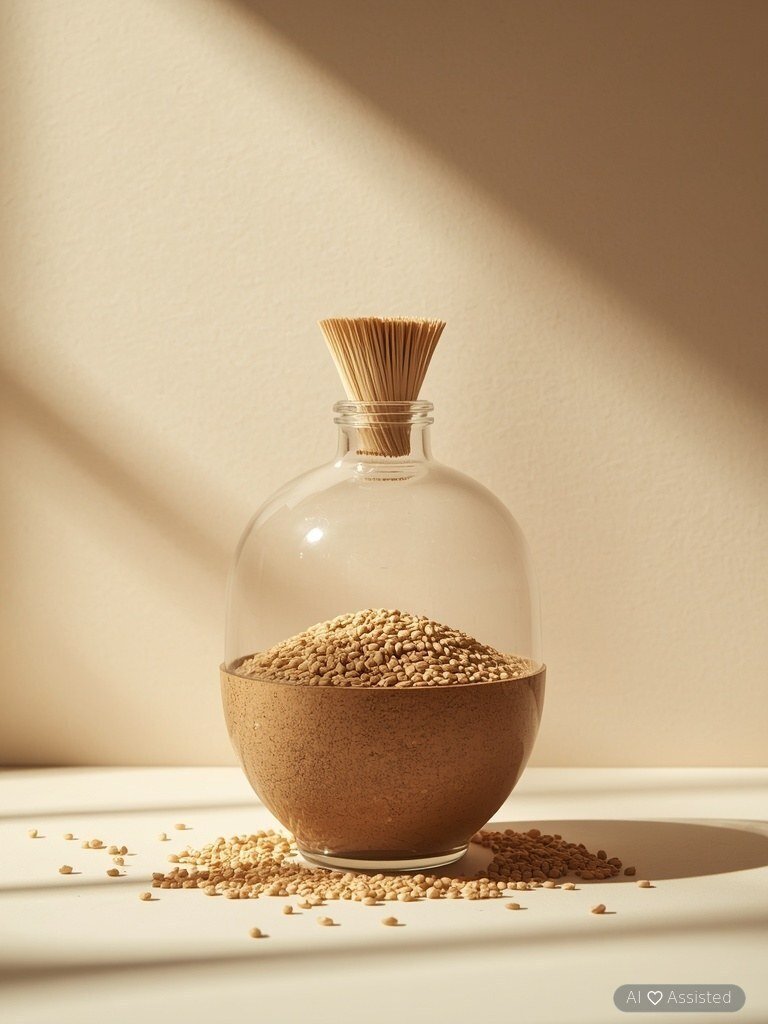
Buckwheat groats – a traditional product made from dehulled common buckwheat seeds
Buckwheat – distinctive nutritional properties and health benefits
Nutritional Profile of Buckwheat Groats: Roasted vs. Unroasted Varieties
Buckwheat groats are available in two primary forms: unroasted (commonly referred to as "white buckwheat," sold as whole, cracked, or finely cracked—e.g., Cracow-style) and roasted (whole or cracked, distinguished by its rich, nutty flavor). As a cereal-based product, buckwheat serves as a primary source of complex carbohydrates while also providing a moderate protein content. Research confirms that the macronutrient profiles (protein, fat, carbohydrates) of roasted and unroasted varieties exhibit negligible differences. However, unroasted white buckwheat may contain up to four times higher levels of polyphenols—antioxidant compounds such as rutin and isoquercetin—compared to its roasted counterpart [1, 2].
Per 100 g of dry buckwheat groats, the average nutritional composition includes 344 kcal, comprising 12.6 g of protein, 3.1 g of fat (predominantly unsaturated fatty acids), and 69.3 g of carbohydrates (of which 5.9 g are dietary fiber, supporting digestive health). This product is also notable for its high micronutrient content, particularly magnesium (218 mg)—critical for neurological function—and zinc (3.5 mg), essential for immune defense. Additionally, buckwheat provides B vitamins: thiamine (B1), riboflavin (B2), niacin (PP), and folate, whereas vitamins A, D, B12, and C are absent from its profile.
Detailed nutritional breakdown per 100 g of dry product [3]:
- Energy: 344 kcal
- Protein: 12.6 g | Fat: 3.1 g | Carbohydrates: 69.3 g (including fiber: 5.9 g)
- Minerals: sodium (5 mg), potassium (443 mg), calcium (25 mg), magnesium (218 mg), iron (2.8 mg), zinc (3.5 mg)
- Vitamins: B1 (0.541 mg), B2 (0.127 mg), niacin (1.950 mg), B6 (0.670 mg), folate (32.0 µg)
Owing to this comprehensive micronutrient density, buckwheat groats—in both unroasted and roasted varieties—provide exceptional dietary support for hematopoietic integrity, immune function, and the prevention of magnesium and zinc deficiencies.
Metabolic properties of buckwheat: Glycemic index, gluten content, and health implications
Buckwheat Culinary Guide: Nutrient-Preserving Recipes and Traditional Preparation Techniques
Want to apply these guidelines in your daily diet?
Our smart diet generator creates a tailored meal plan in 3 minutes based on the recommendations in this article.
Tags

Literatura: Zarzecka K., Gugała M., Mystkowska I., Wartość odżywcza i prozdrowotna gryki siewnej. Probl Hig Epidemiol, 2015, 96, 410–413, Filipiak-Florkiewicz A., Florkiewicz A., Wpływ obróbki hydrotermicznej na zawartość składników odżywczych i bioaktywnych kasz i ryżu, Żywność. Nauka. Technologia. Jakość, 2016, 6, 64–79, Kunachowicz H., Przygoda B., Nadola I. i in., Tabele składu i wartości odżywczej żywności, Wydawnictwo PZWL, Warszawa 2017, http://www.glycemicindex.com/foodSearch.php [data dostępu: 15.05.2018 r.], http://www.kuchniawformie.pl/2017/03/bezglutenowy-chleb-z-kaszy-gryczanej-niepalonej/comment-page-1/ [data dostępu: 15.05.2018 r.], http://www.kaszomania.pl/budyn-czekoladowy-z-kaszy-gryczanej/ [data dostępu:15.05.2018 r.], http://iadorecinnamon.blogspot.com/2015/04/placuszki-gryczane-bez-jajek.html, [data dostępu:15.05.2018 r.]. Zarzecka K., Gugała M., Mystkowska I., Wartość odżywcza i możliwości wykorzystania gryki, „Postępy Fitoterapii” 2014, nr 1, s. 28-31, http://www.czytelniamedyczna.pl/4802,wartosc-odzywcza-i-mozliwosci-wykorzystania-gryki.html [dostęp 15.05.2018]
Diets Premium Expert
Diets Premium team expert. Specializes in nutrition plans, strength sports, and training plans.