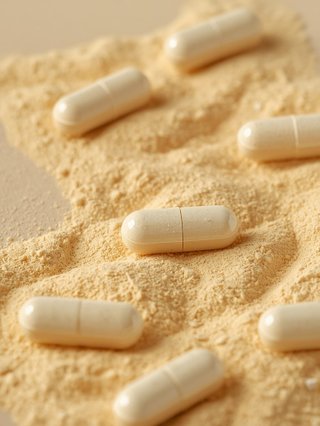
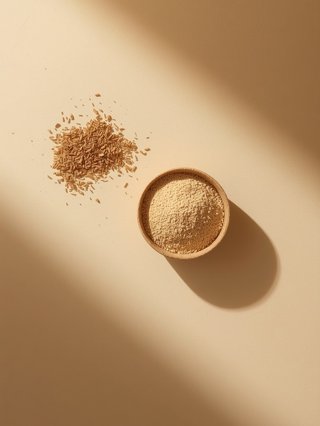
Uses of oat bran: health benefits, fiber richness, and practical ways to use it in the diet
Table of Contents 3
Medical & Editorial Disclaimer (§3 Terms): This article is for informational and educational purposes only, does not constitute medical advice, diagnosis, or treatment, and is used at your own risk. Consult a qualified physician for medical conditions.
The physiological benefits of psyllium seeds are driven by their rich concentration of both soluble and insoluble fiber fractions, dominated by highly branched arabinoxylan mucilages. Upon contact with liquid, these hydrophilic polysaccharides expand to form a soothing, gel-like matrix that normalizes stool consistency and supports the mucosal lining of the digestive tract. Furthermore, the chapters highlight critical safety and pharmacokinetic interactions, explaining how this same mucilaginous network can delay or reduce the intestinal absorption of concurrently taken medications such as thyroid hormones, iron supplements, cardiac glycosides, and oral hypoglycemic agents.
To incorporate psyllium seeds safely and effectively into daily nutrition, intake should be introduced gradually so the intestinal microbiome can adapt without uncomfortable bloating. Every serving must be accompanied by generous fluid intake to ensure proper hydration of the fiber matrix and smooth gastrointestinal passage. Equally important is maintaining a consistent time interval between consuming psyllium and taking any prescription medications, while consulting a healthcare professional prior to use if gastrointestinal strictures or underlying medical conditions are present.
Plantago ovata seeds (commonly designated as blond psyllium or ispaghula) represent one of the most therapeutically validated natural sources of soluble dietary fiber in clinical nutrition. Exhibiting exceptional mucilaginous water-binding capacities, they effectively normalize gastrointestinal transit, resolve chronic constipation and diarrhea, and assist in stabilizing lipid profiles and blood glucose concentrations. This comprehensive guide outlines the biochemical mechanisms, proper hydration protocols, and evidence-based culinary uses of psyllium seeds.
Plantago ovata seeds – nutritional profile and therapeutic properties
Blond psyllium (Plantago ovata) is a resilient annual botanical cultivated primarily in northwestern India and the Mediterranean basin. Its seeds and husks comprise approximately 80% total dietary fiber, distributed between soluble (approx. 47%) and insoluble (approx. 53%) structural fractions.
The principal therapeutic modality of psyllium seeds is governed by highly branched arabinoxylan mucilages. Upon aqueous contact, these hydrophilic polysaccharides swell exponentially, yielding a non-absorbable emollient gel that delivers dual-action bowel regulation:
- Alleviation of constipation: Expands fecal mass and softens stool consistency, gently stimulating physiological colorectal peristalsis through mechanical mechanoreceptor activation.
- Relief of diarrheal states: Binds surplus luminal liquid, increasing stool viscosity and prolonging transit time.
- Mucoprotective and prebiotic benefits: Forms a soothing biological coating over irritated gastrointestinal mucosa while serving as a fermentable substrate for butyrate-producing commensal bacteria.
How to properly integrate psyllium seeds into daily nutrition
The clinical efficacy and physiological safety of Plantago ovata supplementation hinge upon correct administration protocols and sufficient fluid volume:
- Dosage titration: The recommended adult dosage ranges between 1 and 2 teaspoons (approx. 5–10 g) administered once to twice daily. Initiating supplementation gradually (e. g., 1 teaspoon daily for the first week) prevents initial bloating as the microbiome adapts.
- Hydration rule: Each dose must be suspended in at least 150–200 ml of water, diluted fruit juice, or herbal tea, consumed promptly, and followed immediately by another full glass (250 ml) of water. Overall daily fluid intake must not drop below 2 to 2.5 liters.
- Culinary integration: Psyllium seeds seamlessly enrich breakfast oatmeal, smoothies, plain fermented yogurts, vegetable purees, and serve as an exceptional binding agent in gluten-free baking.
Contraindications, drug interactions, and safety considerations
Despite its non-toxic, natural botanical origin, psyllium therapy requires clear adherence to safety and pharmacotherapeutic guidelines:
- Medication timing interval: The mucilaginous matrix can retard or impair intestinal absorption of concomitantly ingested pharmaceutical agents (including thyroid hormones, cardiac glycosides, iron supplements, and oral hypoglycemics). A strict interval of at least 1 to 2 hours must be observed between psyllium intake and medication.
- Absolute contraindications: Mechanical bowel obstruction (ileus), suspected intestinal perforation, acute inflammatory abdomen, esophageal stenosis, and severe dysphagia.
- Impaction risk: Ingesting seeds without sufficient water can precipitate intraluminal bezoar or impaction within the esophagus or intestinal tract.
Want to apply these guidelines in your daily diet?
Our smart diet generator creates a tailored meal plan in 3 minutes based on the recommendations in this article.
Tags

Anna Schmidt
• 25.11.2026Diets Premium Expert
Diets Premium team expert. Specializes in nutrition plans, strength sports, and training plans.