
1 / 1
1 zdjęcie
399
Pufferndes Kreatin vs. herkömmliches Kreatinmonohydrat
Stärke
Kreatinmonohydrat
Creatin
Stabilität
Tim Klein
Autor
2026-03-20
Datum
4 Min. Lesezeit
article.read_time
3
Kapitel
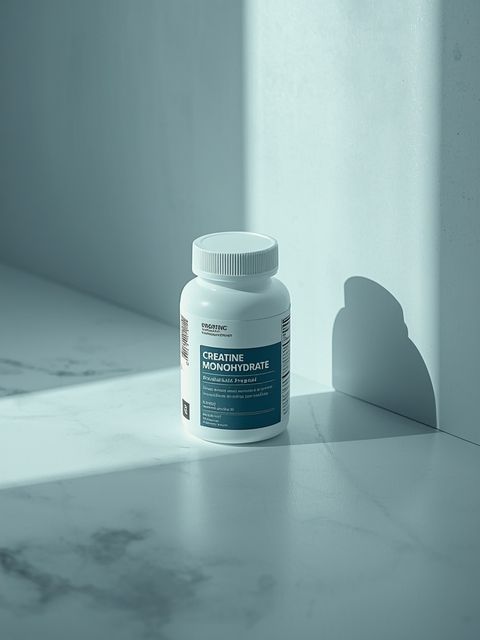
Versprechen wie "100% Stabilität in der sauren Magenumgebung", "bessere Absorption und Verwertung" und "schnellerer Zuwachs an Kraft und Gewicht" werden einer neuen, verbesserten Version des ältesten Nahrungsergänzungsmittels der Welt zugeschrieben. In diesem Fall wird es als gepuffertes Kreatinmonohydrat verkauft, das manchmal auch Kre-Alkalyn genannt wird. Die Wirkung von herkömmlichem Kreatinmonohydrat ist jedoch mehrfach nachgewiesen worden, und einige Quellen bezeichnen es als das effektivste Nahrungsergänzungsmittel für Kraftsportler. Das Problem mit Kreatinmonohydrat ist jedoch, dass es... alt, gut und bewährt ist. Herstellern, die sich auf dem Markt abheben wollen, müssen Innovationen in seine alte Formel einführen und versuchen, sie zu verbessern, um Gewinne zu erzielen. Diese neuen, teureren Formen, obwohl sie bessere Ergebnisse versprechen, halten diese Versprechen in der Praxis nicht immer. Entgegen dem Schein werden sie nicht immer von unabhängigen Studien getestet, so dass es schwierig ist, von einer bahnbrechenden neuen chemischen Formel zu sprechen — aber im Falle von gepuffertem Kreatin stehen Vergleichsstudien mit Kreatinmonohydrat zur Verfügung.
Buffered creatine - purported advantages
The buffered form of creatine, marketed as Kre-Alkalyn, is advertised as a more efficient form of creatine monohydrate. According to information provided by manufacturers, buffering creatine provides it with better stability in the stomach because it is resistant to acidic stomach juices and does not break down into useless creatinine, which is only a metabolite of creatine. This effect is achieved by adding an alkaline powder such as magnesium glycerol or bicarbonate to creatine, in order to adjust the pH to the range of 7-14. Manufacturers claim that such a form of creatine is ten times stronger than normal creatine and that even 1.5g of Kre-Alkalyn is equivalent to 10-15g of the normal variety.
Cre-alkaline compared to monohydrate in a comparative study
The effectiveness of Cre-alkaline was verified by an independent research team led by Andrew Jagim. The scientists wanted to verify the reality of the benefits attributed to buffered creatine. The 41 participants who took part in this 28-day study were divided into 3 groups. The first group took 1.5 grams of Cre-alkaline each day of the study - this is the dose recommended by the manufacturer that can replace up to 15 grams of standard creatine. The second group took 20 grams of creatine monohydrate for the first 5 days, which was the loading phase, while the rest of the 21 days of this group took only 5 grams of creatine per day. The third group received the same doses as the second group, however, instead of monohydrate, the innovative Cre-alkaline was used. - Group 1: 1.5 grams of Cre-alkaline for 28 days; - Group 2: 20 grams of monohydrate for 5 days, 5 grams of monohydrate for 21 days; - Group 3: 20 grams of Cre-alkaline for 5 days, 5 grams of Cre-alkaline for 21 days. If you believe the promises of the manufacturers, 1.5 grams of buffered creatine should allow for similar muscle saturation as in the group taking creatine monohydrate in the classic method including the loading phase. Unfortunately, the study showed that this is not the case. In the first group, the concentration of creatine increased by 4.71 mmol/kg of dry matter, in the group with creatine monohydrate the same indicator improved by 22.3 mmol/kg of dry matter. In the third group, which took large doses of Cre-alkaline, the creatine content in muscles increased by 9.07 mmol/kg of dry matter. The dominance of monohydrate is almost indisputable in this case.
The final verdict
The presented results shouldn't come as a surprise to anyone. The primary advantage of creatine alkaline is its resilience against degradation in the acidic environment of the stomach, however, studies consistently demonstrate that standard creatine monohydrate also doesn't degrade in stomach juices and more than 99% of the creatine consumed is absorbed. True, the higher the pH or the higher the temperature, the greater the conversion of creatine to creatinine, however, studies indicate that to bring about significant change, it takes up to several days of contact with low pH levels, which is an unrealistic scenario when it comes to the process of absorption of nutrients. Note that one study presented at the annual meeting of the International Society of Sports Nutrition in 2007 showed that the conversion of creatine to creatinine from monohydrate at a pH level of 1.0 and 37°C was less than 1% after 5, 30, and 120 minutes, while the conversion of creatine alkaline in similar conditions was 35% higher.