1 / 1
1 zdjęcie
376
Behandlung von Infektionssäulen bei Kleinkindern - was ist mit Infektionssäulen bei Kleinkindern?
Tragen
Oliwia Kaczmarek
Autor
2026-09-24
Datum
5 Min. Lesezeit
article.read_time
5
Kapitel
Die Haut von Neugeborenen unterscheidet sich in vielerlei Hinsicht von der von Erwachsenen... Sie befindet sich im Stadium der Reifung, was es ihr erschwert, ihre entsprechenden Funktionen auszuüben... Die Hornhaut ist dünner und empfindlicher, was zu einem unzureichenden Schutz vor äußeren Faktoren führt... Die Talg- und Schweißdrüsen sind bei Säuglingen noch nicht vollständig entwickelt... Aufgrund dieser Faktoren treten in den ersten Lebensmonaten eines Kindes häufig verschiedene Hauterkrankungen auf... Zu den harmlosen und vorübergehenden Hautsymptomen, die im frühen Lebensstadium auftreten, gehört auch die Infektionssäule [1]... Lasst uns dieses Thema genauer betrachten.
Neonatale akneiforme Dermatitis bei Säuglingen
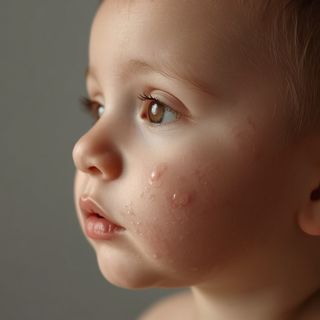
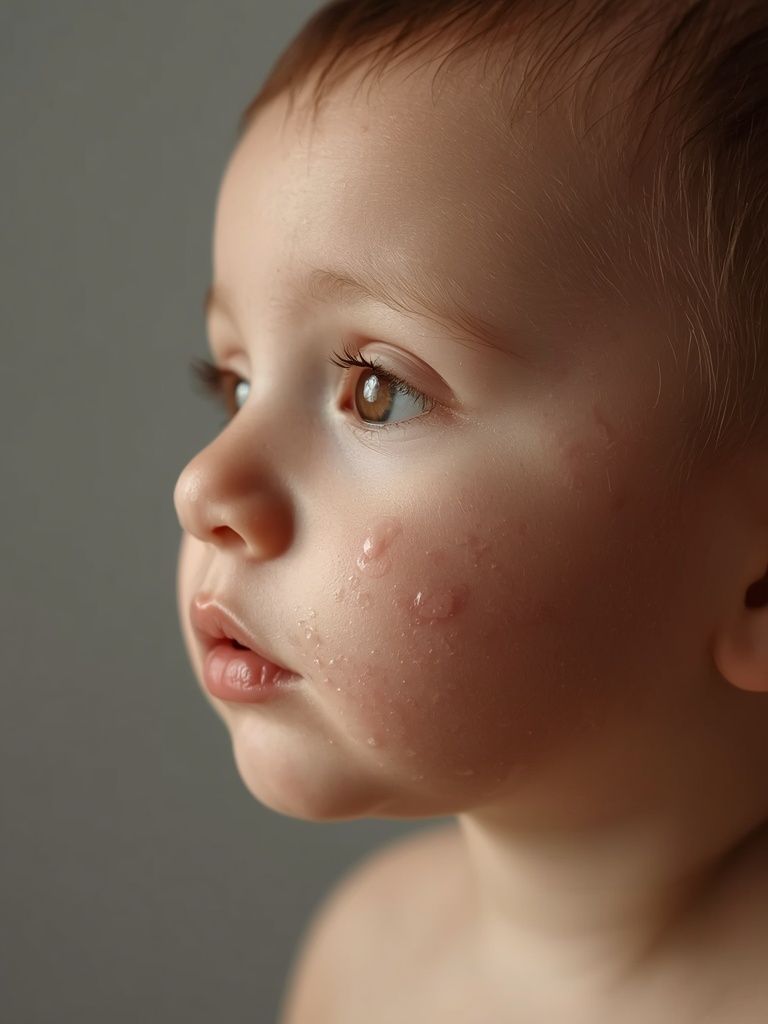
Bei etwa einem Fünftel aller Neugeborenen lassen sich entzündliche Hautveränderungen beobachten, die sich als kleine Papeln, Pusteln und in seltenen Fällen auch als geschlossene Komedonen äußern. Diese dermatologischen Auffälligkeiten treten vornehmlich im Gesicht – insbesondere auf den Wangen, seltener auf der Stirn oder am Kinn – auf [2]. Statistischen Erhebungen zufolge sind Jungen häufiger betroffen als Mädchen. Die genauen pathophysiologischen Mechanismen, die dieser Hauterscheinung zugrunde liegen, sind in der pädiatrischen Dermatologie bisher nicht vollständig geklärt. Die vorherrschende wissenschaftliche Meinung führt die Entstehung dieser Effloreszenzen auf eine übermäßige Stimulation der Talgdrüsen durch Androgene zurück – sowohl durch die vom kindlichen Organismus selbst produzierten als auch durch mütterliche Hormone, die während der Schwangerschaft oder in der Stillphase über die Plazenta bzw. die Muttermilch auf das Kind übergehen. Die Hautsymptome manifestieren sich in der Regel unmittelbar nach der Geburt oder innerhalb der ersten Lebenswochen. Typischerweise präsentieren sich die Veränderungen als rötlich-rosa entzündliche Papeln und Pusteln, während klassische Komedonen vergleichsweise selten auftreten. Im Gegensatz zur Acne vulgaris sind bei dieser neonatalen Form weder der Rücken noch die Brustpartie betroffen. In einigen dokumentierten Fällen kann die Hautreaktion zudem als Nebenwirkung der Anwendung pflegender Präparate mit mineralölhaltigen Inhaltsstoffen auftreten, welche die Ausführungsgänge der Talgdrüsen verstopfen [3].
Dauer der Babyakne: Wann verschwindet sie und welche Unterschiede gibt es zwischen früher und später Form?
Säuglingsakne kann in seltenen Fällen bereits bei der Geburt vorliegen, tritt jedoch in der Regel erst zwischen der zweiten und vierten Lebenswoche auf. Die Hautveränderungen bilden sich meist von selbst zurück, und zwar im Zeitraum zwischen dem sechsten und zwölften Lebensmonat des Kindes, wie klinische Studien zeigen [2]. Eine spätere Variante dieser Dermatose manifestiert sich erst zwischen dem dritten und sechsten Lebensmonat. In solchen Fällen klingen die Symptome vor dem vollendeten dritten Lebensjahr ab, weshalb diese Form medizinisch als Säuglings- oder frühkindliche Akne eingestuft wird, entsprechend den fachlichen Richtlinien [4].
Babyähnliche Asthma und Proteinschäden
Bei Milchallergie in Kühen verschwinden die Haut-Symptome und andere Erkrankungen entstehen, z.B. im Atemwegsbereich. Allergien können auch mit Erbrechen, Mangel an Hunger, Zentralentzündung usw. verbunden sein. [5] Bei Symptomen, die auf den Hals, den Körper und die Gliedmaßen hinweisen, kann ein Protein-Syndrom auftreten.
Behandlungsmethoden für Säuglingsakne – therapeutische Ansätze und pharmakologische Empfehlungen
Säuglingsakne, medizinisch als *Acne neonatorum* oder *Acne infantum* bezeichnet, klingt in der Regel spontan ab, sobald sich die Talgdrüsen zurückbilden, was meist innerhalb der ersten Lebensmonate geschieht. Bei ausgeprägten Hautveränderungen oder anhaltendem Verlauf kann jedoch eine gezielte topische Therapie erforderlich werden. Als Mittel der ersten Wahl gilt Erythromycin in Form eines Gels oder einer Lösung, das bzw. die zweimal täglich aufgetragen wird. Alternativ kommen Kombinationen aus Erythromycin mit Zinkpräparaten oder individuell hergestellte Rezepturen mit diesem Spurenelement zum Einsatz. Fachliteratur belegt zudem die Wirksamkeit von oralem Isotretinoin bei schweren Formen der Säuglingsakne, insbesondere bei Therapieresistenz gegenüber lokalen Behandlungen und oralen Antibiotika. Isotretinoin wird ebenfalls bei hohem Narbenbildungsrisiko eingesetzt. Die optimale Dosierung dieses Retinoids ist nicht eindeutig definiert – einige Experten empfehlen eine kumulative Gesamtdosis von 120 mg/kg Körpergewicht, während andere vorschlagen, die Therapie unmittelbar nach Abklingen der Symptome zu beenden. Übliche Dosierungsschemata liegen zwischen 0,2 und 2,0 mg/kg Körpergewicht pro Tag, wobei die Behandlungsdauer vier bis vierzehn Monate betragen kann. Isotretinoin wird von pädiatrischen Patienten generalmente gut vertragen, und mögliche Nebenwirkungen sind in der Regel mild und vorübergehend.
Was kann man gegen Babyakne tun? Hausmittel und Pflegeempfehlungen für empfindliche Haut
Säuglingsakne, medizinisch als *Acne neonatorum* bezeichnet, ist ein häufiges, aber harmloses Hautphänomen, das in der Regel ohne medizinische Behandlung innerhalb weniger Wochen oder Monate von selbst abklingt. Studien zeigen, dass das Auftreten dieser Hautveränderungen kein erhöhtes Risiko für die spätere Entwicklung von Jugendakne während der Pubertät darstellt [1]. Neben einer selten notwendigen medikamentösen Therapie gibt es bewährte Hausmittel und Pflegeempfehlungen, die den Heilungsprozess unterstützen können. Von entscheidender Bedeutung ist, dass mechanische Manipulationen wie Ausdrücken oder Kratzen der Pickel strikt vermieden werden müssen, da dies zu Reizungen, bakteriellen Infektionen und einer Verschlimmerung des Hautbildes führen kann. Stattdessen sollte auf sanfte, pH-hautneutrale Reinigungsprodukte zurückgegriffen werden – der übermäßige Gebrauch von Pflegeprodukten wie Ölen oder Lotionen kann die empfindliche Hautbarriere des Babys stören und die Symptome verstärken. Auch die Wahl der Kleidung spielt eine wichtige Rolle: Synthetische Stoffe sollten vermieden werden, während atmungsaktive Naturmaterialien wie Baumwolle bevorzugt werden. Zudem ist es ratsam, Überhitzung des Säuglings zu vermeiden, da dies die Talgproduktion anregt und die Entstehung von Hautunreinheiten begünstigt. Da die Haut von Neugeborenen noch in der Entwicklungsphase ist, reagiert sie besonders empfindlich auf äußere Reize. Eine konsequente, aber zurückhaltende Pflege ist daher essenziell. Falls die Akne länger als drei bis vier Monate anhält oder sich verschlimmert, sollte ein Kinderarzt oder Dermatologe aufgesucht werden, um eine gezielte Behandlung einzuleiten.
Tags