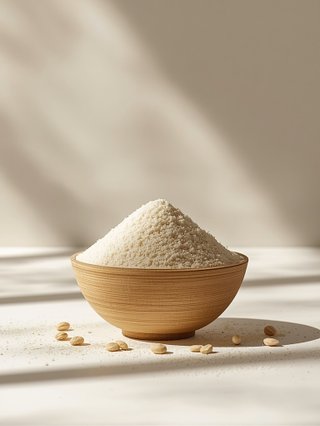
Whole grain vs. traditional flour – why is it worth making the switch?


Table of Contents 3
Medical & Editorial Disclaimer (§3 Terms): This article is for informational and educational purposes only, does not constitute medical advice, diagnosis, or treatment, and is used at your own risk. Consult a qualified physician for medical conditions.
The physiological superiority of whole grain flour stems from its complete anatomical structure, which includes the fiber-dense bran and the nutrient-rich germ. Refined flour strips away these essential layers, leaving behind only the starchy endosperm. By choosing whole grains, you benefit from a complex matrix that slows digestion and promotes a more stable glucose response, while simultaneously providing essential minerals and prebiotic fibers that nourish the gut microbiome and support cardiovascular health.
Integrating whole grain flour into your daily diet is a practical and effective way to improve your health. Whether you are preparing baked goods, pancakes, or pasta, opting for whole grain varieties ensures you receive a higher density of vitamins and dietary fiber. This simple dietary adjustment helps improve satiety signals and contributes to better overall health, making it an excellent choice for those seeking to nourish their bodies with more wholesome, nutrient-dense ingredients.
Flour is a staple across households worldwide, yet conventional refined white flour delivers isolated starches stripped of essential micronutrients. This guide explains why switching to whole grain flour improves glycemic control, digestive health, and cardiovascular wellness.
Milling Differences and Whole Grain Anatomy
A whole cereal grain encompasses three distinct anatomical layers:
- Endosperm: Accounting for roughly 83% of the grain, consisting almost entirely of starchy carbohydrates and storage proteins.
- Bran: The multi-layered protective outer husk dense in dietary fiber, B-vitamins, and phytochemicals.
- Germ: The embryo core concentrated in essential fatty acids, tocopherols (vitamin E), and zinc.
Refined white flour strips away both the bran and germ, retaining only isolated starch. In contrast, 100% whole grain flour grinds the entire kernel, preserving the complete physiological matrix.
Nutritional Profile: Fiber, Minerals, and Glycemic Index
Direct nutritional comparison highlights the immense biochemical superiority of whole grains:
- Dietary fiber: Whole grain flour delivers 10–12 grams of fiber per 100 g versus an impoverished 2–3 grams in white flour.
- Micronutrient density: Whole grain retains 300–400% more magnesium, iron, zinc, potassium, and thiamine.
- Glycemic Index (GI): Refined flour triggers sharp postprandial glucose surges, whereas the intact fiber matrix of whole grain blunts glycemic response.
Impact on Metabolic Health, Satiety, and Digestion
Prospective cohort studies consistently associate high whole grain intake with profound chronic disease prevention:
- Gastrointestinal microbiome: Prebiotic fermentable fibers promote short-chain fatty acid (SCFA) production, supporting colonocyte barrier integrity.
- Cardiovascular protection: Viscous fibers bind intestinal bile acids, facilitating endogenous clearance of circulating LDL cholesterol.
- Type 2 Diabetes mitigation: Enhanced insulin sensitivity and satiety signaling lower long-term cardiometabolic risk.
Culinary tip: Transition smoothly by blending 50% whole wheat with 50% traditional flour in baked goods before progressing to 100% whole grain.
Want to apply these guidelines in your daily diet?
Our smart diet generator creates a tailored meal plan in 3 minutes based on the recommendations in this article.
Tags

mgr Max Müller
• 25.11.2026Diets Premium Expert
Diets Premium team expert. Specializes in nutrition plans, strength sports, and training plans.