5 min read
When and how to take probiotics correctly and how to avoid overdosing on them

1 photo
796
Smart Voice
AI
0:00
0:00
Listen to the article content live
Table of Contents 5
Medical & Editorial Disclaimer (§3 Terms): This article is for informational and educational purposes only, does not constitute medical advice, diagnosis, or treatment, and is used at your own risk. Consult a qualified physician for medical conditions.
Clinical E-Books & Diet Plans:
Explore E-Books & Plans →
Key Takeaways
Probiotics are living microorganisms that, when consumed in appropriate amounts, can help support digestive balance and overall well-being. This diverse group primarily encompasses lactic acid-producing bacteria from the Lactobacillus and Bifidobacterium genera, alongside beneficial yeast strains such as Saccharomyces boulardii. Whether obtained through functional foods, dietary supplements, or pharmaceutical preparations, understanding the optimal timing and proper dosage is essential for anyone seeking to maximize microbial survival while avoiding the potential risks associated with excessive intake.
A critical physiological consideration explored in the article involves coordinating probiotic administration with meals and concurrent medical treatments. During antibiotic therapy, probiotic cultures play an important supportive role in mitigating gastrointestinal disturbances, yet they must not be ingested simultaneously with the medication, as the active pharmaceutical agent can inhibit the viability of the beneficial strains. Furthermore, clinical insights emphasize that true efficacy relies far more on the scientifically validated properties of specific strains and their timing relative to food intake than on sheer microbial quantity alone. Alongside concentrated supplement formulations, naturally fermented foods such as plain yogurt, traditional kefir, cultured buttermilk, acidophilus milk, and pickled vegetables serve as reliable everyday sources of indigenous lactic acid bacteria.
To apply these insights safely in daily life, individuals should prioritize supplements with clearly identified strains and adhere strictly to evidence-based usage guidelines rather than assuming higher doses yield superior results. Incorporating natural fermented dairy or vegetable products into regular meals offers a practical nutritional foundation, though those with lactose intolerance may need to select dairy-free ferments or targeted capsule preparations. Consulting a healthcare professional or registered dietitian remains the most reliable way to tailor probiotic use to personal health needs.
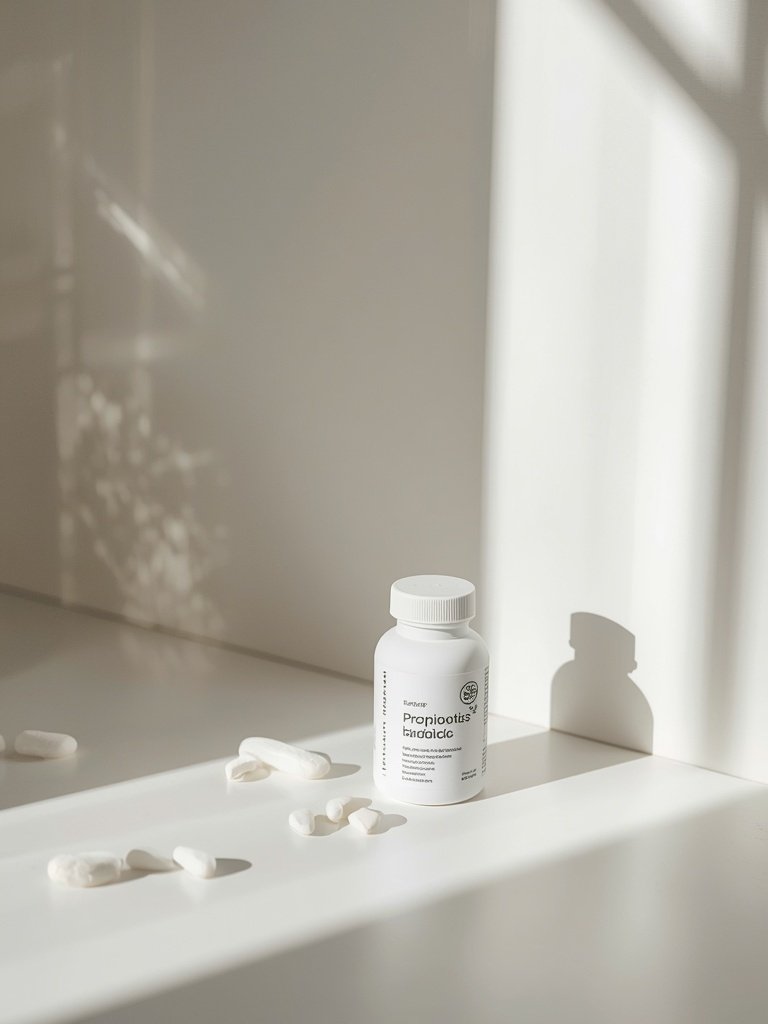
Probiotics are living microorganisms that yield favorable health benefits when consumed in suitable quantities. This category of microorganisms primarily includes lactic acid-producing bacteria such as Lactobacillus and Bifidobacterium. Other microorganisms, such as the yeast Saccharomyces boulardii, are also classified as probiotics due to their beneficial impact on the body. Probiotics can be derived from food products, dietary supplements, or pharmaceutical preparations [1].
01 / 05
Optimal timing for probiotic supplementation – when is the best time to take them?
The administration of probiotics plays a critical role during antibiotic treatment, as it helps mitigate the risk of adverse effects, including gastrointestinal disturbances. It is crucial to avoid concurrent intake of probiotic supplements with antibiotics, since the active pharmaceutical ingredient may inhibit the beneficial activity of the bacterial strains contained within the probiotic. Beyond their protective function during antibiotic therapy, probiotics also contribute to the restoration of gut microbiota following the completion of pharmacological treatment [3]. Furthermore, their use is justified in specific clinical scenarios, such as cases of diarrhea, *Helicobacter pylori* eradication protocols, allergy management and atopic dermatitis, colitis, irritable bowel syndrome, and necrotizing enterocolitis [4]. Given that distinct probiotic strains exert varying effects on the human body, it is advisable to consult a healthcare professional prior to initiating supplementation to ensure tailored and effective outcomes.
02 / 05
Guidelines for the proper use of probiotic supplements: How to determine the optimal dosage?
Currently, a wide array of products—ranging from functional foods to dietary supplements—are commercially available, all fortified with live probiotic bacterial cultures. The microbial content per single serving may vary significantly, spanning from a few million to as many as tens of billions of colony-forming units (CFU). However, the **critical determinant of efficacy** is not merely the quantitative presence of microorganisms but rather their **clinically validated effectiveness**, as demonstrated through rigorous scientific investigations. Most conventional formulations contain concentrations between **1 × 10⁹ and 1 × 10¹⁰ CFU per dose**, though certain strains exhibit therapeutic benefits even at lower concentrations. Conversely, some compositions necessitate higher dosages to achieve the desired health outcomes. It is essential to recognize that the **bacterial count listed on the packaging does not invariably correspond to the actual number of viable microorganisms that successfully colonize the large intestine**—their survival is contingent upon multiple variables, including resistance to gastric acid and storage conditions. To date, **there remains an absence of universally standardized guidelines** pertaining to minimum effective dosages or quality benchmarks for probiotic products. Consequently, manufacturers bear the responsibility of not only accurately disclosing the composition but also **providing comprehensive, evidence-based dosing instructions**.
See also: *Natural probiotic sources: 5 homemade preparations you can easily make yourself* | *Probiotics – definition, mechanisms of action, and potential health benefits* | *The impact of gut microbiota on skin condition, hair health, and overall well-being*.
03 / 05
When is the best time to take probiotics—before, during, or after a meal? Evidence-based timing for bacterial survival and efficacy
Upon examining the labels of various probiotic supplements, one may observe inconsistent manufacturer recommendations regarding the optimal timing of administration. Some advise consumption prior to meal initiation, others during the eating process, and yet others suggest ingestion only after meal completion. Additionally, certain sources propose that the most beneficial approach involves taking probiotics between meals. To resolve this discrepancy, a controlled scientific investigation was conducted to determine under which conditions the bacterial strains contained in probiotic formulations exhibit the highest survival rates within the gastrointestinal tract. The findings conclusively demonstrated that the most favorable circumstances occur when probiotics are consumed either concurrently with a meal or immediately before its commencement. Furthermore, researchers emphasized that the presence of dietary fats significantly enhances the viability of probiotic bacterial strains. Therefore, to maximize the benefits derived from probiotic supplementation, it is advisable to ensure that the meal with which the probiotic is taken includes fat sources—a conclusion supported by the study published in reference [6].
04 / 05
Excessive intake of probiotic supplements: risk assessment, safety considerations, and usage guidelines
Within the human gastrointestinal tract, bacteria belonging to the genera *Lactobacillus* and *Bifidobacterium* constitute a critical component of the indigenous microbial community, whereas other microbial species persist in lower concentrations, often transiently. The ingestion of traditional lactic acid bacteria associated with food fermentation processes—such as those employed in yogurt or pickled vegetable production—is widely regarded as safe for human consumption. However, probiotic supplements available commercially exhibit substantial heterogeneity in their microbial composition, which directly influences both their therapeutic efficacy and the spectrum of potential adverse effects. These parameters are intrinsically linked to the specific bacterial strain and the colony-forming unit count per dose [4]. For instance, preparations containing live, human-derived *Lactobacillus* strains—due to their adaptation to intestinal environmental conditions—appear highly tolerable, with overdose considered theoretically unattainable [7]. Nonetheless, a foundational tenet of toxicology dictates that any substance, regardless of its safety profile, may elicit deleterious physiological responses if administered in excessive quantities. Consequently, adherence to manufacturer-recommended dosing guidelines represents the most prudent approach, while any uncertainties should prompt consultation with a qualified healthcare professional or pharmacist. Furthermore, experts emphasize the urgent necessity for additional rigorous scientific investigations to definitively ascertain whether—and under what circumstances—probiotic overexposure may occur, particularly in the context of prolonged or high-dose regimens.
05 / 05
Dietary sources of natural probiotic cultures – identification and associated health benefits
Beyond the wide array of pharmaceutical formulations and dietary supplements, naturally fermented foods represent a rich source of live probiotic cultures. The most concentrated sources include dairy products such as cultured buttermilk, traditional kefir, plain yogurt, and milk fermented with *Lactobacillus acidophilus* strains. While these items constitute the primary dietary sources of probiotics in modern nutrition, their consumption may be limited for individuals with lactose intolerance or sensitivities to other allergenic compounds present. A viable alternative is found in plant-based products subjected to controlled probiotic fermentation—particularly those derived from soy, cereals, vegetables (e.g., sauerkraut, pickled cucumbers), and fruits. The fermentation process not only enriches foods with beneficial microorganisms but also diminishes the content of antinutritional factors such as phytic acid, which is naturally present in grains, legumes, and nuts. Less conventional probiotic sources include specially prepared, non-heat-treated cured meats, lyophilized infant formula supplemented with probiotic bacteria, and kombucha—a fermented tea produced through the symbiotic interaction of yeast and acetic acid bacteria. Extensive research confirms that regular probiotic intake exerts beneficial effects not only on gut microbiota composition but also on the broader physiological functioning of multiple organ systems. Consequently, it is advisable to incorporate a diverse range of probiotic-rich foods into daily dietary patterns, supplementing them when necessary with targeted probiotic formulations containing specific bacterial strains.
Meal Plan
Want to apply these guidelines in your daily diet?
Our smart diet generator creates a tailored meal plan in 3 minutes based on the recommendations in this article.

mgr Mateusz Pawlak
• 25.11.2026Diets Premium Expert
Diets Premium team expert. Specializes in nutrition plans, strength sports, and training plans.