How to choose running shoes? A comprehensive guide to biomechanics, cushioning, and surface

Table of Contents 5
Medical & Editorial Disclaimer (§3 Terms): This article is for informational and educational purposes only, does not constitute medical advice, diagnosis, or treatment, and is used at your own risk. Consult a qualified physician for medical conditions.
Comprehensive biomechanical evaluation requires examining subtalar joint kinematics, arch support, and foot strike classifications such as neutral alignment or overpronation. Furthermore, terrain calibration dictates whether footwear needs specialized urban road traction or aggressive off-road lug configurations to handle uneven forest tracks. Understanding these structural interactions helps maintain stability and mitigates excessive skeletal loading during training sessions.
Practical guidelines emphasize acquiring running shoes with adequate toe clearance to accommodate foot expansion and thermal vasodilation during prolonged exercise. Runners should consistently monitor midsole foam compaction and structural fatigue, replacing worn-out training shoes before cushioning degradation transfers raw impact forces directly to sensitive joints.
Running Biomechanics and Ground Reaction Forces: Why Proper Footwear Protects Joint Integrity
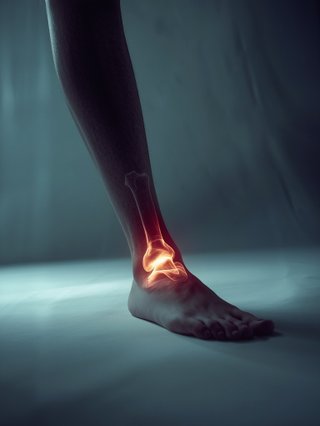
During distance running on unforgiving surfaces, each foot strike generates an impact transient radiating through the calcaneus, subtalar joint, patella, and lumbar spine. For a 70 kg athlete, kinetic impact forces repeatedly surpass 200 kg per stride. Contemporary running footwear integrates structural stabilization, torsional rigidity, and impact attenuation.
Running in generic sneakers or degraded lifestyle shoes invites overuse pathologies, including Achilles tendinopathy and iliotibial band syndrome. Advanced midsole compounds (PEBAX, supercritical EVA, TPU) not only disperse peak impact vectors but also return elastic energy during propulsion, preserving connective tissue integrity.
Pronation, Supination, and Neutral Foot Strike: Conducting the Wet Test and Determining Arch Support
Evaluating subtalar joint kinematics during stance phase is paramount. Biomechanical foot strikes divide into three classifications:
- Neutral Foot Strike: Initial ground contact occurs on the lateral calcaneus, rolling smoothly inward by roughly 15 degrees to disperse load across the forefoot. Neutral runners require standard cushioned trainers devoid of medial postings.
- Overpronation: The arch collapses medially beyond physiological norms, inward-rotating the tibia and straining the medial patellofemoral complex. Overpronators require structured Stability shoes featuring dual-density medial posts or guide-rail systems.
- Supination (Underpronation): The foot remains locked on its lateral border throughout stance. Supinators require high-cushion, flexible footwear to augment attenuated shock absorption.
The Wet Paper Test: Moisten the plantar foot surface and step firmly onto dry cardboard. A balanced imprint with a moderate medial cutout denotes neutral mechanics; a completely filled imprint signifies overpronation; a thin lateral stripe indicates high arches and supination.
Terrain Calibration: Urban Asphalt vs. Off-Road Trail and Woodland Environments
Running environments dictate chassis construction, tread geometry, and upper durability:
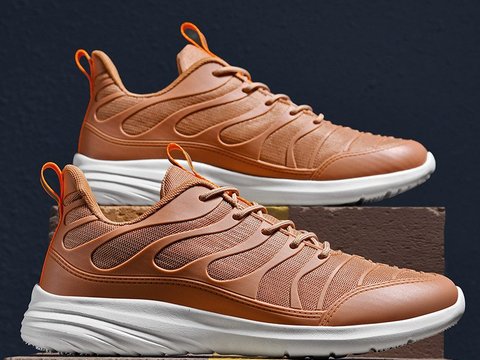
- Road Footwear (Asphalt and Concrete): Engineered with shallow lug configurations and carbon rubber compounds designed for abrasion resistance. Midsoles prioritize vertical cushioning volume, paired with ultra-breathable engineered mesh uppers for heat dissipation.
- Trail Footwear (Off-Road and Forest Tracks): Outsoles incorporate aggressive multi-directional 4–6 mm rubber lugs that bite into mud, wet clay, and scree. Protective features include reinforced toe caps (rock bumpers), dense tear-resistant uppers, and protective thermoplastic rock plates embedded between midsole layers to shield against sharp stones.
Sizing, Width, and Drop Parameters: Why Running Shoes Must Be Larger Than Everyday Footwear
A critical miscalculation is purchasing running footwear in one's standard dress-shoe size. Under protracted repetitive loading and thermal vasodilation, the foot elongates and expands within the shoe chassis during distance running.
Runners must ensure a 5 to 10 mm clearance (roughly a half-to-full size surplus) between the longest toe and the anterior toebox. Inadequate clearance culminates in subungual hematomas ('black toenails') and blisters. Footwear should be fitted in the late afternoon wearing running-specific socks. Additionally, evaluate the heel-to-toe drop: traditional 8–12 mm drops accommodate heel strikes, whereas low drops (0–6 mm) encourage midfoot striking but demand resilient calf musculature.
When to Retire Running Shoes: Midsole Fatigue Lifespans and Structural Wear Indicators
Even when upper textiles remain pristine, the internal cellular matrix of midsole foams suffers structural fatigue and compaction over repetitive strike cycles, substantially degrading dampening capacity and transferring raw impact forces directly to skeletal structures.
The established operational lifespan for training shoes ranges between 600 and 800 kilometers (400 to 500 miles), modulated by runner mass and stride mechanics. Definitive indicators for shoe retirement include visible deep wrinkling/compaction along the midsole perimeter, worn-down outsole tread exposing midsole foam, asymmetric heel counter tilt, and the onset of insidious post-run joint or shin soreness.
Want to apply these guidelines in your daily diet?
Our smart diet generator creates a tailored meal plan in 3 minutes based on the recommendations in this article.
Tags

Katarzyna Mazur
• 25.11.2026Diets Premium Expert
Diets Premium team expert. Specializes in nutrition plans, strength sports, and training plans.