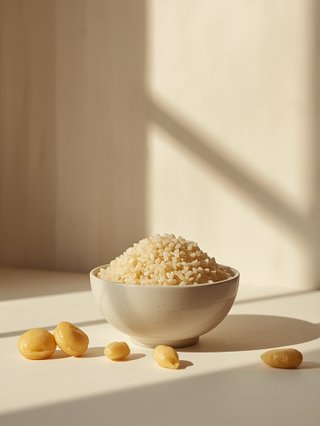
Do standard oat grains naturally contain gluten?


Table of Contents 3
Medical & Editorial Disclaimer (§3 Terms): This article is for informational and educational purposes only, does not constitute medical advice, diagnosis, or treatment, and is used at your own risk. Consult a qualified physician for medical conditions.
Physiologically, oats exert profound supportive effects on cardiovascular and metabolic health. Their high content of soluble dietary fiber, particularly beta-glucans, acts within the digestive tract to bind cholesterol and inhibit its reabsorption, thereby contributing to healthy blood lipid profiles. Furthermore, these fibers promote a gradual glucose response, helping to maintain stable blood sugar levels and prolonged satiety. The presence of powerful antioxidants, including phenolic compounds and vitamin E, further helps neutralize oxidative stress and counter inflammatory markers. The primary consideration regarding gluten in commercial oat products stems not from the grain itself, but from potential cross-contamination during agricultural harvesting, transportation, and industrial processing.
For daily health management, incorporating whole-grain oat foods—such as rolled oats, oat bran, and oat flour—provides a convenient way to enhance fiber intake, support electrolyte balance, and optimize metabolic efficiency. Individuals requiring a strict gluten-free regimen should specifically select products labeled and certified as gluten-free to ensure complete protection against cross-contact with wheat, rye, or barley. When integrated into a balanced diet, oats serve as a highly effective, nutrient-dense staple that fosters digestive harmony and long-term vitality.
Common oat, a member of the Poaceae family, represents one of the primary cultivated crops in temperate climate regions spanning both Eurasia and North America. Its domestication by human populations occurred during prehistoric times, approximately six thousand years ago. Within modern agriculture, a substantial portion of the harvested oat yield is allocated for animal feed and seed stock, while the remaining part is utilized in the food industry, processed into high-quality oat flour, widely consumed rolled oats, diverse types of groats, and fiber-rich bran. Nutritionally, oats are distinguished by their substantial content of complete protein, as well as an array of essential micronutrients, such as calcium—critical for skeletal health, magnesium—vital for muscle and nerve function regulation, potassium—key to electrolyte balance, iron—indispensable for oxygen transport in the blood, and a complex of B vitamins, which play a pivotal role in the body’s metabolic processes.
Nutritional value and health properties of oats
Oats are among the healthiest grains in the world. As a whole-grain product, they serve as an excellent source of essential nutrients. Thanks to their content of minerals, lipids, beta-glucans, and flavonoids, oats are recognized as a valuable food with beneficial physiological effects.
They lower low-density lipoprotein (LDL) cholesterol levels, exhibit anti-inflammatory properties, and reduce the risk of type 2 diabetes. Antioxidants found in oats include vitamin E, phenolic compounds, phytic acids, sterols, and flavonoids. Although some of these antioxidants are heat-sensitive, the majority remain stable during processing, which is highly advantageous for commercial oat products.
Health benefits: cholesterol, blood sugar, and weight management
Thanks to its dietary fiber content, oats increase satiety, support the digestive system, and accelerate metabolism. Studies show that individuals who regularly consume whole-grain products are more likely to have a normal body mass index (BMI) and a lower prevalence of overweight and obesity. The soluble dietary fiber beta-glucan binds cholesterol in the intestine, reducing its reabsorption and protecting the cardiovascular system. Furthermore, due to its low glycemic index, oats help stabilize blood glucose levels after meals, which is particularly beneficial for individuals with insulin resistance and type 2 diabetes.
Are oats naturally gluten-free?
A gluten-free diet is essential for individuals with celiac disease, wheat allergy, or non-celiac gluten sensitivity. Gluten is a mixture of proteins found naturally in wheat (gliadin), rye (secaline), and barley (hordein).
Pure oats do not inherently contain gluten, but rather avenin, which is well-tolerated by the vast majority of celiac patients. However, the main issue with commercial oat products is the risk of cross-contamination with gluten-containing grains during harvesting, transport, storage, or processing. Therefore, individuals requiring a strict gluten-free diet should only consume certified gluten-free oat products.
Want to apply these guidelines in your daily diet?
Our smart diet generator creates a tailored meal plan in 3 minutes based on the recommendations in this article.
Tags

Literatura: Jasińska Z., Kotecki A. Szczegółowa uprawa roślin tom I, Wydawnictwo Uniwersytetu Przyrodniczego we Wrocławiu, 2003 Carol E. O’Neil , Theresa A, Nicklas , Victor L, Fulgoni, III , Maureen A. DiRienzo . Cooked oatmeal consumption is associated with better diet quality, better nutrient intakes, and reduced risk for central adiposity and obesity in children 2–18 years: NHANES 2001–2010. Food Nutr Res. 2015; 59:10 Qingtao Hou , Yun Li , Ling Li , Gaiping Cheng , Xin Sun , Sheyu Li , Haoming Tian . The Metabolic Effects of Oats Intake in Patients with Type 2 Diabetes: A Systematic Review and Meta-Analysis. Nutrients . 2015 Dec; 7(12): 10369–10387. Paula Tighe , Garry Duthie , Nicholas Vaughan , Julie Brittenden , William G Simpson , Susan Duthie , William Mutch , Klaus Wahle , Graham Horgan , Frank Thies . Effect of increased consumption of whole-grain foods on blood pressure and other cardiovascular risk markers in healthy middle-aged persons: a randomized controlled trial. 2010 American Society for Nutrition Othman RA , Moghadasian MH , Jones PJ . Cholesterol-lowering effects of oat B-glucan. Nutr Rev. Jun;69(6):299-309 Rebello CJ , Chu YF , Johnson WD , Martin CK , Han H , Bordenave N , Shi Y , O’Shea M , Greenway FL . The role of meal viscosity and oat β-glucan characteristics in human appetite control: a randomized crossover trial. Nutr J. May 28;13:49. Kristensen M , Jensen MG . Dietary fibres in the regulation of appetite and food intake. Importance of viscosity. Appetite. Feb;56(1):65-70. Nazare JA , Normand S , Oste Triantafyllou A , Brac de la Perrière A , Desage M , Laville M . Modulation of the postprandial phase by beta-glucan in overweight subjects: effects on glucose and insulin kinetics. Mol Nutr Food Res. Mar;53(3):361-9 Tapola N , Karvonen H , Niskanen L , Mikola M , Sarkkinen E . Glycemic responses of oat bran products in type 2 diabetic patients. Nutr Metab Cardiovasc Dis. Aug;15(4):255-61. http://www.bmj.com/content/343/bmj.d6617 Sur R , Nigam A , Grote D , Liebel F , Southall MD . Avenanthramides, polyphenols from oats, exhibit anti-inflammatory and anti-itch activity. Arch Dermatol Res. Nov;300(10):569-74 Thompson T .Oats and the gluten-free diet. J Am Diet Assoc. Mar;103(3):376-9. Haboubi NY , Taylor S , Jones S . Coeliac disease and oats: a systematic review. Postgrad Med J. Oct;82(972):672-8.
Diets Premium Expert
Diets Premium team expert. Specializes in nutrition plans, strength sports, and training plans.