Discover your inner strength: strategies for effective personal transformation through dialogue with your subconscious "elephant"

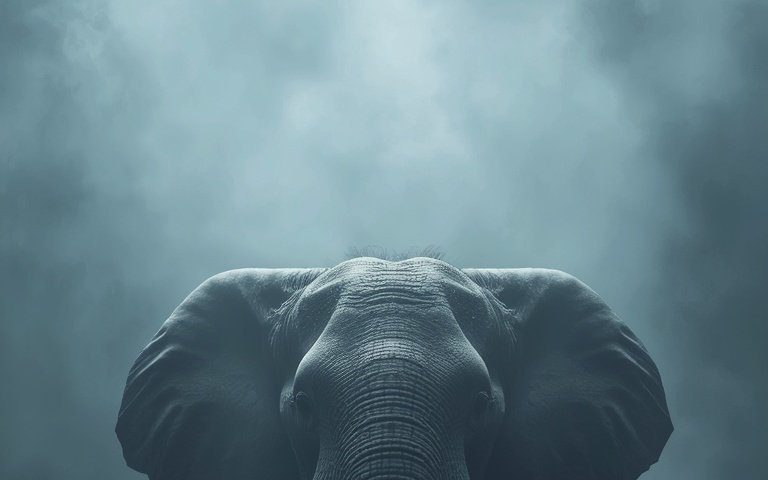
Table of Contents 3
Medical & Editorial Disclaimer (§3 Terms): This article is for informational and educational purposes only, does not constitute medical advice, diagnosis, or treatment, and is used at your own risk. Consult a qualified physician for medical conditions.
From a neurological and evolutionary perspective, the subconscious mind is hardwired to prioritize biological energy conservation and familiarity. The intuitive elephant within us evaluates every action based on potential effort versus reward, inherently preferring comfortable, established habits over the uncertainty of new behaviors. When individuals attempt to adopt healthier lifestyles or new daily routines, the rational rider's enthusiasm often wanes as cognitive fatigue sets in. Without a clear emotional incentive that satisfies the subconscious, the mind naturally reverts to entrenched patterns, illustrating why willpower by itself is an unsustainable tool for long-term progress.
To cultivate meaningful personal growth, practical strategies must focus on establishing constructive dialogue with these core psychological principles. Sustainable habit formation is best achieved by lowering the friction required to start a new action and ensuring that positive behaviors yield immediate emotional satisfaction. By thoughtfully structuring one's daily environment and respecting the natural tendencies of the mind, individuals can make healthy choices feel intuitive rather than demanding. This collaborative approach transforms self-improvement into a harmonious journey, supporting overall well-being, mental resilience, and authentic transformation.
This article is professional premium content (PRO) provided in its entirety.
Have you found yourself repeatedly attempting to modify harmful behavioral patterns, only to encounter an invisible barrier each time that thwart your intended goals? If so, there is a strong likelihood that you are acting like a rider who, instead of collaborating with the powerful yet unconscious "elephant" of your psyche, tries to forcefully subjugate it to your will. This metaphor, borrowed from behavioral psychology, perfectly illustrates the internal conflict between the rational mind and emotional, automatic responses. Fortunately, you are not alone in this struggle—millions of individuals worldwide grapple with a similar dilemma. This article will introduce you to methods for establishing a constructive dialogue with this powerful, yet often overlooked, part of yourself. By understanding the mechanisms that govern its operation, you will come to realize that implementing lasting, positive changes in life need not be a process doomed to failure. Instead, it can become a fascinating journey into the depths of your own psyche, leading to authentic transformation.
The Elephant and Rider Metaphor – Neurological Foundations of the Mind
The metaphor of the elephant and the rider originates from the seminal work of American social psychologist Jonathan Haidt, The Happiness Hypothesis: Finding Modern Truth in Ancient Wisdom. To fully grasp its clinical and behavioral significance, it is essential to examine the evolutionary architecture of the human brain through Paul MacLean's triune brain model. Over millions of years, neural structures developed in stratified layers. The most primitive and basal layer—the reptilian brain (encompassing the brainstem and basal ganglia)—regulates essential autonomic functions such as respiration, cardiac rhythm, and instinctual survival drives (fight-or-flight responses). Above it evolved the paleomammalian brain or limbic system, governing affective states, emotional memories, social attachment, and reward seeking. Finally, the most evolutionary recent and sophisticated structure is the neocortex (particularly the prefrontal cortex), orchestrating conscious reasoning, executive planning, abstract logic, and inhibitory self-control. In Haidt's metaphor, the massive elephant embodies the older, subconscious, and instinctual brain structures (the reptilian and limbic networks), whereas the rider perched atop represents conscious, rational intellect (the neocortex). While the rider appears to hold the reins, physical control is largely an illusion: if a six-ton elephant becomes terrified, hungry, or enticed, it will inevitably charge along its preferred path. True and sustainable behavioral transformation is never achieved through violent subjugation or white-knuckled willpower, but rather through establishing empathetic, strategic cooperation between rider and elephant.
The Elephant, the Rider, and Habit Change – The Trap of Raw Willpower
Countless times in life we embark on journeys of self-improvement—resolving to shed excess weight, adopt a nourishing diet, quit smoking, or exercise regularly. In the nascent phase, enthusiasm runs high; the inspiring vision of a healthier self fuels intense motivation. Yet within weeks, the novelty fades, and deliberate habit-building deteriorates into arduous labor. At this juncture, the majority abandon their resolutions and regress into entrenched routines, becoming trapped in a demoralizing cycle of frustration and guilt. Why does this recurring failure happen? The fundamental reason is neglecting to engage the subconscious elephant in the process of change. Many attempt to enforce transformation purely through coercive willpower—the rider shouts commands, mercilessly strikes the elephant with the whip of rigid discipline, and remains blind to its distress. This plays out when one endures severe caloric deprivation or forces themselves through joyless workouts through gritted teeth. However, cognitive self-control is a finite neurobiological resource subject to ego depletion. The moment the rider tires, the unpersuaded elephant breaks free and bolts toward habitual instant comforts—high-sugar treats and sedentary distraction. The rider can only sustainably steer the elephant when they align with its emotional architecture, cultivating an intrinsic desire within the elephant to tread the chosen path.
The Eight Operational Rules of the Elephant – Collaborating with the Subconscious
To establish fruitful collaboration with our subconscious elephant, we must master the eight foundational rules governing its operation:
1. The elephant conserves biological energy (apparent laziness): Its primordial evolutionary imperative is energy conservation for survival. Before undertaking any task, it conducts an intuitive cost-benefit appraisal. To secure its consent, the perceived reward must clearly outweigh the energy expended.
2. Better the familiar misery than the unknown heaven: The elephant is profoundly risk-averse, treating unfamiliar terrain as a potential survival threat. The winning strategy is kaizen—dissecting monumental goals into micro-habits so small that they trigger zero emotional resistance.
3. The elephant is an unapologetic hedonist: The subconscious gravitates toward pleasure and flees discomfort. Abstract logic will never persuade the elephant if a habit feels like pure deprivation; the process itself must incorporate genuine enjoyment and experiential reward.
4. The elephant learns through emotional experience: Limbic conditioning anchors behaviors that provide immediate psychological relief. Designing reinforcing positive feedback loops after healthy behaviors trains the elephant to seek those habits repeatedly.
5. The elephant demands to know: "Why?": While the analytical rider obsesses over tactical "hows" and "whats", the elephant requires deep, visceral emotional meaning ("why does this matter to me?"). Passion and core values, not cold metrics, ignite its monumental drive.
6. Communicate with the elephant through sensory imagery: Brain networks regulating motivation interface directly with visual and verbal coding centers. Vivid sensory visualization, verbalizing commitments, and journaling articulate goals in a language the elephant readily understands.
7. The elephant exists strictly in the "here and now": Much like a young child, distant rewards scheduled months ahead lack motivating power. Structuring immediate micro-rewards and savoring present feelings of vitality bridges the temporal gap.
8. You cannot deceive the elephant—honor its authenticity: The elephant detects internal incongruence, forced pretending, and suppressed distress instantaneously. Somatic cues and intuition represent its authentic voice; lasting mastery arises from honoring these insights rather than silencing them.
Want to apply these guidelines in your daily diet?
Our smart diet generator creates a tailored meal plan in 3 minutes based on the recommendations in this article.

Alicja Kowalska
• 25.11.2026Diets Premium Expert
Diets Premium team expert. Specializes in nutrition plans, strength sports, and training plans.