Diet with Minimal Allergy Frequency

1 photo
2881
Smart Voice
AI
0:00
0:00
Listen to the article content live
Table of Contents 6
PRO Content
PRO
This article is professional premium content (PRO) provided in its entirety.
Allergies are regarded as the pandemic of the 21st century, particularly in highly developed nations where environmental pollution is substantial. Furthermore, the enhancement of hygienic living conditions has led to a decrease in microbiological stimulation. Less interaction with parasites, fungi, and bacteria results in the immune system not being sufficiently stimulated, thereby leading to an incorrect response. Potentially harmless factors such as food and inhalation allergens are perceived as threats.
01 / 06
The most frequently occurring food allergens in children
Food allergies typically affect children up to the age of 2-3 years, as their immune system is constantly developing and affects their nutrition. Food components supplied with the diet enable the colonization of the digestive tract by beneficial microorganisms (F. van Wijk, L. Knippels 2007). Food allergies affect around 6-8% of small children, of which 4.5% are children under the age of 1 year. It is particularly common in children who are fed modified milk (2.7%) compared to those who are fed naturally (1.8%) (M. Kaczmarski, J. Semeniuk, A. Krasnow 2000). The most common food allergens in children are cow's milk, chicken eggs, soy, wheat, peanuts, other nuts, fish, and shellfish, which are known as the big eight allergens (S. H. Sicherer, H. A. Sampson 2006, I. C. Hospers, K. de Vries-Vrolijk, P. L. P. Brand 2006).
02 / 06
Avoidance of food allergies
Avoidance of food allergies focuses on reducing the risk of their occurrence in children with increased risk. In healthy parents, the likelihood of their child developing an allergy ranges from 5 to 15%. However, if one parent is an allergy sufferer, the risk increases to 20-40%, and if both parents are allergy sufferers, the risk reaches 40-60%. Environmental factors such as air pollution, fuel combustion, use of antibiotics (especially in the first two years of the child's life) and excessive hygiene have an impact on the development of allergies. Exposure to tobacco smoke can lead to frequent inflammatory diseases of the respiratory tract and asthma. Scientific studies have shown that the use of an elimination diet by the mother during breastfeeding has no basis for the prevention of allergies in children (M.S. Kramer 2000; F.R. Greer, S.H. Sicherer, A.W. Burks 2008). The diet should be varied and balanced, as it affects not only the quality of food but also the physical and mental development of the child. It is recommended to consume products with the least possible processing, without preservatives and dyes during breastfeeding and at any age. The best way to prevent allergies is exclusive breastfeeding for 4-6 months (A. Høst et al. 2008). This reduces the risk of atopic dermatitis, cow's milk protein allergy, and asthma (I. Kull et al. 2005). In the prevention of food allergies in children with increased atopy risk, but without symptoms, the use of hydrolyzed protein is recommended - with low or high degree of hydrolysis. It is best if they are enriched with prebiotics, as they have a positive impact on health. Studies have shown that the use of hydrolyzed protein with prebiotics in children up to the 6th month of life reduces the risk of atopic dermatitis up to the 2nd year of life. Additionally, the risk of bronchitis, urticaria, infectious diseases, especially those requiring antibiotic therapy, is reduced (S. Arslanoglu et al. 2008). The use of soy products is not recommended, as soy often causes allergies. An interesting fact concerns peanuts - early introduction of peanuts into the child's diet reduces the risk of developing allergies to them in children with increased risk (G. du Toit et al. 2015). Most children (about 80%) with diagnosed food allergies in infancy outgrow the disease, usually by the 4-5th year of life.
03 / 06
Breastfeeding and food intolerances
In the case of a diagnosed food intolerance, an elimination diet is recommended, which applies to both the breastfeeding mother and the baby if the diet is already expanded. There is no need to cease breastfeeding, quite the contrary, as it supports the development of the immune and digestive systems. In the case of an intolerance to cow's milk protein, a dairy-free diet is introduced for both the mother and the baby. The diet should eliminate substances causing intolerance in a restrictive manner. During lactation, the diet should provide adequate protein, fat, vitamins, and minerals. In the case of a dairy-free diet, even for a short period, the supplementation of calcium, vitamin D, and DHA fatty acids is crucial.
04 / 06
Nutritional regimen for the purpose of diminishing minor allergies
The foundation of treating food allergies lies in the introduction of a suitably composed elimination diet. It is worth noting that every elimination of food items from the diet should precede laboratory test results, and it is best to initiate dietetic therapy under the supervision of an expert - a nutritionist and an allergologist. The key lies in excluding all allergens, incorporating pharmacological treatment, and supplementing with probiotics and prebiotics as a supporting therapy. Correctly administered treatment allows for halting the progression of allergic disease.
05 / 06
The most commonly made errors and tips during the elimination of allergenic products
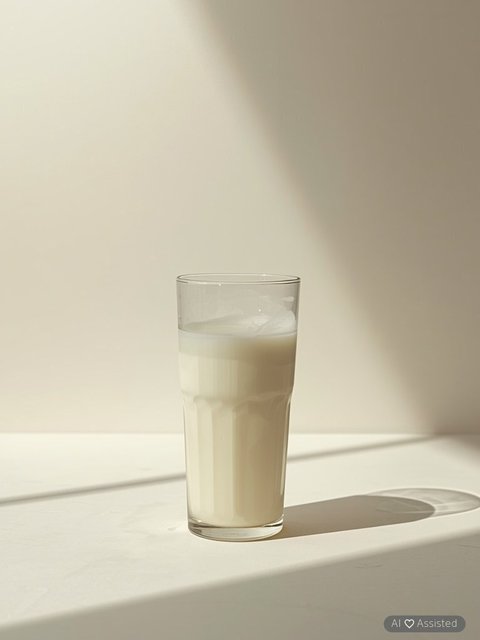
When using a diet that excludes certain groups of products, mistakes can be made unconsciously, which may lead to invisible results. The most commonly made errors are related to the introduction of allergenic product substitutes, which may also cause allergies or not meet the requirements for the food ingredients supplied by the eliminated food. In the case of an allergy to cow's milk protein, a common substitute is the milk of other animals - goat or sheep. However, in practice, the sequence of amino acids present in these types of milk is similar to that of cow's milk, which means that after the introduction of goat or sheep milk, the same symptoms as in the case of cow's milk may appear. Therefore, it is recommended to use plant-based beverages as a substitute for animal milk, such as oat, rice, coconut, soy, almond or nut drinks. However, it should be noted that rice drink is not recommended for children under 4 years of age due to the arsenic content, and soy drink may cause allergic reactions in children with an allergy to cow's milk protein. Also, drinks made from nuts are not suitable for children with a nut allergy.
06 / 06
What should we substitute for eggs? (the proportions depend on how many eggs in the recipe we want to replace)
For thickening, we can use banana puree. For binding, we can use baking powder or baking soda. For dilution, we can use apple juice. For binding, we can use flax seeds and starch. For bubbling, we can use potato flour and water. The most common reaction to cereal is a wheat allergy. The replacement is often orchid, which is an ancestral type of glutathione, but it should also be eliminated from the diet as an essential ingredient. For binding, we can use breakfast cereal that is contaminated with meals. For spraying, we can use mineral oil and water. The most common reaction to cereal is a wheat allergy.
Meal Plan
Want to apply these guidelines in your daily diet?
Our smart diet generator creates a tailored meal plan in 3 minutes based on the recommendations in this article.

Scientifically reviewed by a clinical dietitian
• 23.03.2026
mgr Adamska I., Czerwionka-Szaflarska M., Profilaktyka alergii pokarmowej u dzieci, „Standardy Medyczne. Pediatria” 2010, 7, 580–589. Arslanoglu S. et al., Early dietary intervention with a mixture of prebiotic oligosaccharides reduces the incidence of allergic manifestations and infections during the first two years of life, „Journal of Nutrition” 2008, 138, 1091–1095. Błażowski Ł., Kurzawa R., Alergia na białka mleka krowiego – teoria i praktyka. Część I. Obraz kliniczny i zasady rozpoznawania, „Standardy Medyczne. Pediatria” 2017, 5, 1–11. Bongaerts G.P.A., Severijnen R.S.V.M., Preventive and curative effects of probiotics in atopic patients, „Medical Hypotheses” 2005, 64(6), 1089–1092. Du Toit G. et al., Randomized trial of peanut consumption in infants at risk for peanut allergy, „The New England Journal of Medicine” 2015, 26(372), 803–813. Fewtrell M. et al., Complementary Feeding: A Position Paper by the European Society for Paediatric Gastroenterology, Hepatology, and Nutrition (ESPGHAN) Committee on Nutrition, „Journal of Pediatric Gastroenterology and Nutrition” 2017, 64(1), 119–132. Grabowska-Szymańska M., Najczęściej popełniane błędy podczas diety eliminacyjnej, „Food Forum” 2018, 6(28), 18–20. Greer F.R., Sicherer S.H., Burks A.W., Effects of early nutritional interventions on the development of atopic disease in infants and children: the role of maternal dietary restriction, breastfeeding, timing of introduction of complementary foods and hydrolyzed formulas, „Pediatrics” 2008, 121, 183–191. Hospers I.C., de Vries-Vrolijk K., Brand P.L.P., Double-blind, placebo-controlled cow’s milk challenge in children with alleged cow’s milk allergies, performed in a general hospital: diagnosis rejected in two-thirds of the children, „Nederlands Tijdschrift voor Geneeskunde” 2006, 150, 1292–1297. Høst A. et al., Dietary prevention of allergic diseases in infants and small children, „Pediatric Allergy and Immunology” 2008, 19, 1–4. Kaczmarski M., Semeniuk J., Krasnow A., Nadwrażliwość pokarmowa, „Nowa Pediatria” 2000, 4, 8–10. Kaczmarski M. et al., Polskie stanowisko w sprawie alergii pokarmowej u dzieci i młodzieży, „Advances in Dermatology and Allergology” 2011, 28, 75–115. Kramer M.S., Maternal antigen avoidance during pregnancy for preventing atopic disease in infants of women at high risk, „Cochrane Database of Systematic Reviews” 2000, 2. Kull I. et al., Breast-feeding reduces the risk for childhood eczema, „The Journal of Allergy and Clinical Immunology” 2005, 116, 657–661. Lifschitz C., Wpływ diety eliminacyjnej na stan odżywienia oraz zaburzenia wzrastania u dzieci z alergią na pokarm, „Standardy Medyczne. Pediatria” 2015, 12, 191–196. Małaczyńska T., Leczenie dietetyczne dzieci z alergią na białka mleka krowiego, „Standardy Medyczne. Pediatria” 2013, 10, 745–755. Marek K., Alergia pokarmowa u dzieci, „Forum Medycyny Rodzinnej” 2013, 7(6), 349–354. Sicherer S.H., Sampson H.A., Food allergy, „The Journal of Allergy and Clinical Immunology” 2006, 117, 470–475. Szachta P., Sieńczewski Ł., Alergie i nietolerancję pokarmowe u dzieci – niedoceniany problem?, „Food Forum” 2016, 6(16), 63–72. van Wijk F., Knippels L., Initiating mechanisms of food allergy: Oral tolerance versus allergic sensitization, „Biomedicine & Pharmacotherapy” 2007, 61, 8–20.
Diets Premium Expert
Diets Premium team expert. Specializes in nutrition plans, strength sports, and training plans.
USDA FoodData Central
EFSA
PubMed Clinical Guidelines