3 min read
Cereal flakes: typical, mountain, and quick – comparison of features and differences


1 photo
815
Smart Voice
AI
0:00
0:00
Listen to the article content live
Table of Contents 2
Medical & Editorial Disclaimer (§3 Terms): This article is for informational and educational purposes only, does not constitute medical advice, diagnosis, or treatment, and is used at your own risk. Consult a qualified physician for medical conditions.
Clinical E-Books & Diet Plans:
Explore E-Books & Plans →
Key Takeaways
Cereal flakes represent a foundational staple in a balanced diet, yet this everyday term encompasses distinct product varieties known as ordinary, mountain, and rapid flakes. While the starting raw material is consistently a wholesome grain such as oats, barley, or spelt, the specific manufacturing technique determines which beneficial compounds are retained in the final product and which are lost during production. Understanding how industrial processing alters the structural integrity of the grain helps consumers make informed choices that align with their nutritional goals.
The production journey begins with raw grains that are stripped of their outer hull, standardized in shape, exposed to high-pressure steam to increase moisture, and finally flattened into their recognizable shape. Ordinary flakes represent the least processed variety because they are formed by pressing the intact, moistened grain while completely omitting any intermediate cutting stage. In contrast, mountain flakes and rapid instant varieties undergo additional crushing or grinding of the grain alongside steaming and pressing, a mechanical step that facilitates faster hydration in the kitchen but can simultaneously lead to a reduction in natural mineral content.
When incorporating cereal flakes into daily meal planning, selecting the appropriate variety depends on balancing nutritional density with preparation convenience. Choosing ordinary flakes made from whole pressed grains supports optimal mineral retention and provides a hearty texture well suited for unhurried cooking or overnight soaking. Meanwhile, mountain and rapid flakes offer a practical, easily digestible alternative for busy mornings when a softer consistency and swift preparation without extensive boiling are desired.
Cereal flakes are a term commonly used, yet it refers to three distinct types: ordinary, mountain, and rapid. The primary ingredient for the production of cereal flakes is a balanced grain such as oats, barley, or spelt, however, the processing method determines which ingredients will remain in the finished product after processing and which will be lost with the waste.
01 / 02
The manufacturing process of oat flakes
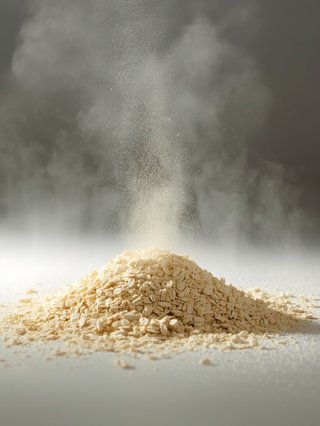
The production of oat flakes begins with raw oat grains that undergo a series of processing stages. Initially, the grains are stripped of their outer layer and their shape is standardized. In a subsequent step, which is not nutritionally optimal, the grains can be crushed, resulting in a reduction of mineral content. Following this, they are exposed to high-pressure steam, which increases their moisture content. Afterward, the grains are stored and flattened to achieve the characteristic flake shape. Finally, the product is dried and packaged in plastic or paper containers.
02 / 02
Varieties of Oat Flakes
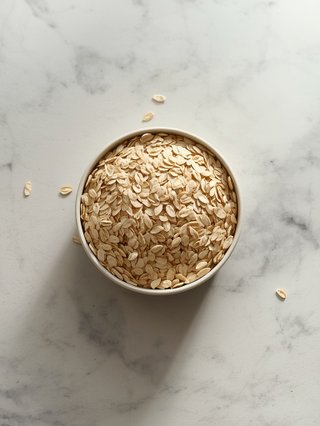
Standard oat flakes are produced by crushing the entire grain, which has been processed and moistened. They are the least processed product among the mentioned varieties, as the crushing step has been omitted. Mountain flakes are created by additional grinding of the grain, supplementing the standard oat flake production process. The steamed grain is partially or fully pressed. Instant flakes come in two types: standard instant and mountain instant flakes. Their key feature is the additional grain hydration, which speeds up cooking. Pre-processing hydration loosens the grain structure, facilitating water absorption during cooking. For consumers, this means faster achievement of the desired texture and improved digestibility.
Meal Plan
Want to apply these guidelines in your daily diet?
Our smart diet generator creates a tailored meal plan in 3 minutes based on the recommendations in this article.

mgr Mateusz Pawlak
• 25.11.2026Diets Premium Expert
Diets Premium team expert. Specializes in nutrition plans, strength sports, and training plans.