4 min read
Calm down, young man!


1 photo
881
Smart Voice
AI
0:00
0:00
Listen to the article content live
Table of Contents 15
Medical & Editorial Disclaimer (§3 Terms): This article is for informational and educational purposes only, does not constitute medical advice, diagnosis, or treatment, and is used at your own risk. Consult a qualified physician for medical conditions.
Clinical E-Books & Diet Plans:
Explore E-Books & Plans →
Key Takeaways
Stretching is an essential component of any physical activity, often serving as the bridge between intense exertion and effective recovery. When training concludes, muscles remain in a contracted state, which can lead to reduced elasticity, hindered recovery, and an increased risk of injury. Maintaining a consistent stretching routine is vital for supporting spinal health and preventing discomfort that might otherwise impede your ability to pursue your chosen discipline at a high level.
The physiological mechanisms involved in stretching focus on enhancing muscle elasticity and promoting tissue relaxation. By utilizing static variations, you encourage the release of tension within the muscle fibers and improve overall circulation. This process helps to mitigate the risk of inflammation caused by tight muscles and ensures that the body remains supple and resilient. A well-rounded approach that addresses various muscle groups contributes to a more balanced and functional musculoskeletal system.
Incorporate relaxing stretching exercises into your daily routine, particularly following your workouts, to maximize the benefits for your body. Always prioritize correct form and gentle movements over intensity, ensuring that you listen to your body throughout each stretch. By making these practices a regular habit, you support your long-term physical health and maintain the flexibility necessary for a balanced and active lifestyle.
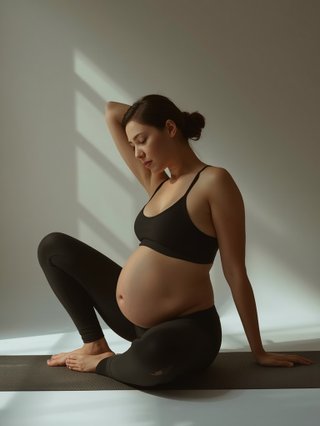
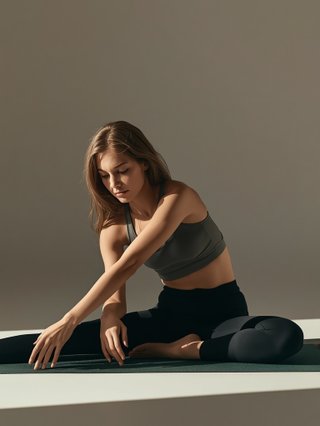
Stretching is a shared term for all sorts of physical activity. Stretching should be carried out after finishing the training session, as contracted muscles become shorter, recover poorly, and are more prone to injuries. A lack of constant stretching can result in back diseases such as diskopathy and even impede the practice of a certain discipline at a high level. To evade these adverse outcomes, take a look at the list of stretching exercises below.
01 / 15
How to correctly perform stretching exercises?
Stretching is a series of exercises that promotes muscle elasticity and stretching. After intense physical exertion, you should start with a static variation. It involves relaxing individual parts of the body in a resting position, rather than energetic movements of the limbs or rotations of the wrists. Before stretching, always perform a good warm-up, such as a short run or another form of exercise. Stretching tight muscles can lead to inflammation. Incorporate relaxing exercises into your daily routine immediately after the main phase of your workout, without taking a break in between. Stretch all muscle groups, not just those you worked on that day. Be mindful of symmetry – stretch both sides of the body and the entire legs. After stretching the back wall of the legs, also pay attention to the front. Do not press too hard on the stretched body parts – a light push is sufficient. The breathing technique is very important during stretching. Take long breaths through the nose and exhale through the mouth. Deepen the bends during exhalation. Try to hold each stretch for about 20 seconds.
02 / 15
Extension of the lumbar spine segment
Lie down on the surface, bend your legs at the knees and shift them towards the body, enclose your legs with your arms and press them even firmer against the body. After a certain period, you can commence gentle rocking forwards and backwards.
03 / 15
The confectionery department
Lie down on your back, incline your lower limbs towards the ground, place one foot on the other, without modifying the position of the lower extremities, raise them towards the chest, and after 20 seconds, alter the position.
04 / 15
The back portion
Occupy a seated position on your feet... Lower your chest all the way down to the surface and stretch your hands in front of you... Try to keep your fingers on the surface as far as possible... Do not put pressure on your neck, your head should rest comfortably on the ground.
05 / 15
Superior Limbs
Protrude your hand straight ahead in the elbow... Apply pressure to it against your chest with the other hand... Simultaneously, attempt to relax your wrist by executing rotational movements... Upon finishing this workout, replicate it on the opposite side.
06 / 15
Thoracic container
Establish a wide stance and interlock your hands behind your back, attempting to pull them out forcefully. Face your countenance towards the ceiling and open your thoracic container. The interlocked hands should be at the level of or above the navel.
07 / 15
The digestive tract
Position yourself on your abdomen... situate your hands beside the chest area near the body... the ends of your feet should loosely adhere to the ground... elevate your body, extend your upper limbs... gently incline your head in a backward direction.
08 / 15
The torso's side
Set your feet in a striding stance.. Raise your left arm upwards, move your right arm down along your torso.. Lean your body to the right, while simultaneously pulling your right arm to the left.. Do not shift your body weight onto one side or protrude your hips.. After 20 seconds, repeat the exercise on the opposite side.
09 / 15
Front wall of the lower leg
Position your feet at hip-width distance, seize the ankle of your left leg with the hand on the same side and press it against your glutes, place your other hand on your hip, gently advance the hips forward, and reiterate the exercise with your right leg.
10 / 15
The rear wall of the legs
Assume a straddle stance, elevate your straight arms up in your elbows. Tilt to the right, persisting in this position for no less than 20 seconds. Transfer your body mass to the center, touching the floor, then lean to the left. Returning to the standing position, rotate your spine along the way, and then straighten up.
11 / 15
The inner segment of the lower extremities
Assume a position on the floor, join your feet together, direct the soles of your footwear in your direction, grasp both ankles and gently press your knees towards the floor.
12 / 15
Foot Flexion Towards Knee
Shoot your arms forward and grasp a stable piece of furniture or equipment... take a step forward... bend your right foot and push your left foot far back... attempt to press the left foot to the floor... repeat on the opposite side.
13 / 15
Neck
Position your ear at the shoulder in a standing or sitting stance, gently press your head with your hand... also perform the exercise on the opposite side.
14 / 15
Biceps, not exceeding a thickness of 10 mm
Prolong your open hand in front of you, maintain your arm straight in the elbow joint, direct the middle of your hand towards the ceiling, utilize your other hand to grip your fingers and compress them, replicate this motion to the opposite side.
15 / 15
Alternative, with a maximum thickness of 10 mm
Flex your arm at the elbow and push it behind you, as if you wanted to touch your shoulder blades... Perform a deeper stretch by pushing the elbow back with your other hand... Do not forget to repeat the exercise on the other side.
Meal Plan
Want to apply these guidelines in your daily diet?
Our smart diet generator creates a tailored meal plan in 3 minutes based on the recommendations in this article.

Katarzyna Mazur
• 25.11.2026Diets Premium Expert
Diets Premium team expert. Specializes in nutrition plans, strength sports, and training plans.