
Nutrition
4 min read
Bee Sting – Properties, Ointment, Cost
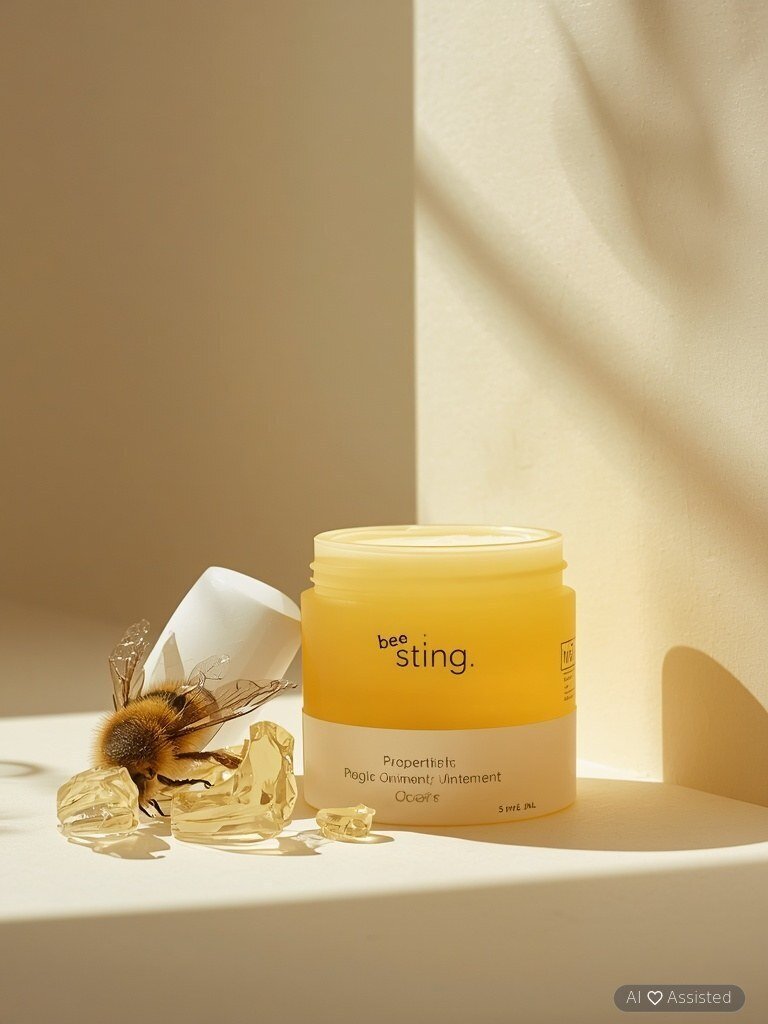
1 photo
740
Smart Voice
AI
0:00
0:00
Listen to the article content live
Table of Contents 4
Bee sting is the secretion from the venom gland of bees. It often triggers abrupt allergic reactions. However, it possesses a range of health characteristics that have been utilized in natural medicine for a long time. The answers to these questions are contained in the following article: In what form is it available and at what price is it obtainable on the market? For what purpose should bee sting be utilized?
01 / 04
Apitoxin: The defensive bee secretion with centuries-old medicinal applications
Apitoxin, commonly referred to as bee venom, represents an exceptionally valuable biologically active substance synthesized by bees as part of their innate defensive mechanisms. This complex secretion contains specialized alarm pheromones whose release during the stinging act of a single bee triggers a chain reaction, compelling other bees to engage in aggressive behavior. In its initial physical state, the venom exhibits a viscous, syrup-like consistency that rapidly undergoes transformation upon exposure to atmospheric conditions, solidifying into a hardened, desiccated form—thereby substantially facilitating subsequent processing and storage procedures. Notably, apitoxin demonstrates remarkable resilience to thermal extremes, maintaining stability under both low and high temperature conditions. From a sensory perspective, it is characterized by a subtly perceptible bitterness interspersed with a pronounced, pungent aftertaste. Historical records corroborate its centuries-long utilization within traditional natural medicine, particularly in the management of diverse rheumatic disorders of inflammatory and degenerative etiology. However, it is imperative to emphasize that, owing to its potent allergenic properties, administration may in certain instances provoke severe hypersensitivity reactions with potentially hazardous clinical manifestations.
02 / 04
Comprehensive therapeutic profile of apitoxin: Clinical and cosmetic applications of bee venom in evidence-based practice
Apitoxin, commonly known as bee venom, constitutes a biologically potent composite of peptides, enzymes, and bioactive amines that exert profound systemic effects—encompassing both adverse reactions and substantiated therapeutic benefits—across the immune, cardiovascular, and neurological systems. Its clinical applications span a diverse array of conditions, including: **rheumatological disorders** (rheumatoid arthritis, ankylosing spondylitis), **metabolic dysregulations** (gout, hyperlipidemia), **urinary tract infections** (acute and chronic cystitis), **periodontal diseases** (periodontitis, gingivitis), **trauma-induced and inflammatory states** (sprains, radiculitis, intervertebral disc herniation), **peripheral neuropathies** (sciatica, post-traumatic neuralgia), and **adjunctive cardiac therapies** (atherosclerosis management, microcirculation enhancement).
Empirical evidence demonstrates that apitoxin exhibits **hypotensive properties** (modulation of arterial pressure), **metabolic stimulation** (enhancement of catabolic and anabolic pathways), **cardioprotective effects** (augmentation of myocardial contractility), **lipid-regulating capabilities** (reduction of low-density lipoprotein cholesterol), **vasodilatory activity** (expansion of capillary lumen), and **analgesic potential** (alleviation of pain via augmented tissue perfusion). Furthermore, its **antioxidant capacity** (scavenging of free radicals), **antimicrobial efficacy** (inhibition of *Staphylococcus aureus* and *Candida albicans* proliferation), and **thermoregulatory influence** (localized tissue warming) render it a valuable component in **anti-aging interventions**—promoting type I and III collagen synthesis alongside elastin production, thereby improving skin elasticity, diminishing fine lines, and attenuating deep wrinkles.
Pharmaceutical formulations containing bee venom (topical ointments, gels, injectable solutions) are administered **locally** (direct application to pathological foci) or **systemically** (via electrophoretic or ultrasonographic phonophoresis techniques). **Contraindications** include: age <5 or >70 years, pregnancy, lactation, acute febrile illnesses, hypersensitivity to apicultural products, and renal/hepatic impairment. **Therapeutic oversight by a naturopathic physician or primary care provider is mandatory** to mitigate the risk of anaphylactic responses.
03 / 04
Topical apitoxin-based (bee venom) unguent formulation for dermatological application
Apitoxin-based (bee venom) ointment formulations are strictly intended for topical dermatological application. Prior to initiating a full-course treatment regimen, a mandatory patch test must be conducted to rule out hypersensitivity reactions. The procedure involves applying a minimal quantity of the ointment to a small, discrete area of the forearm skin (preferably the inner aspect) and leaving it undisturbed for a full 24-hour observation period. Adverse cutaneous responses—such as erythema, urticarial wheals, localized edema, burning sensations, or severe pruritus—constitute an absolute contraindication to proceeding with therapy. Should any of these symptoms manifest, the product must be immediately removed using tepid water and a gentle cleanser (e.g., castile soap), and oral calcium supplementation may be considered to mitigate potential systemic effects. The absence of any dermatological reactions upon completion of the 24-hour window permits the commencement of structured treatment: the ointment should be applied in a thin, uniform layer to affected or painful areas using gentle circular motions, twice daily—once in the morning and once in the evening. The recommended therapeutic duration ranges from a minimum of 14 days to a maximum of 8 weeks, contingent upon individual physiological responses and guidance from a naturopathic practitioner or dermatologist.
04 / 04
Cost and therapeutic applications of bee venom in apitherapy – a pricing and clinical usage review
At present, bee venom-based preparations are readily accessible in both brick-and-mortar pharmacies and specialized drugstores offering an extended range of natural health products. Cosmetic formulations enriched with this active ingredient—particularly creams and ointments designed to combat signs of aging, smooth wrinkles, and enhance skin elasticity—are positioned within the premium price segment. Their cost varies between approximately PLN 180 and PLN 600, depending on the brand, concentration of the active substance, and supplementary high-end components. Many of these products integrate bee venom with other luxurious ingredients, such as certified Manuka honey renowned for its antibacterial properties or microparticles of 24-carat gold, which further elevates their market value. In contrast, therapeutic ointments intended for the treatment of inflammatory or degenerative conditions—including chronic rheumatoid arthritis, atopic dermatitis, sciatica, and neuralgia—are significantly more affordable, with prices ranging from PLN 25 to PLN 60. Bee venom, a biologically active apitherapy product with well-documented effects, is utilized in both unconventional medicine and contemporary cosmetology. Its primary application remains adjunctive therapy for musculoskeletal disorders, particularly those of autoimmune origin. However, its potential in aesthetic procedures as a natural alternative to invasive rejuvenation methods, such as botulinum toxin injections, is increasingly recognized. This is attributable to its ability to stimulate collagen and elastin synthesis, resulting in visible improvements in skin texture and firmness. It is crucial to emphasize, however, that due to the high immunogenic potential of bee venom, its use is contraindicated in individuals with a confirmed allergy to bee products or a predisposition to anaphylactic reactions.
Meal Plan
Want to apply these guidelines in your daily diet?
Our smart diet generator creates a tailored meal plan in 3 minutes based on the recommendations in this article.
Tags

Scientifically reviewed by a clinical dietitian
• 25.09.2026
Literatura: Gawlik R., Alergia na jad owadów błonkoskrzydłych, Mediaton, 2003, s. 23-31. Bornus L., Hodowla pszczół, Państwowe Wydawnictwo Rolnicze i Leśne, Warszawa, 1963.
Diets Premium Expert
Diets Premium team expert. Specializes in nutrition plans, strength sports, and training plans.
USDA FoodData Central
EFSA
PubMed Clinical Guidelines




