Wild Thyme (Thymus serpyllum) – Botanical Profile, Medicinal Properties, and Phytotherapeutic Applications
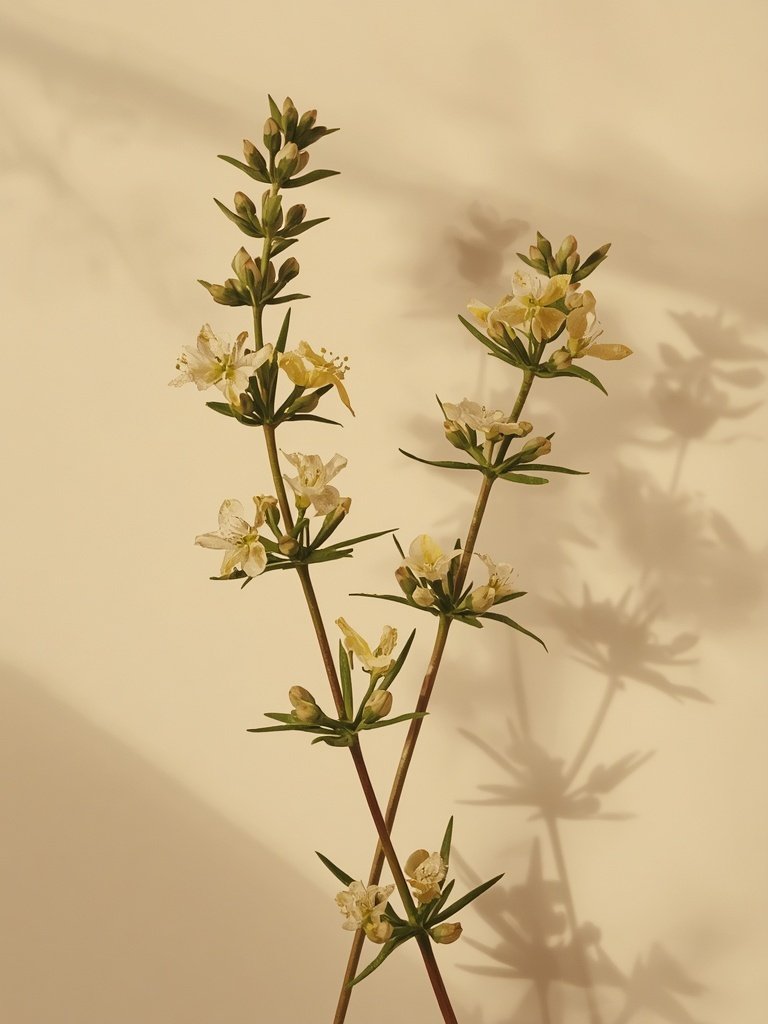
Table of Contents 3
Wild Thyme (Thymus serpyllum), a member of the mint family (Lamiaceae), is a revered medicinal subshrub with deep roots in European phytotherapy. Abundant in an essential oil rich in thymol and carvacrol, as well as flavonoids, tannins, and triterpene acids, it exerts potent antibacterial, secretomotoric, antispasmodic, and anti-inflammatory actions. It is extensively utilized to soothe upper respiratory infections, optimize digestive function, and resolve mucosal inflammations.
Botanical Characteristics, Habitat, and Harvesting of Herbal Material
Wild thyme is a perennial creeping dwarf subshrub reaching 10–20 cm in height, indigenous to sunny sandy slopes, dunes, dry pastures, and pine woodland clearings across Europe. It features woody rooted stems, tiny elliptical opposite leaves, and dense terminal clusters of lilac-pink flowers.
The pharmacopoeial herbal drug is wild thyme herb (Herba Serpylli), harvested at the peak of anthesis from June through August. Non-woody upper flowering stems are gathered and dried in shaded, well-ventilated areas below 35°C to preserve the volatile essential oil fractions.
Biochemical Profile and Pharmacological Properties of Wild Thyme
The therapeutic efficacy of wild thyme stems from the synergy of its bioactive phytochemical constituents:
- Essential oil (up to 1%) – enriched with phenolic monoterpenes such as thymol, carvacrol, alongside p-cymene and linalool, providing robust bactericidal, antifungal, and antiviral protection.
- Tannins (approx. 7%) – provide marked astringent, hemostatic, and protective barrier effects across oral, respiratory, and intestinal mucosa.
- Flavonoids (luteolin, apigenin) – exert spasmolytic relaxation upon bronchial and intestinal smooth muscle fibers while delivering potent antioxidant activity.
- Phenolic acids – dominated by rosmarinic acid, which suppresses acute and chronic inflammation by inhibiting inflammatory prostaglandin synthesis.
Practical Phytotherapy: Respiratory Health, Digestion, and Therapeutic Baths
Wild thyme demonstrates exceptional therapeutic versatility across internal and topical modalities:
- Respiratory infusions – steeping one tablespoon of dried herb in 250 ml of boiling water for 15 minutes yields an effective expectorant that liquefies tenacious mucus and soothes bronchial spasms.
- Gastrointestinal support – stimulates gastric acid and bile secretions, alleviates intestinal meteorism, cramps, and postprandial dyspepsia.
- Oral rinses and gargles – combats aphthae, gingival inflammation, pharyngitis, and hoarseness through antimicrobial astringency.
- Balneological baths – a decoction of 50–100 g herb added to bathwater alleviates muscle soreness, neuralgias, and dermatological blemishes while exerting a restorative sedative effect.
Want to apply these guidelines in your daily diet?
Our smart diet generator creates a tailored meal plan in 3 minutes based on the recommendations in this article.
Tags

Literatura: A. Skarżyński: „Zioła czynią cuda.”, Agencja Wydawnicza Comes, Warszawa, 1994. A. Ożarowski, W. Jaroniewski: „Rośliny lecznicze i ich praktyczne zastosowanie.”, Instytut Wydawniczy Związków Zawodowych, Warszawa, 1987. J. Muszyński: „ Ziołolecznictwo i leki roślinne (Fytoterapia).”, Wydawnictwo Prawnicze i Naukowe, Warszawa, 1951. E. Lamer-Zarawska, B. Kowal-Gierczak, J. Niedworok: „Fitoterapia i leki roślinne.”, Wydawnictwo Lekarskie PZWL, Warszawa, 2007.
Diets Premium Expert
Diets Premium team expert. Specializes in nutrition plans, strength sports, and training plans.