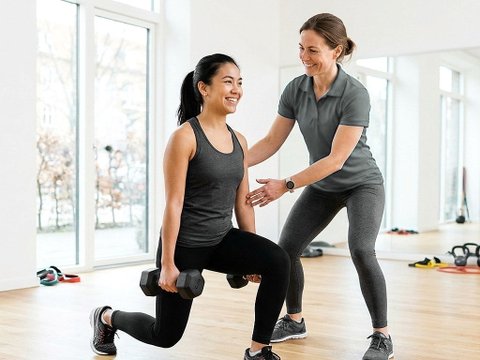
Pilates - who it is suitable for and what health benefits it has


Table of Contents 14
Medical & Editorial Disclaimer (§3 Terms): This article is for informational and educational purposes only, does not constitute medical advice, diagnosis, or treatment, and is used at your own risk. Consult a qualified physician for medical conditions.
From a physiological perspective, the methodology relies on the conscious activation of deep stabilizing muscles prior to movement execution, ensuring proper spinal alignment and preventing energy dispersion. Performing exercises at a measured tempo recruits slow-twitch muscle fibers responsible for segmental stabilization, while fluid, uninterrupted transitions protect tendons and ligaments from sudden strain. By simultaneously strengthening underactive muscles and releasing chronically tense structures, the practice fosters structural equilibrium, further supported by intentional diaphragmatic breathing that stabilizes the rib cage. Clinical literature suggests that consistent practice may help alleviate chronic lower back discomfort, support pelvic floor strength, and assist in improving static and dynamic balance across diverse rehabilitation settings.
Integrating Pilates into a regular wellness routine helps establish lasting postural and respiratory habits, making it suitable for both novices and experienced athletes looking to refine their movement mechanics. While it serves as a gentle and effective option for managing everyday muscle stiffness or restlessness, practitioners must always respect their individual anatomical limits. Before starting a training program, it is essential to consult a healthcare professional to rule out contraindications such as unmanaged hypertension, acute injuries, active inflammation, thrombosis risk, hernias, or advanced intervertebral disc conditions.
This article is professional premium content (PRO) provided in its entirety.
Pilates - the essential tenets
The principal rules of Pilates
The objective of this allocation is to engage the deep muscles before training
Perfection in body positioning
Controlling
Interruption-free and fluid progression
Equilibrium and harmony in muscle build-up development
Consciously accelerating the respiratory process
Habit
Who can and should contemplate pilates
Pilates - Counterindications and Adverse Effects
Pilates - Effects
Further benefits confirmed by scientific studies
Overview of Pilates
Want to apply these guidelines in your daily diet?
Our smart diet generator creates a tailored meal plan in 3 minutes based on the recommendations in this article.

Aldaro-Gonzalvo A.R. et al., The effect of Pilates exercises on body composition: A systematic review, „Journal of Bodywork and Movement Therapies” 2012, 16(1), 109–114. Culling P.J. et al., A randomized clinical trial comparing pelvic floor muscle training to a Pilates exercise program for improving pelvic muscle strength, „International Urogynecology Journal” 2010, 21, 401–408. Eyigor S. et al., Effects of pilates exercises on functional capacity, flexibility, fatigue, depression and quality of life in female breast cancer patients: a randomized controlled study, „European Journal of Physical and Rehabilitation Medicine” 2010, 46, 481–487. Fernandez-Rodrigue R. et al., Best exercise options for reducing pain and disability in adults with chronić low back pain: pilates, strength, core-based, and mind-body. A network meta-analysis, „Journal of Orthopaedic & Sports Physical Therapy” 2022, 52(8), 505–521. Halis F. et al., Pilates for better sex: changes in sexual functioning in healthy Turkish women after Pilates exercise, „Journal of Sex & Martial Therapy” 2016, 42(4), 302–308. Irez G.B. et al., Integrating Pilates exercise into an exercise program for 65+ year-old women to reduce falls, „Journal of Sports Science & Medicine” 2011, 10(1), 105. Kalron A. et al., Pilates exercise training vs. Physical therapy for improving walking and balance in people with multiple sclerosis: a randomized controlled trial, „Clinical Rehabilitation” 2017, 31(3), 319–328. Muscolino J.E., Cipriani S., Pilates and the „powerhouse” – I, „Journal of Bodywork and Movement Therapies” 2004, 8(1), 15–24. Muscolino J.E., Cipriani S., Pilates and the „powerhouse” – II, „Journal of Bodywork and Movement Therapies” 2004, 8(2), 122–130. Patti A. et al., Effectiveness of Pilates exercise on low back pain: review with meta-analysis, „Disability and Rehabilitation” 2023, 1–14. Sonmezer E., Özköslü M.A., Yosmaoğlu H.B., The effects of clinical pilates exercises on functional disability, pain, quality of life and lumbopelvic stabilization in pregnant women with low back pain: A randomized controlled study, „Journal of Back and Musculoskeletal Rehabilitation” 2021, 34(1), 69–76. Wells C. et al., The effectiveness of Pilates exercise in people with chronić low back pain: a systematic review, „Plos One” 2014, 9(7), e100402. Yu Z. et al., Efficacy of pilates on pain, functional disorders and quality of life in patients with chronic low back pain: a systematic review and meta-analysis, „International Journal of Enviromental Research and Public Health” 2023, 20(4), 2850.
Diets Premium Expert
Diets Premium team expert. Specializes in nutrition plans, strength sports, and training plans.