Mother's diet while breastfeeding - facts and myths

Table of Contents 7
Medical & Editorial Disclaimer (§3 Terms): This article is for informational and educational purposes only, does not constitute medical advice, diagnosis, or treatment, and is used at your own risk. Consult a qualified physician for medical conditions.
Physiologically, the composition of breast milk is remarkably stable and is not significantly altered by the mother's daily food intake. Many common concerns, such as the belief that specific foods cause infant colic or allergies, are largely unsupported by evidence, as these symptoms typically stem from the natural immaturity of the newborn's digestive system. Furthermore, moderate caffeine consumption is generally considered safe and does not negatively impact an infant's sleep patterns, allowing mothers to enjoy their daily routines without undue restriction.
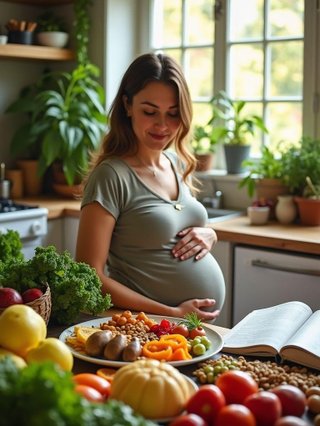
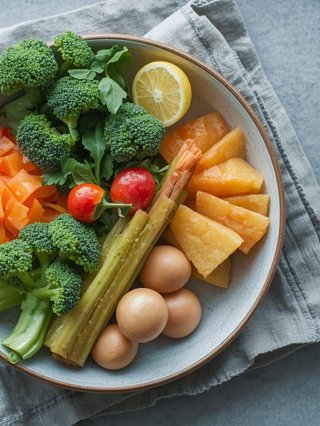
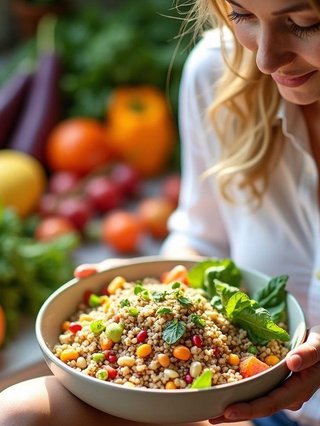
For optimal health, breastfeeding mothers should prioritize a balanced and varied diet rich in vegetables, fruits, whole grains, and lean protein sources like fish and dairy. Rather than adhering to restrictive or exclusionary diets, the focus should be on meeting the body's increased energy needs through wholesome, nutrient-dense meals. Adopting a flexible and relaxed approach to nutrition not only benefits the mother's well-being but also fosters a positive environment for the nurturing bond shared with her child.
This article is professional premium content (PRO) provided in its entirety.
The importance of breastfeeding in newborn nourishment
The influence of a breastfeeding mother's diet on her offspring
Maternal nutrition in the context of allergies in children
Maternal Nutrition and Colic in Newborns
Intake of coffee during lactation
Caloric consumption of mother's food
Should a breastfeeding mother's diet look like this?
Want to apply these guidelines in your daily diet?
Our smart diet generator creates a tailored meal plan in 3 minutes based on the recommendations in this article.
Tags

Aaltonen J. et al., Impact of maternal diet during pregnancy and breastfeeding on infant metabolic programming: a prospective randomized controlled study, „European Journal of Clinical Nutrition” 2011, 65, 10–19. Binns C., Lee M., Low W., The Long-Term Public Health Benefits of Breastfeeding, „Asia Pacific Journal of Public Health” 2016, 28(1), 7–14. Borszewska-Kornacka M.K. et al., Stanowisko Grupy Ekspertów w sprawie zaleceń żywieniowych dla kobiet w okresie laktacji, „Standardy Medyczne. Pediatria” 2013, 10, 265–279. Fewtrell M. et al., Complementary Feeding: A Position Paper by the European Society for Paediatric Gastroenterology, Hepatology, and Nutrition (ESPGHAN) Committee on Nutrition, „Journal of Pediatric Gastroenterology and Nutrition” 2017, 64(1), 119–132. Harb T. et al., Infant Colic—What works, „Journal of Pediatric Gastroenterology and Nutrition” 2016, 62(5), 668–686. Hjern A. et al., A systematic review of prevention and treatment of infantile colic, „Acta Paediatrica” 2020, 109(9), epub. Hoppu U., Kalliomäki M., Isolauri E., Maternal diet rich in saturated fat during breastfeeding is associated with atopic sensitization of the infant, „European Journal of Clinical Nutrition” 2000, 54, 702–705. Hu Y. et al., Breastfeeding duration modified the effects of neonatal and familial risk factors on childhood asthma and allergy: a population-based study, „Respiratory Research” 2021, 22, epub. Karcz K., Lehman I., Królak-Olejnik B., The link between knowledge of the maternal diet and breastfeeding practices in mothers and health workers in Poland, „International Breastfeeding Journal” 2021, 16, epub. Kidd M. et al., “Something is wrong with your milk”: Qualitative study of maternal dietary restriction and beliefs about infant colic, „Canadian Family Physician” 2019, 65(3), 204–211. Marangoni F. et al., Maternal Diet and Nutrient Requirements in Pregnancy and Breastfeeding. An Italian Consensus Document, „Nutrients” 2016, 8(10), epub. Matsumoto N. et al., Breastfeeding and risk of food allergy: A nationwide birth cohort in Japan, „Allergology International” 2020, 69(1), 91–97. Nehring-Gugulska M., Karmienie piersią lub mlekiem kobiecym jako złoty standard w żywieniu niemowląt – część 1, „Pediatria po Dyplomie” 2017, epub. Netting M.J., Middleton P.F., Makrides M., Does maternal diet during pregnancy and lactation affect outcomes in offspring? A systematic review of food-based approaches, „Nutrition” 2014, 30(11–12), 1225–1234. Segura S.A. et al., The importance of maternal nutrition during breastfeeding: Do breastfeeding mothers need nutritional supplements?, „Anales de Pediatría (English Edition)” 2016, 84(6), epub. Szajewska H. et al., Karmienie piersią. Stanowisko Polskiego Towarzystwa Gastroenterologii, Hepatologii i Żywienia Dzieci, „Standardy Medyczne. Pediatria” 2016, 13, 9–24. Szajewska H. et al., Zasady żywienia zdrowych niemowląt. Stanowisko Polskiego Towarzystwa Gastroenterologii, Hepatologii i Żywienia Dzieci, „Standardy Medyczne. Pediatria” 2021, 18, 805–822.
• 23.03.2026Diets Premium Expert
Diets Premium team expert. Specializes in nutrition plans, strength sports, and training plans.