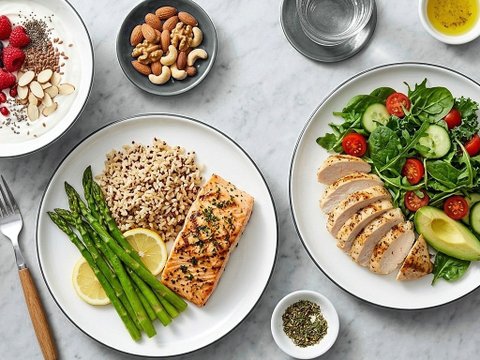
High-Fat Diet - Recipes, Meal Plans, and Weight Loss Strategies

Table of Contents 4
Medical & Editorial Disclaimer (§3 Terms): This article is for informational and educational purposes only, does not constitute medical advice, diagnosis, or treatment, and is used at your own risk. Consult a qualified physician for medical conditions.
The physiological transition to a high-fat lifestyle involves significant changes in how the body stores and utilizes energy. Initially, the reduction of carbohydrates leads to the depletion of muscle glycogen, which naturally releases stored water molecules, often resulting in an early shift in body weight. The article details the nuances of various high-fat strategies, from low-carb variations to ketogenic states, explaining how these shifts impact blood sugar stability and the body's ability to efficiently oxidize fats for daily activities.
Implementing a high-fat regimen in daily life involves prioritizing nutrient-dense sources such as walnuts, clarified butter, and fatty fish like halibut. Culinary applications, such as preparing fish with creamy spinach sauces, demonstrate that this dietary style can be both flavorful and satisfying. For sustainable health, it is beneficial to focus on high-quality ingredients and diverse vegetable intake, ensuring that the body receives a broad spectrum of essential nutrients while maintaining a focus on healthy fat consumption.
This article is professional premium content (PRO) provided in its entirety.
Fundamentals of a High-Fat Diet
A diet in which fat is the predominant source of calories can be called a high-fat diet. If a calorie distribution of 33% from each macronutrient source can be called balanced, then any diet where approximately 40% or more of energy is provided by fats will be a high-fat diet.
There are two basic variants of this eating style: a high-fat and low-carbohydrate diet (known as a low-carb diet), and a high-fat and no-carbohydrate diet (also known as a no-carb or ketogenic diet).
- In the first variant – less restrictive – the diet is composed mainly of fats and proteins, with carbohydrates appearing in amounts of 50–100 g, depending on body weight and physical activity level.
- The second variant, however, which requires a slightly longer period of body adaptation, assumes an intake of less than 50 g of carbohydrates per day.
A high-fat diet might be associated with an incorrect “Western diet” rich in processed foods with a high content of saturated and hydrogenated fats. However, such a diet should not be confused with a properly balanced high-fat diet, as they differ significantly. A high-fat diet tailored to needs will always contain more complete protein sources and unprocessed products, while the “Western diet” based on fast food and sweets is characterized by the intake of hard-to-digest proteins and significant amounts of sugars, usually deviating from the standard assumptions of a properly balanced high-fat diet.
Poor eating habits and the accompanying unhealthy lifestyle – their monotony and duration – destructively affect the health of society. Overeating processed fats in quantities too large relative to demand can lead to serious metabolic, neuroendocrinological, and microbiological changes, and ultimately to a type of addiction, neurodegeneration, obesity, and lifestyle diseases. To avoid associating a high-fat diet with atherosclerosis and insulin resistance, proper nutritional education is needed. This applies to pregnant women, children, adolescents, adults, and the elderly. A low- or no-carbohydrate diet properly composed by a dietitian can bring a range of health benefits – provided, of course, that it is ideally adapted to the body's needs. The selection of fat sources and the rest of the nutrients and their quantitative ratio, covering the demand for fiber, minerals, and vitamins, establishing the appropriate number of meals, and cooking technologies are key to a healthy and convenient high-fat diet for many people.
High-Fat Diet – Sample Meal Plan
Here is an example of a well-composed high-fat, low-carbohydrate meal plan for a person with an energy requirement of 2000 kcal and moderate intellectual and physical activity. The intake of 2060 kcal consists of 62% energy from fats, 26% from proteins, and 12% from carbohydrates (142 g, 134 g, and 81 g respectively). Fiber intake is 21 g, while simple sugars account for 1.25% of the energy supplied.
Breakfast: Scrambled eggs with walnuts, pickled cucumbers, and bell pepper
- 10 g goose fat
- 180 g chicken eggs
- 25 g walnuts
- 200 g pickled cucumber
- 200 g red bell pepper
Preparation: Fry scrambled eggs in lard until not fully set. Serve with walnuts, pickled cucumbers, and bell pepper.
Second Breakfast: Modified “Bulletproof Coffee” and almonds
- 200 g coffee – brew without sugar
- 10 g cocoa
- 30 g whey protein isolate
- 10 g coconut oil
- 10 g butter
- 20 g almonds
Preparation: Blend slightly cooled coffee with coconut oil, butter, cocoa, and protein powder. Serve almonds as a snack.
Lunch: Roasted pork neck with asparagus
- 250 g pork, neck
- 250 g asparagus
- 10 g flaxseed oil
- 125 g onion
Preparation: Roast pork neck in a baking bag with spices and chopped onion. Serve with boiled asparagus drizzled with flaxseed oil.
Dinner: Cold-smoked salmon with buckwheat groats and broccoli
- 100 g salmon/tuna/mackerel, fresh
- 250 g broccoli
- 33 g buckwheat groats
Preparation: Serve cold-smoked salmon with cooked buckwheat groats and broccoli.
High-Fat Diet – Recipes
Here are two delicious recipes that can be perfectly integrated into a high-fat diet, being both nutritious and flavorful.
Recipe for Halibut Baked with Spinach Sauce
Ingredients:
- 4 paper towel-dried fillets of lean fish
- 2 tablespoons wheat flour
- 1 tablespoon rapeseed oil
- 1 tablespoon clarified butter
- Salt and lemon juice to taste
For the Sauce:
- 200 g fresh chopped spinach
- 1 small finely chopped onion
- 2 cloves minced garlic
- 1 tablespoon rapeseed oil
- ½ cup 18% cream
- Salt and lemon pepper to taste
- Parsley for garnish
- 1 teaspoon butter for greasing the baking dish
Preparation:
- Sprinkle the dried fillets with lemon juice, let stand for a few minutes, dry again, then salt.
- Next, thoroughly coat the fillets in flour and fry in heated oil mixed with butter until browned on both sides.
- To prepare the sauce, sauté the onion and garlic in heated oil.
- Then add spinach to the onion and garlic and fry for a moment until its volume reduces.
- Next, mix everything with cream, heat briefly, then set aside and season with salt and pepper.
- Finally, transfer the halibut to a baking dish greased with regular butter, pour the cream-spinach sauce over it, and bake everything at 180 degrees Celsius for about 20 minutes.
Recipe for Salad with Egg, Avocado, Seeds, and Nuts
Ingredients:
- 3 medium-boiled chicken eggs
- 1 ripe, peeled avocado
- 50 g lamb's lettuce
- 10 g chopped dill
- 100 g halved cherry tomatoes
- 50 g chopped red onion
- 15 g walnuts
- 15 g pumpkin seeds
- 5 g flaxseed oil
- 5 g apple cider vinegar
- Salt and pepper to taste
Preparation:
- Dice the eggs and avocado and mix with vegetables, nuts, seeds, oil, and vinegar.
- Finally, season to taste.
High-Fat Diet and Weight Loss
High-fat diets in various forms have gained considerable popularity in the context of weight loss. These diets cause slightly faster weight loss than high-carbohydrate diets, but it is worth noting that this is a somewhat misleading effect. Greater weight loss in the early stages of such a diet is associated with a reduction in muscle glycogen reserves and, simultaneously, a decrease in body water reserves.
This happens because glycogen binds three molecules of water per molecule, and under conditions of low availability of sugars in the diet, the body prefers to save glucose for the needs of the brain rather than for skeletal muscles, thereby consuming glycogen. However, there is no evidence for the superior effectiveness of a high-fat diet over other diets used for weight loss.
Publications concerning the process of losing excessive body weight clearly emphasize that the most important factor in this process is an energy deficit, and only subsequently does the quantitative ratio of energy sources matter. It is also stressed that it is easier to adapt a diet to the body's needs when it does not involve such significant restrictions as in the case of low- and no-carbohydrate diets. An ill-conceived elimination diet can certainly disrupt the body's homeostasis, not only making weight loss difficult but also leading to troublesome and hard-to-combat side effects.
High-fat diets can be beneficial for health, provided they are properly balanced and adapted to the body's needs. Without knowledge and experience in dietetics, one should not implement such a diet "on their own"; it is advisable to consult professionals regarding such decisions.
Want to apply these guidelines in your daily diet?
Our smart diet generator creates a tailored meal plan in 3 minutes based on the recommendations in this article.

Literatura: Beilharz J.E., Maniam J., Morris M.J.: Diet-Induced Cognitive Deficits: The Role of Fat and Sugar, Potential Mechanisms and Nutritional Interventions. Nutrients. 2015 Aug 12;7(8):6719-38. Reyes T.M.: High-fat diet alters the dopamine and opioid systems: effects across development. Int J Obes Suppl. 2012 Dec;2(Suppl 2):S25-8. Zhang M., Yang X.J.: Effects of a high fat diet on intestinal microbiota and gastrointestinal diseases. World J Gastroenterol. 2016 Oct 28;22(40):8905-8909. Uranga R.M., Bruce-Keller A.J., i wsp.: Intersection between metabolic dysfunction, high fat diet consumption, and brain aging. J Neurochem. 2010 Jul;114(2):344-61. Sullivan E.L., Riper K.M., i wsp.: Maternal high-fat diet programming of the neuroendocrine system and behavior. Horm Behav. 2015 Nov;76:153-61. Putti R., Migliaccio V., i wsp.: Skeletal Muscle Mitochondrial Bioenergetics and Morphology in High Fat Diet Induced Obesity and Insulin Resistance: Focus on Dietary Fat Source. Front Physiol. 2016 Jan 20;6:426. Wasserman D.H.: Four grams of glucose . Am J Physiol Endocrinol Metab. 2009 Jan;296(1):E11-21. Shah M., Garg A.: High-fat and high-carbohydrate diets and energy balance. Diabetes Care. 1996 Oct;19(10):1142-52. Schrauwen P., Westerterp K.R.: The role of high-fat diets and physical activity in the regulation of body weight. Br J Nutr. 2000 Oct;84(4):417-27.
Diets Premium Expert
Diets Premium team expert. Specializes in nutrition plans, strength sports, and training plans.