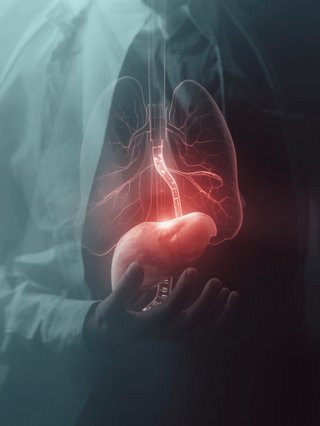
Liver hemangioma – etiology, differential diagnosis, dietary recommendations, and alcohol's effect
Table of Contents 4
Medical & Editorial Disclaimer (§3 Terms): This article is for informational and educational purposes only, does not constitute medical advice, diagnosis, or treatment, and is used at your own risk. Consult a qualified physician for medical conditions.
Physiologically, these hemangiomas are defined as congenital vascular malformations that do not exhibit neoplastic progression. The nutritional focus is not on dissolving the vessel abnormality itself, but rather on shielding the surrounding liver parenchyma against metabolic strain. Adopting a whole-food, Mediterranean dietary pattern and limiting ethanol intake helps mitigate oxidative stress on the liver.
In practical terms, management centers on regular imaging surveillance to assess any changes. Surgical intervention is reserved strictly for exceptionally large lesions that cause mechanical impingement or severe functional impairment. It is vital to approach alcohol consumption with restraint, adhering to lifestyle guidelines that support the overall health and function of the liver.
Hepatic cavernous hemangioma represents the most frequently encountered benign mesenchymal neoplasm of the liver. Predominantly identified incidentally during abdominal ultrasonography, clarity regarding its indolent prognosis, radiological surveillance criteria, and targeted hepatoprotective lifestyle principles prevents unjustified patient distress.
Biological Nature and Pathophysiology: Distinguishing Benign Hemangiomas from Malignancy
Hepatic hemangiomas are congenital vascular malformations consisting of cavernous, blood-filled vascular spaces lined by a single layer of mature endothelial cells. They possess zero malignant transformation potential, never transitioning into hepatocellular carcinoma. The overwhelming majority measure under 4–5 cm in diameter and persist entirely asymptomatic throughout the patient's lifespan.
Radiological Surveillance Protocols and Surgical Indications for Giant Hemangiomas
Diagnostic verification utilizes Doppler ultrasonography, with dynamic contrast-enhanced magnetic resonance imaging (MRI) functioning as the definitive modality exhibiting pathognomonic peripheral nodular enhancement with progressive centripetal fill-in. Asymptomatic lesions warrant merely annual sonographic surveillance. Surgical intervention is reserved strictly for giant hemangiomas (>10 cm) inducing mechanical compression on adjacent viscera or severe consumptive coagulopathy (Kasabach-Merritt syndrome).
Hepatoprotective Nutrition Principles and Alcohol Metabolic Considerations
No dietary intervention or botanical formulation can pharmacologically dissolve vascular hemangiomas. Rather, clinical nutrition focuses on shielding the surrounding hepatic parenchyma against metabolic dysfunction-associated steatotic liver disease (MASLD). Emphasizing a Mediterranean whole-food diet, eliminating high-fructose corn syrup, and restricting ethanol prevents unnecessary metabolic and oxidative strain on the liver.
Liver vessel and alcohol
Want to apply these guidelines in your daily diet?
Our smart diet generator creates a tailored meal plan in 3 minutes based on the recommendations in this article.

mgr Emilia Szymańska
• 23.10.2026Diets Premium Expert
Diets Premium team expert. Specializes in nutrition plans, strength sports, and training plans.