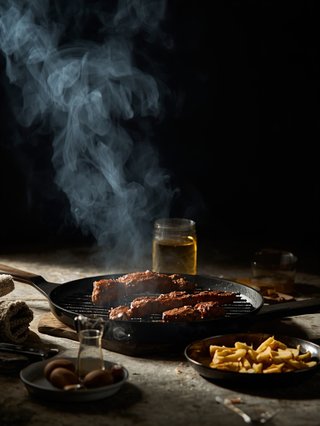
Healthy grilling – how to grill safely and healthily? Expert tips
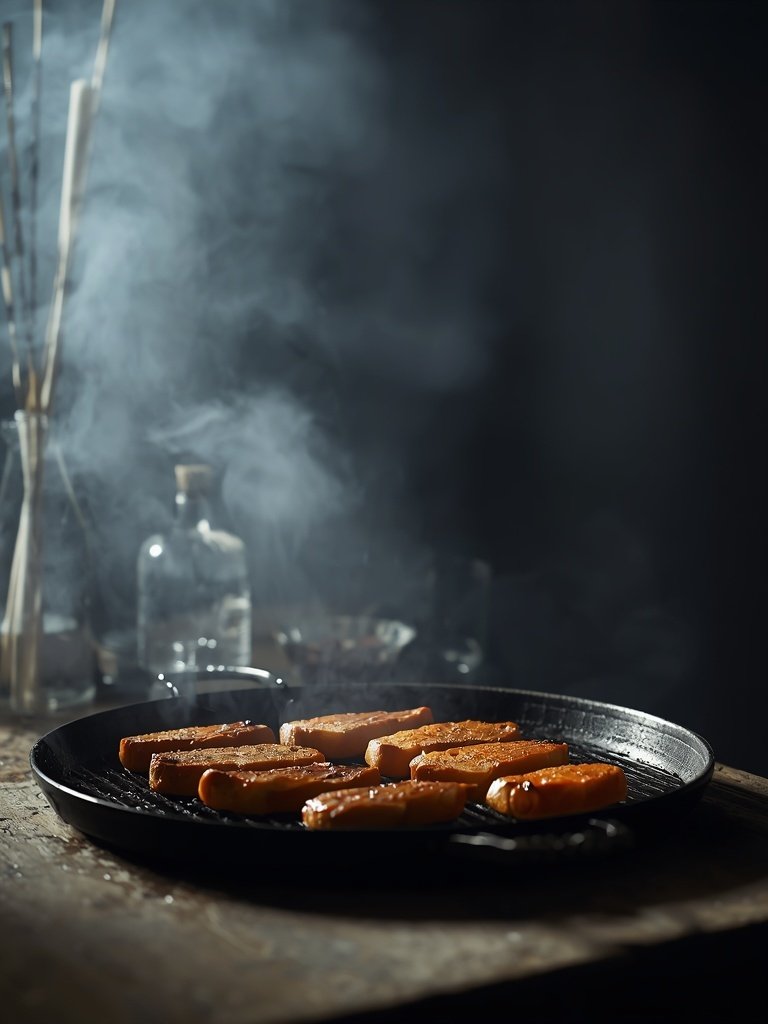

Table of Contents 7
Medical & Editorial Disclaimer (§3 Terms): This article is for informational and educational purposes only, does not constitute medical advice, diagnosis, or treatment, and is used at your own risk. Consult a qualified physician for medical conditions.
The article delves into the principles of thermal cooking on a grill and categorizes grilling appliances based on their heat source. A central focus is the formation of harmful compounds such as polycyclic aromatic hydrocarbons (PAHs) and heterocyclic aromatic amines (HAAs), particularly when fat drips onto hot coals. Healthier grilling methods that reduce the emission of these substances are presented, alongside a detailed explanation of the physiological mechanisms behind their creation.
Practical takeaways include choosing the right grill, using protective marinades, and avoiding direct contact between food and flames. It is recommended to opt for leaner meats, grill vegetables and fruits more frequently, and utilize aluminum foil or grilling trays to prevent fat from dripping. Adhering to these guidelines significantly contributes to a healthier grilling experience, allowing one to savor the benefits of outdoor cooking without unnecessary risks.
This article is professional premium content (PRO) provided in its entirety.
Definition, principles, and techniques of thermal barbecue cooking
Comprehensive categorization of grilling appliances based on thermal energy source
Does grilling pose health risks? A scientific examination of harmful compounds formed during thermal meat processing
Which grilling methods are the healthiest and how to minimize harmful compounds in grilled foods
Safe barbecuing: Practical guidelines for healthier grilled meals
Safe and Healthy Grilling: Evidence-Based Practical Guidelines
Health-conscious grilling: a comprehensive review of dietary guidelines and risk mitigation
Want to apply these guidelines in your daily diet?
Our smart diet generator creates a tailored meal plan in 3 minutes based on the recommendations in this article.

Ciemniak A., Czy można grillować bezpiecznie?, „Gospodarka Mięsna” 2012, 5, 24–28. Dordevic D., Buchtova H., Jancikova S. et al., Aluminum contamination of food during culinary preparation: Case study with aluminum foil and consumers’ preferences, „Food Science & Nutrition” 2019, 7(10), 3349–3360. Gill V. et al., Advanced Glycation End Products (AGEs) May Be a Striking Link Between Modern Diet and Health, „Biomolecules” 2019, 9(2), 888. Gushgari A.J., Halden R.U., Critical review of major sources of human exposure to N-nitrosamines, „Chemosphere” 2018, 210, 1124–1136. Kubiak S. M., Borowy T., Grala R., Urządzenia i techniki wykorzystywane podczas grillowania, „Gospodarka Miesna”2021, 5, 31–33. Masuda M., Wang Q., Tokumura M., Simultaneous determination of polycyclic aromatic hydrocarbons and their chlorinated derivatives in grilled foods, „Ecotoxicology and Environmental Safety” 2019, 178, 188–194. Parada H. et al., Grilled, barbecued, and smoked meat intake and survival following breast cancer, „Journal of the National Cancer Institute” 2017, 109(6), epub. Sinha R. et al., Well-done, grilled red meat increases the risk of colorectal adenomas, „Cancer Research” 1999, 59(17), 4320–4324. Smith J.S., Ameri F., Gadgil P., Effect of marinades on the formation of heterocyclic amines in grilled beef steaks, „Journal of Food Science” 2008, 73(6), 100–105. Sobczak P., Żukiewicz-Sobczak W., Prozdrowotne aspekty grillowania, „Gospodarka Mięsna” 2016, 5, 20–21. Więk A., Tkacz K., Żywica R., Zawartość wielopierścieniowych węglowodorów aromatycznych (WWA) w mięsnych produktach grillowanych w zależności od zawartości tłuszczu w surowcu, „Żywność. Nauka. Technologia. Jakość” 2013, 2(87), 39-50. Wojda B., Grillowanie – zalecane techniki i sprzęt, ncez.pzh.gov.pl/abc-zywienia/grillowanie-zalecane-techniki-i-sprzet/ (8.06.2018).
Diets Premium Expert
Diets Premium team expert. Specializes in nutrition plans, strength sports, and training plans.