Garden dill – characteristics, storage, and use: medicinal properties, caraway, and culinary art
Table of Contents 5
Medical & Editorial Disclaimer (§3 Terms): This article is for informational and educational purposes only, does not constitute medical advice, diagnosis, or treatment, and is used at your own risk. Consult a qualified physician for medical conditions.
The therapeutic virtues of dill stem from its rich essential oil content, including carvone and limonene, alongside protective flavonoids and vitamin C. These compounds contribute to its carminative, antispasmodic, and antimicrobial properties, providing relief from indigestion, bloating, and other gastrointestinal discomforts. Dill also stimulates the secretion of digestive juices and bile, aiding in the breakdown of rich meals, and its infusions are traditionally used to soothe infantile colic.
To preserve dill's fresh quality and vibrant aroma, short-term storage involves placing stems upright in water in the refrigerator. For extended preservation, freezing is the most effective method to maintain its beneficial compounds. In the kitchen, dill pairs exquisitely with fish, cold soups, new potatoes, and fermented foods, making it an indispensable ingredient for a healthy and flavorful diet.
Garden Dill (*Anethum graveolens*): Botanical Taxonomy and Historical Phytotherapy
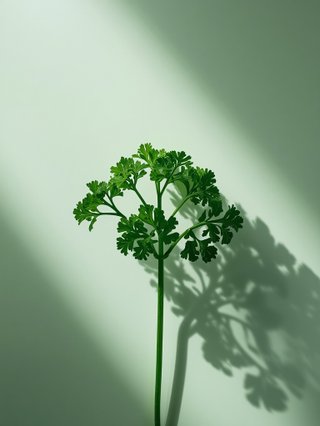
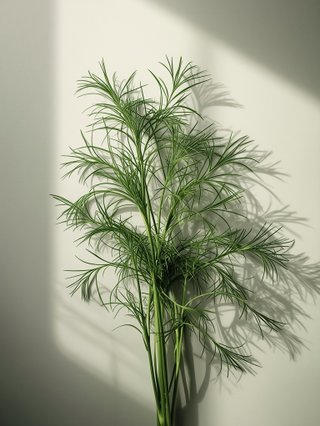
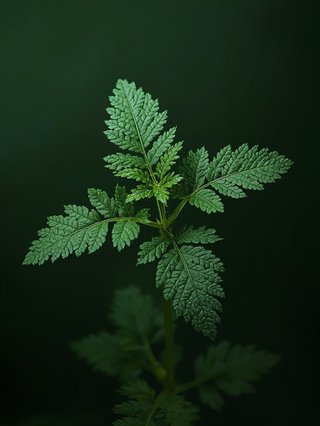
Garden dill (*Anethum graveolens*) is a fast-growing annual herb belonging to the Apiaceae family, native to the sun-drenched terrains of the Mediterranean basin and Western Asia. It produces a hollow, striated stem reaching up to 1 meter in height, bearing finely dissected, thread-like glaucous leaves, culminating in broad compound umbels of delicate golden blossoms. Dill's ethnobotanical record extends to ancient Egypt (recorded in the Ebers Papyrus), Classical Greece, and Rome, where gladiators applied crushed dill foliage to soothe muscle spasms and accelerate wound closure. Throughout medieval monastic medicine, dill seed infusions were recognized as the quintessential remedy for colic, gastric spasms, and nocturnal restlessness.
Phytochemical Profile of Dill: Carvone, Limonene, Flavonoids, and Carminative Activity
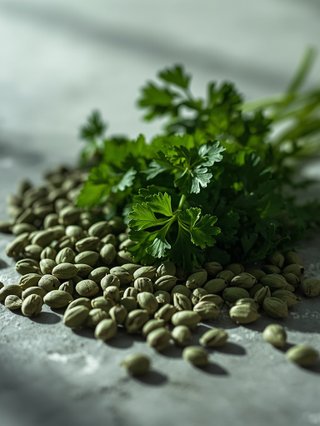
The therapeutic virtues of dill reside primarily within its essential oil matrix, the composition of which diverges markedly between seeds and fresh aerial foliage. Dill seeds are dominated by d-carvone (comprising 40% to 60% of total volatiles), bestowing a pungent, spicy note, accompanied by d-limonene. Conversely, fresh dill weed is characterized by alpha-phellandrene ('dill ether'), providing its signature crisp, herbaceous aroma. Carvone exerts powerful carminative effects by directly relaxing the smooth muscle sphincters of the digestive tract, facilitating the expulsion of trapped luminal gases and alleviating postprandial cramping. Simultaneously, dill flavonoids (quercetin, kaempferol, isorhamnetin) provide systemic antioxidant defense.
Digestive Support, Infantile Colic Management, and Mild Sedative Benefits
Aqueous infusions of dill seeds represent an evidence-honored standard in pediatric and adult gastroenterology. Dill water ('gripe water') traditionally administered to infants provides rapid relief from paroxysmal intestinal colic, safely reducing intraluminal wall tension and peristaltic spasms without adverse pharmacological sequelae. In adults, dill stimulates salivary, hepatic bile, and gastric secretions, accelerating the enzymatic breakdown of rich or heavy meals. Beyond digestion, volatile dill constituents exert mild neurosedative properties: they interact favorably with gamma-aminobutyric acid (GABA) pathways in the central nervous system, quelling autonomic agitation and fostering restorative sleep.
Optimal Post-Harvest Preservation: Freezing, Cryopreservation, Drying, and Salting
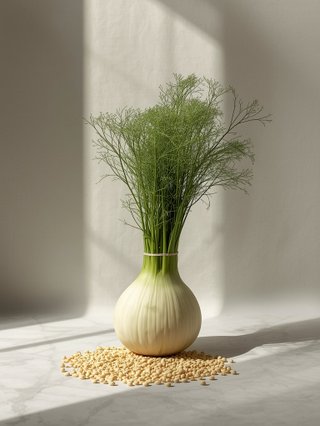
Freshly harvested dill weed is delicate, wilting rapidly and forfeiting its volatile terpene bouquet due to enzymatic oxidation and cellular moisture evaporation. For short-term preservation (up to 7 days), placing whole stems upright in a glass jar with 2 cm of cool water like a floral arrangement, loosely hooded with a clean bag in the refrigerator, is ideal. For long-term storage, **freezing is scientifically superior to all other methods**: finely minced, dried dill frozen in airtight glass containers retains roughly 90% of its native L-ascorbic acid and near-complete volatile aroma for 8 to 10 months. Dehydration (drying) drives off over 60% of delicate monoterpenes. Another classic heritage technique is layered salt curing in sterile jars, creating a self-preserving seasoning base for winter broths.
Dill in Gastronomic Arts: Fish Pairings, Cold Emulsions, Soups, and Fermentations
Garden dill reigns supreme across Northern and Central European culinary traditions. Fresh dill fronds are the quintessential pairing for fatty wild fish (wild salmon, arctic char, herring)—the world-famous Scandinavian gravlax relies entirely on an abundance of fresh chopped dill cured with coarse sea salt and cracked pepper. In Polish gastronomy, dill transforms summer new potatoes with churned butter, cold beet chłodnik, and delicate velouté soups. Meanwhile, mature, flowering dill umbels with fibrous stalks represent the indispensable preservative backbone of traditional lacto-fermented pickles (ogórki kiszone); antimicrobial phytoncides in flowering dill prevent brine spoilage while locking in crisp vegetable texture.
Want to apply these guidelines in your daily diet?
Our smart diet generator creates a tailored meal plan in 3 minutes based on the recommendations in this article.

mgr Tomasz Jankowski
• 23.10.2026Diets Premium Expert
Diets Premium team expert. Specializes in nutrition plans, strength sports, and training plans.