4 min read
Balance Disorders in Older Adults – Triggers, Recognition, Prevention
1 photo
734
Smart Voice
AI
0:00
0:00
Listen to the article content live
Table of Contents 3
Individuals in advanced age, due to their advanced age, face numerous health challenges. The majority of elderly individuals encounter difficulties in functioning safely and effectively. One of the most frequent issues is the inability to maintain proper body balance. Are there any triggering factors and consequences of balance instability in the elderly?
01 / 03
Determinants of balance impairment in the elderly population: an examination of causative factors and underlying mechanisms
Impairments in postural stability and motor coordination represent a significant health challenge for older adults, frequently stemming from progressive degenerative alterations within the nervous system. Elderly individuals commonly exhibit reduced efficiency in processing sensory inputs, which manifests as difficulties in maintaining proper body alignment, an unsteady gait, and deficits in executing precise movements. The etiologies of these dysfunctions are multifactorial, encompassing neurodegenerative disorders, structural brain injuries, vestibular system dysfunctions, visual impairments, and adverse effects of pharmacological treatments. Differential diagnosis should account for ischemic strokes, cerebellar damage, orthostatic hypotension, degenerative spinal conditions, otosclerosis, post-traumatic sequelae of head injuries, and the impact of psychoactive substances and alcohol on motor function.
02 / 03
Balance disorders in older adults: clinical symptomatology, health consequences, and fall-related risks arising from compromised postural stability and vestibular system dysfunction
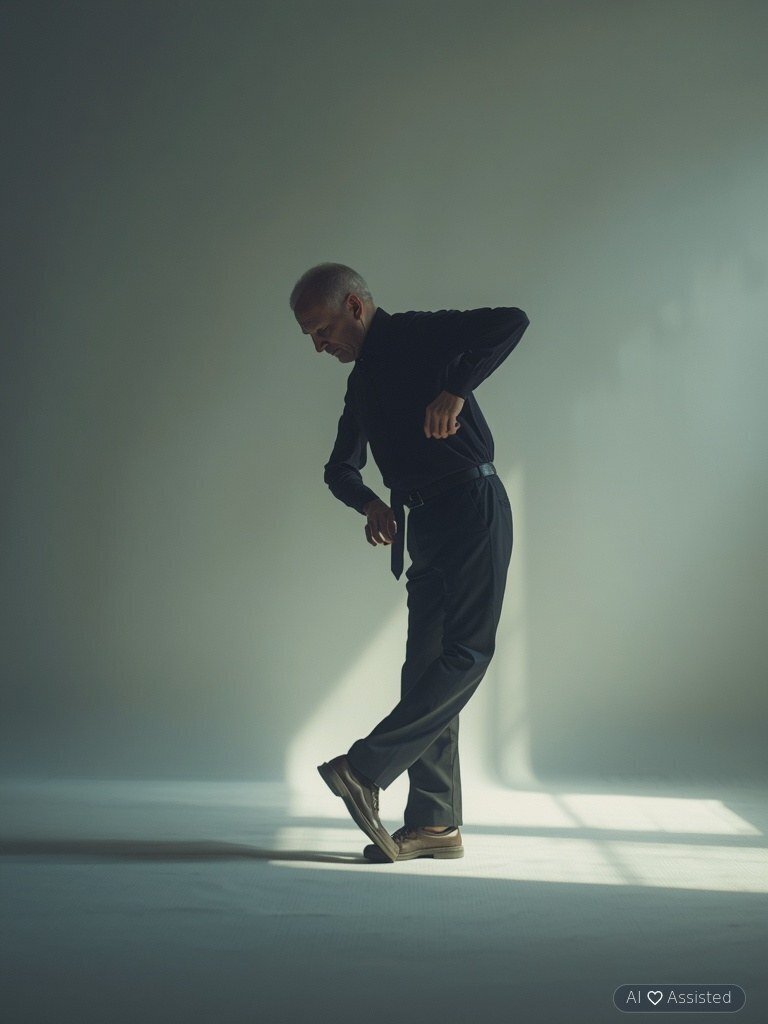
At the core of this condition lies progressive structural instability within the torso as well as the upper and lower extremities, rendering older adults increasingly incapable of sustaining an upright, physiologically correct posture. As a direct consequence, the body’s center of mass shifts, leading to an uneven distribution of gravitational forces across the musculoskeletal system’s various segments. The resultant biomechanical dysfunction manifests as a distinctly unstable gait pattern—wavering, uncoordinated, and marked by visible deviations from the body’s midline, frequently accompanied by sudden episodes of balance loss. Associated symptomatology encompasses a broad spectrum of complaints, including recurrent vertiginous episodes characterized by a spinning sensation or perceived motion of the surroundings, cognitive impairments such as deterioration in both short- and long-term memory, spatial disorientation and confusion even in previously familiar environments, ophthalmologic symptoms like ocular pain, diplopia (double vision), or accommodation disorders, gastrointestinal disturbances presenting as nausea and occasionally reflexive vomiting, and otolaryngologic manifestations such as tinnitus of varying severity alongside the subjective perception of ringing or buzzing in the ears. Balance disorders represent a significant risk factor that heightens susceptibility to falls—an issue of particular concern in the elderly due to the severe health repercussions they entail. This vulnerability stems from age-related physiological changes in the musculoskeletal system, notably progressive sarcopenia (the loss of muscle mass and strength) and the frequent coexistence of osteoporosis, defined by reduced bone mineral density. Consequently, even seemingly minor falls can precipitate severe injuries, including vertebral body or process fractures with potential spinal cord involvement, long-bone fractures—particularly hazardous femoral neck fractures often necessitating hospitalization and surgical intervention—, rib fractures that may lead to respiratory complications such as pneumothorax or respiratory failure, and traumatic brain injuries, whose sequelae can range from cerebral contusions and subdural or epidural hematomas to, in extreme cases, permanent neurological deficits.
03 / 03
Comprehensive assessment and management of balance disorders in older adults: from imaging diagnostics to personalized physical rehabilitation
The precise identification of the underlying causes of balance disorders in older adults constitutes the cornerstone of an effective therapeutic approach. Given the multifaceted nature of potential etiologic factors—encompassing both neurological and systemic conditions—a comprehensive array of specialized diagnostic evaluations is indispensable. Imaging techniques play a pivotal role in this context, with computed tomography (CT) and magnetic resonance imaging (MRI) of the head enabling the exclusion of intracranial tumors or structural abnormalities. Additionally, spinal MRI facilitates the assessment of degenerative vertebral changes (e.g., disc herniation), which may significantly impair the ability to maintain postural stability. To ensure a thorough evaluation, clinicians may further recommend electroencephalography (EEG) to analyze brain bioelectrical activity, electromyography (EMG) to assess muscle function, otolaryngological examinations (including audiometry and videootoscopy), and Doppler ultrasound of the carotid and vertebral arteries to evaluate blood flow. Tests assessing vestibular function, such as electronystagmography and videonystagmography, are equally critical, as they examine the coordination between the vestibulocochlear nerve and ocular movements.
The treatment strategy for balance disorders is inherently linked to the identified cause. In cases involving brain or cerebellar tumors, oncological intervention takes precedence, whereas vascular stenosis may necessitate surgical procedures to restore adequate blood flow. Nevertheless, for the majority of patients, physical rehabilitation—often integrated with medical training—remains the primary therapeutic modality. Physiotherapists focus on enhancing proprioceptive acuity, thereby enabling patients to consciously regulate body alignment. A well-structured rehabilitation program should incorporate coordination exercises, balance training utilizing stabilization platforms and sensomotoric devices, and gait reeducation activities. Stretching, isometric, and strengthening exercises are likewise essential components. Many elderly individuals require assistive devices such as canes or walkers, making proper training in their use an integral part of therapy. Within the home environment, modifications to minimize fall risks are strongly advised, including the removal of loose rugs, installation of grab bars in bathrooms, and application of non-slip mats in showers.
Meal Plan
Want to apply these guidelines in your daily diet?
Our smart diet generator creates a tailored meal plan in 3 minutes based on the recommendations in this article.
Tags

Scientifically reviewed by a clinical dietitian
• 25.09.2026
Janczewski G., Pierchała K., Zaburzenia równowagi w wieku podeszłym (Presbyastasis), „Przewodnik Lekarza” 2003, 6(2), 34–38. Józefowicz-Korczyńska M., Rehabilitacja zawrotów głowy i zaburzeń równowagi, „Otorynolaryngologia” 2010, 9(1), 7–12. Majda A. et al., Zawroty głowy i zaburzenia równowagi powyżej 60. roku życia, „Problemy Pielęgniarstwa” 2011, 19(2). Narożny W. et al., Epidemiologia zawrotów głowy i zaburzeń równowagi, „Forum Medycyny Rodzinnej” 2010, 4(5), 356–365. Szot P. et al., Przegląd wybranych testów funkcjonalnych, stosowanych w ocenie ryzyka upadków u osób starszych, „Gerontologia Polska” 2008, 16(1), 12–17.
Diets Premium Expert
Diets Premium team expert. Specializes in nutrition plans, strength sports, and training plans.
USDA FoodData Central
EFSA
PubMed Clinical Guidelines