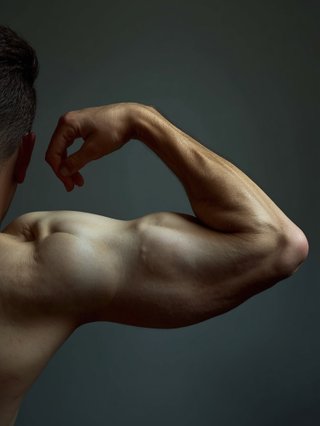
Arms like CT Fletcher's! Make them a real threat!


Table of Contents 8
Medical & Editorial Disclaimer (§3 Terms): This article is for informational and educational purposes only, does not constitute medical advice, diagnosis, or treatment, and is used at your own risk. Consult a qualified physician for medical conditions.
Examining the physiological structure reveals that the biceps consists of distinct heads spanning multiple joints, each contributing differently to elbow flexion, rotation, and overall arm movement. By varying grip width and adjusting execution parameters, trainers can selectively emphasize specific regions of the muscle. Furthermore, paying attention to the underlying brachialis muscle enhances the overall aesthetic and volume of the arm by elevating the main muscle group.
Translating these insights into daily practice involves managing movement velocity and incorporating deliberate eccentric phases to maximize muscular engagement. Avoiding common planning errors and focusing on proper exercise selection supports balanced development across all arm areas. This structured, evidence-based approach helps individuals overcome plateaus and achieve sustainable progress in their physical conditioning.
This article is professional premium content (PRO) provided in its entirety.
Anatomy of the two-headed muscle in the arm
The responsibilities of the biceps brachii muscle
Division of muscular fibers
Focusing exercises on a specific head of the double-headed muscle
The development of the shoulder muscle and its influence on the aesthetics of the biceps
Height of the biceps brachii (top)
Movement velocity, repetition range, set count in the weekly training microcycle
Overview
Want to apply these guidelines in your daily diet?
Our smart diet generator creates a tailored meal plan in 3 minutes based on the recommendations in this article.

mgr Mateusz Pawlak
Diets Premium Expert
Diets Premium team expert. Specializes in nutrition plans, strength sports, and training plans.