Key Takeaways
Alpha-lipoic acid stands out as a remarkable organosulfur compound holding a unique position in nutritional science. Initially misclassified as a vitamin, it is endogenously synthesized by mammals and plants in microscopic amounts. Within scientific circles, it is widely celebrated as a universal antioxidant due to its amphiphilic solvency, allowing it to dissolve effortlessly in both aqueous and lipid cellular compartments. This distinctive trait underpins its vital role in protecting cellular integrity against oxidative stress.
The physiological mechanisms of action extend far beyond simple free radical scavenging. Acting as an obligatory catalytic cofactor in mitochondrial multienzyme complexes, alpha-lipoic acid actively supports cellular ATP generation. Furthermore, it coordinates the intricate recycling network of endogenous antioxidants, restoring reduced forms of glutathione alongside essential vitamins. Clinical and experimental investigations additionally highlight its potential in mitigating inflammatory pathways and alleviating discomfort associated with neuropathic conditions.
Translating these insights into daily lifestyle and nutritional habits involves mindful dietary choices and targeted supplementation. Because whole food sources supply this compound in quantities far below those utilized in clinical studies, many individuals turn to dedicated dietary supplements to achieve optimal health benefits. Prioritizing high-quality formulations and integrating them into a balanced routine ensures a comprehensive, evidence-based approach to long-term cellular vitality.
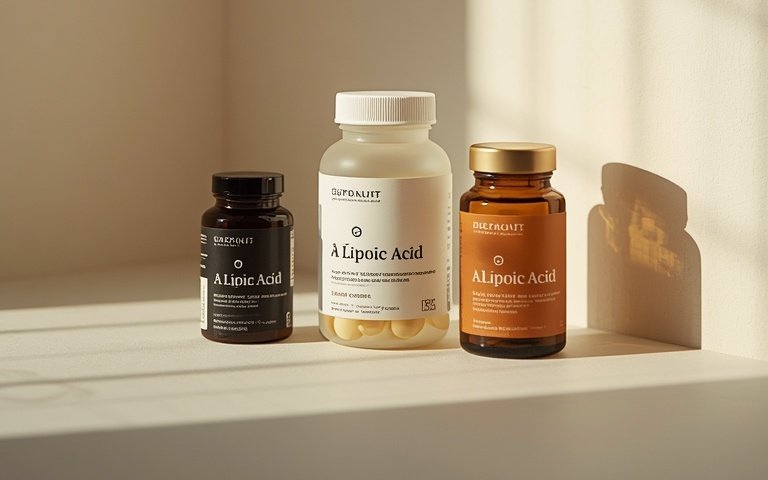
Alpha-lipoic acid (1,2-dithiolane-3-pentanoic acid, thioctic acid; ALA) is an extraordinary organosulfur compound possessing singular biochemical attributes. Originally misclassified as a vitamin, it is synthesized endogenously in minute concentrations within mammalian mitochondria. In scientific literature, it is universally celebrated as the 'universal antioxidant' due to its amphiphilic solvency—dissolving seamlessly in both aqueous and lipid cellular compartments. This unique trait allows ALA to effortlessly cross the blood-brain barrier and protect cytosol, organelles, and plasma membranes from oxidative destruction. Beyond direct radical neutralization, ALA functions as an obligatory catalytic cofactor in mitochondrial multienzyme complexes driving cellular ATP generation and coordinates the recycling of glutathione, ascorbic acid, and alpha-tocopherol. This monograph reviews ALA biochemistry, enantiomeric distinctions (R-ALA vs racemic RS-ALA), clinical utility in diabetic polyneuropathy, and evidence-based supplementation.
02 / 03
Alpha-lipoic acid action
Alpha-lipoic acid exhibits many valuable properties such as:
antioxidant: alpha-lipoic acid has the ability to neutralize free radicals, regenerate reduced forms of other antioxidants (such as vitamins C and E) [2], and mobilize the body's endogenous antioxidant mechanisms. One study [5] even suggests that the antioxidant effect of R-ALA may influence the reduction of pain symptoms and quality of life in various types of neuropathy; anti-inflammatory: an excess of free radicals creates an inflammatory state in the body, which, if sustained, is the cause of many diseases, among others. Atherosclerosis, obesity, autoimmune diseases... The antioxidant effect of R-ALA is therefore linked to its anti-inflammatory action. Alpha-lipoic acid has the ability to lower inflammatory markers (e.g., IL-6 during 4-week supplementation at a dose of 300 mg/day) [2]. The use of R-ALA in the context of diseases related to chronic inflammation requires further research; slowing down aging processes: thanks to its antioxidant abilities and increasing glutathione levels (the body's most important endogenous antioxidant), R-ALA may influence the delay of aging processes [2]; helpful in diabetes: participation in preventing the development of diabetic polyneuropathy (especially in the lower limbs, including feet), increases glucose tolerance, reduces tissue insulin resistance [2]. Combining endurance training with R-ALA supplementation (30 mg/kg per day, for 15 days) in rats resulted in an improvement in insulin sensitivity and glucose tolerance to a greater extent than physical exercise alone. [2] [4]; helpful in hypertension and coronary heart disease: alpha-lipoic acid has the ability to enhance the activity of nitric oxide synthase (NOS). This enzyme is involved in the synthesis of nitric oxide (NO) from the nitrogen residue of the amino acid arginine. The resulting product affects the elasticity and dilation of blood vessel walls (which is a beneficial phenomenon, especially in the case of existing hypertension and coronary heart disease), blood clotting (it has anticoagulant properties), and has anti-inflammatory effects (reducing inflammation within blood vessels – one of the causes of atherosclerotic plaque formation) [2]. Nitric oxide also affects the increase in psychophysical performance and strengthens the immune system; supporting weight loss: in one study [3], oral intake of R-ALA at a dose of 1200 mg/day for 8 weeks resulted in a slight decrease in body weight and a reduction in waist circumference. The placebo group did not achieve a similar effect; helpful in metabolic syndrome: metabolic syndrome is characterized by the coexistence of several health conditions – obesity, hypertension, insulin resistance or diabetes, and dyslipidemia, often with coexisting atherosclerosis. The previously mentioned actions of R-ALA, related to improving insulin sensitivity, glucose tolerance, anti-inflammatory action, and beneficial effect on cardiovascular function, mean that it can be a helpful supplement in combating metabolic syndrome. A study involving R-ALA [6] showed that it affects adiponectin levels – a hormone responsible for a number of metabolic processes, particularly glucose and fatty acid metabolism in the liver and muscles, and indirectly influences insulin sensitivity, and consequently has anti-inflammatory, anti-atherosclerotic, and insulin-sensitizing effects. In the study mentioned, three months of R-ALA supplementation at a dose of 500 mg/day increased adiponectin levels compared to the baseline level. Concurrently, a decrease in fasting blood glucose levels and AST levels (a marker of liver function) was observed in the patients. Another randomized, double-blind study [7] conducted on 360 obese patients also suffering from hypertension, diabetes, and hypercholesterolemia showed a greater reduction in body weight in patients supplemented with a dose of 1800 mg R-ALA per day for 20 weeks compared to the placebo group; possible effect on preventing neurodegenerative diseases: a clinical study [9] involving a group of patients showed that regular supplementation with R-ALA at a dose of 1200 mg/day affects the proper condition of nerve cells, protects against changes in neurons within the brain of older people and strengthens neuronal myelin sheaths.. This may be significant in reducing the risk of developing diseases such as Alzheimer's or multiple sclerosis; it reduces the negative effects of nicotine: in a study published in the "Canadian Journal of Physiology and Pharmacology" [1], rats exposed to nicotine and simultaneously provided with R-ALA maintained lower levels of oxidative stress (expressed by higher glutathione and superoxide dismutase concentrations), lower levels of liver dysfunction and coronary heart disease markers, and dyslipidemia compared to rats exposed to exclusive exposure to nicotine, without alpha-lipoic acid supplementation. Histopathological changes in the liver and lungs were also observed in this group of rats, which were not found in the R-ALA supplemented group. This study indicates the antioxidant and hepatoprotective effect of alpha-lipoic acid and its possible significance in the prevention of dyslipidemia and lung protection in smokers; ability to chelate metal ions: chelation is the removal of heavy metals from the body, such as lead and mercury. R-ALA also facilitates the normalization of blood iron levels in cases of excess, without causing a drop below normal values [2].. Most studies conducted on R-ALA are performed in vitro or on animal models.. To better understand the mechanism of action and its efficacy in vivo, further research is necessary, preferably on a human model.
Want to apply these guidelines in your daily diet?
Our smart diet generator creates a tailored meal plan in 3 minutes based on the recommendations in this article.